
Eid-Ul-Adha
Enough supplies, higher prices and higher hopes of the cattle farmers

Graphics: Agamir Somoy
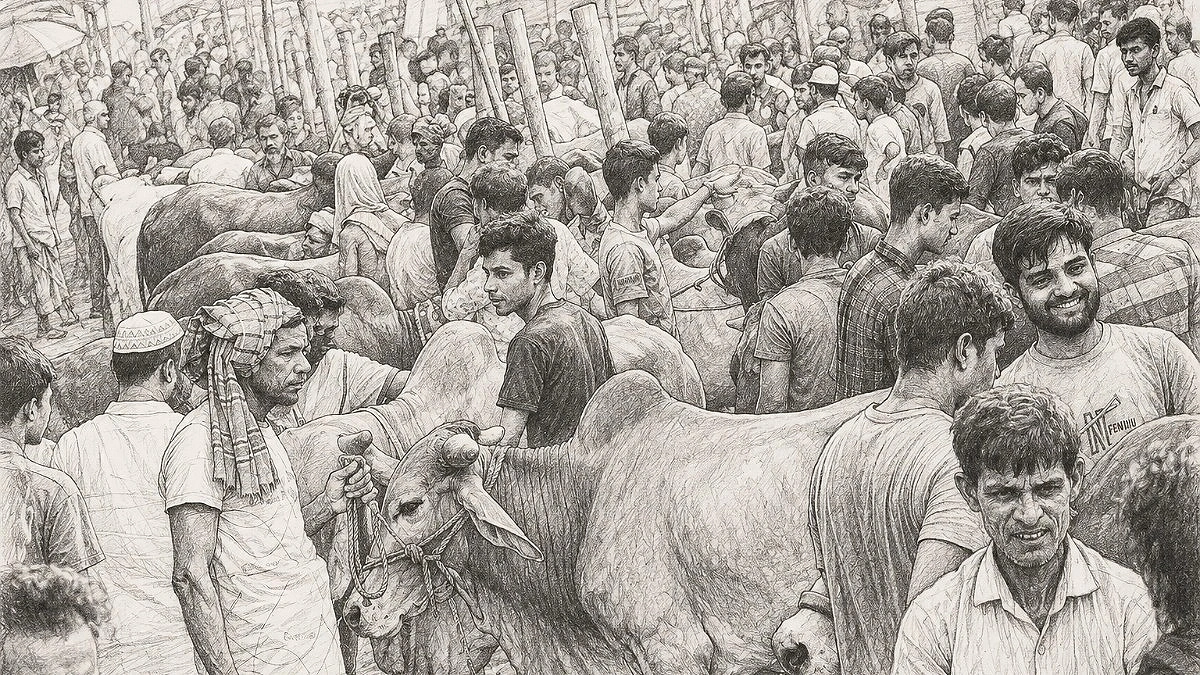
Running around, pushing and shoving, scrambling for space under tarpaulins. This was the scene yesterday, Sunday, around 4:30 pm at the cattle market on the Tejgaon Polytechnic Institute ground, when heavy rain suddenly poured across the capital. Most people won the battle for shelter, but hardly anyone spared a thought for the helpless animals. The attitude seemed to be that animals do not really suffer from sun or rain.
When the rain eased after a while, people left the tarpaulins and returned to stand beside their soaked animals. Their reasoning was simple: supply is higher this time, prices are higher, and so are expectations. These expectations are cited by both the buyers and thr sellers. Sellers hope to sell at higher prices, while buyers hope to purchase animals at lower rates. Traders said sacrificial animals are arriving day and night by truck from different parts of the country. About 6,000 animals have been brought to the Tejgaon market this year.
The picture is much the same at the cattle market in the Mirpur Eastern Housing area. The market has spilled beyond its designated space, with long lines of animals stretching onto nearby roads. The supply of animals there is also very high.
In South City Corporation’s Banasree–Demra Road area, the cattle market is known as Mostomajhi. A visit there yesterday afternoon showed a vast field packed with animals, though the lines had not yet extended onto the roads.
Every cattle market in Dhaka is filled with bargaining, loud calls from traders, and the sounds of animals. Overall, the capital’s sacrificial animal markets can be summed up in three key words this year: abundant supply, high prices, and strong optimism among farmers and traders. However, brisk sales have not yet begun. Almost every trader said the same thing: considering it is the first day of official trading, sales are virtually nonexistent. Sellers are present, animals are plentiful, but buyers are scarce.
Despite the low number of buyers, the number of animals is higher than usual, and prices are also much higher. Sellers said that compared to last year, the price of a 200 to 250 kilogram cow has increased by around 50,000 taka. The price of a one-ton cow has risen by 200,000 to 400,000 taka. Traders blame the sharp rise in cattle feed prices. The cost of bran, oil cake, and straw has increased by about one and a half times over the past year. Added to this are transportation costs and market fees. Without higher prices, they say, losses would be inevitable.
Market analysts, however, believe that because supply is so high, prices may come down to a more reasonable level in the final two or three days before Eid, when buyer pressure increases. They also expect higher numbers of sacrificial offerings this year due to the presence of a political government. Government offices are closed from today, Monday, which traders believe will help the markets pick up momentum.
To manage the large crowds at the markets, Dhaka North and South City Corporations have arranged special security measures and CCTV surveillance.
