

Oil rallies sharply as US military action in Iran threatens fragile truce

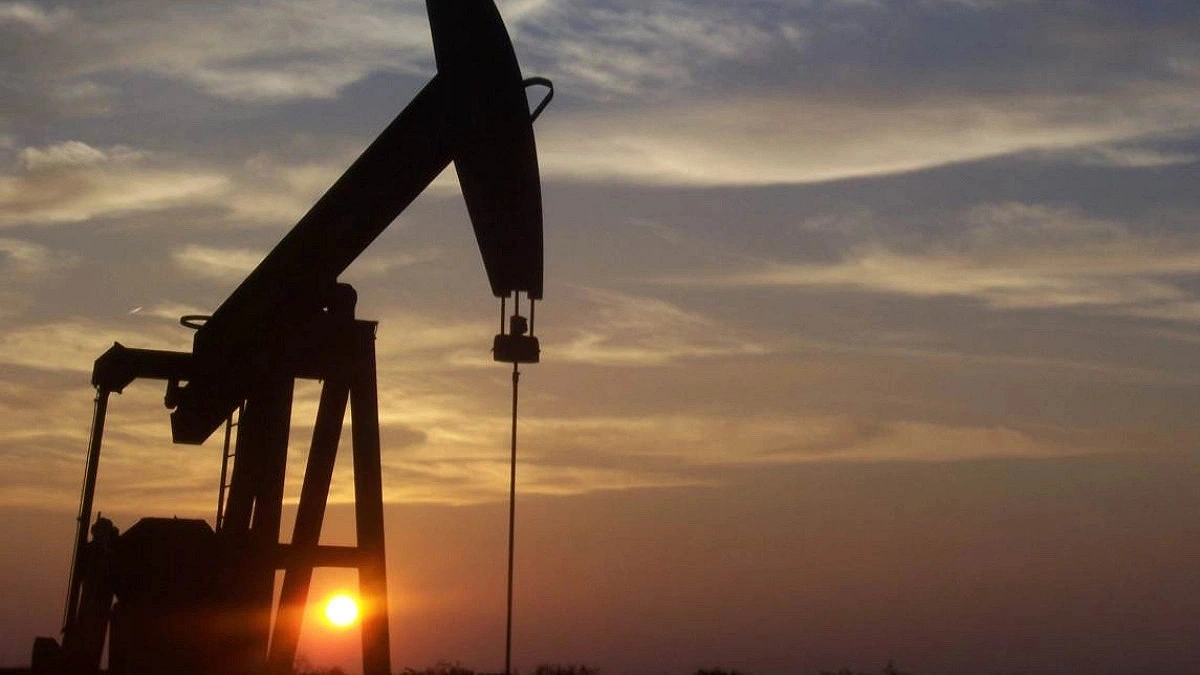
Representational image. Courtesy: Wikipedia.
Global oil prices reversed their recent downward trend on Wednesday, spiking sharply after the United States launched military strikes against Iran and reinstated oil sanctions, casting doubt over a tentative ceasefire that had briefly calmed energy markets.
The international benchmark, Brent crude, jumped as much as 3% during trading, briefly surpassing $76 a barrel for the first time in a fortnight. By 04:00 GMT, September futures were trading at $76.07—the highest level recorded since June 23.
The market upheaval followed twin escalations from Washington. The US carried out airstrikes on Iranian installations and concurrently withdrew a temporary 60-day sanctions waiver on Iranian crude exports. The moves came in direct response to assaults on three commercial ships in the Strait of Hormuz, an incident for which US, Qatari, and Saudi officials have squarely blamed Tehran.
In a statement posted on X, US Central Command confirmed it was "launching a series of powerful strikes against Iran to impose heavy costs for targeting and attacking commercial shipping crewed by innocent civilians in an international waterway."
While Iranian authorities have not formally claimed responsibility for the vessel attacks, they have consistently warned that unapproved transits through the strategic waterway would face consequences. The repeal of the sanctions exemption prompted a sharp rebuke from Tehran. Iranian Deputy Foreign Minister Kazem Gharibabadi declared that his government would take "decisive actions to safeguard its national interests and security," condemning Washington's decision as a "blatant violation" of the bilateral memorandum of understanding (MoU) signed on June 17.
Commenting on the escalating tensions, Tony Sycamore, a senior market analyst at IG Australia, noted that the June agreement had deliberately left key issues ambiguous. He pointed out that the MoU failed to settle the long-standing dispute over whether the Strait of Hormuz is classified as an international waterway or falls partly under Iran's territorial jurisdiction.
Sycamore further suggested that the outlook remains highly uncertain. "It remains to be seen whether this morning’s US strikes bring a swift end to the latest escalation or Iran elects to continue flexing its leverage over the Strait with actions that fall short of triggering a broader conflict," he wrote in a client note on Wednesday. He added that, at a minimum, the heightened geopolitical risk will keep traders on edge and strongly suggests that crude prices have established a floor for the time being.
The military action on Wednesday followed a separate announcement late Tuesday by the US Treasury Department, which formally revoked the 60-day sanctions waiver on Iranian oil sales.
As part of its broader diplomatic outreach to Tehran, the Treasury Department had granted a temporary authorization last month, allowing Iranian oil sales to continue through August 21. However, a notice now posted on the department’s website confirms that this permission has been abruptly revoked—effective after 12:01 AM EDT (04:01 GMT) on July 17, all such transactions will be strictly prohibited.
The updated directive goes further by retroactively canceling clearance for any new deals—whether involving purchases or loading operations—that were initiated after Tuesday.
Looking ahead, Saul Kavonic, who leads energy research at MST Marquee, predicts that crude prices will stay buoyant in the near term. He attributes this outlook to two converging factors: persistent hazardous conditions in the strait and the gradual phase-out of emergency oil stockpile releases. Speaking to Al Jazeera, Kavonic warned that Iran is fully determined to tighten its grip over the Strait of Hormuz over the coming weeks. He argued that such a move would be wholly unacceptable to the United States, many Gulf states, and global buyers, potentially keeping transit volumes through the strait below 50% of pre-war levels for months on end, punctuated by intermittent eruptions of hostilities.
(Source: Al Jazeera)

