


Factories shut due to gas crisis, hundreds of crores taka worth of fabric rotting

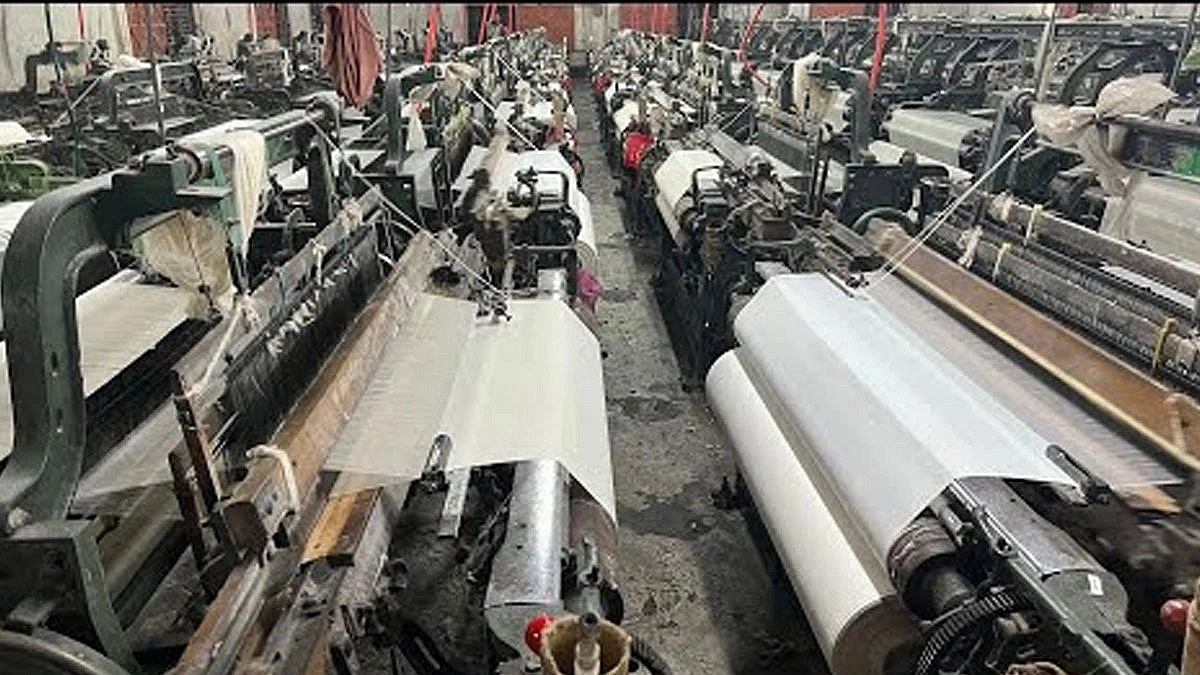
Collected Photo
Due to a severe gas crisis, factories have remained shut, and businessmen are already bearing heavy losses. On top of that, the rotting of materials has become a fresh disaster. With production halted, fabrics, apparels, and various other materials are rotting and spoiling inside industrial establishments. This has doubled the losses and suffering of industrial owners in Narsingdi, known as the industrial city.
In dyeing and printing factories, crores of taka worth of fabric are rotting away. Over the past month, the total loss has reached approximately Tk 100 crore. A visit to Madhabdi in Narsingdi on Wednesday morning revealed a shocking scene. At the dyeing and printing section of Tithi Textile Mills in the upazila, 250,000 yards of fabric were found spoiled inside machines due to a combination of water and chemicals. Similar scenes are visible in almost every dyeing and printing factory in the district. Three days ago, when gas pressure dropped during ongoing production, the machines shut down, leaving the fabrics in that state. The fabrics inside the machines have already been ruined.
It is learned that the dire situation for businessmen in Narsingdi due to the gas shortage shows no sign of improvement. With factories closed because of the gas crisis, businessmen are facing multifaceted losses. Especially in the district's dyeing and printing factories, sarees, three-pieces, muslin fabrics, and bedsheets are rotting. Even the grey fabrics that had been soaked in water and processed with chemicals for production are rotting on the floors, emitting a foul odor.
Factory technicians claim that after chemical processing of grey fabrics, the process must be completed within 16 hours. In some factories, gas pressure has been at zero PSI for three to four days, rendering machines completely inoperable. As a result, crores of taka worth of chemical-soaked fabrics are rotting away. This is impacting the local market, driving up fabric prices. On the other hand, there is a risk of export orders being canceled.
Giash Uddin, DGM of Tithi Textile Mills, said, "Our mill's wheels have not turned for three days. And over the past month, we could only run the factory intermittently. Three days ago, the gas connection was completely cut off. We cannot start the boilers, so the machines are shut down. About 250,000 yards of wet fabric with chemicals are lying there, all rotting. The fabrics will no longer be usable. Meanwhile, buyers are turning away from us. We will have to pay penalties on every fabric. Our exports have also stopped."
Meanwhile, Pranab Kumar Shah, Managing Director of Tithi Group, lamented, "I don't know what to do. On one side, there are bank debts; on the other, extreme discontent among workers. Workers cannot work but are demanding wages. If we cannot produce and sell fabrics, how will we pay workers' wages, electricity and gas bills, and bank loans? The government should think about us. Otherwise, we will have to close down our businesses. We want the government to resolve the gas problem quickly."
Momen Molla, Vice President of the Bangladesh Textile Dyeing and Printing Mills Association, said, "There are over 200 dyeing and printing factories in Narsingdi, both large and small. In each, between 200,000 and 500,000 yards of fabric have already been spoiled. The fabrics are mixed with water and chemicals, and there is a specific time frame for processing. If there is no gas day after day, the fabrics will inevitably rot. Just in the dyeing sector alone, our current loss exceeds Tk 100 crore."
In the past month alone, over one crore yards of fabric have rotted in Narsingdi's dyeing and printing factories, with an estimated value of hundreds of crores of taka. According to Maqsudur Rahman, Manager of Narsingdi Titas Gas Transmission and Distribution, following government directives, gas is being supplied at a priority basis with 200 pressure to the Ghorashal Polash Urea Fertilizer Factory. After supplying to the fertilizer factory, the remaining gas is distributed to CNG stations, factories, and households. Even though there are over 200 dyeing and printing establishments of various sizes here, they are not receiving the necessary gas supply.

