
Iran War sends coal market booming

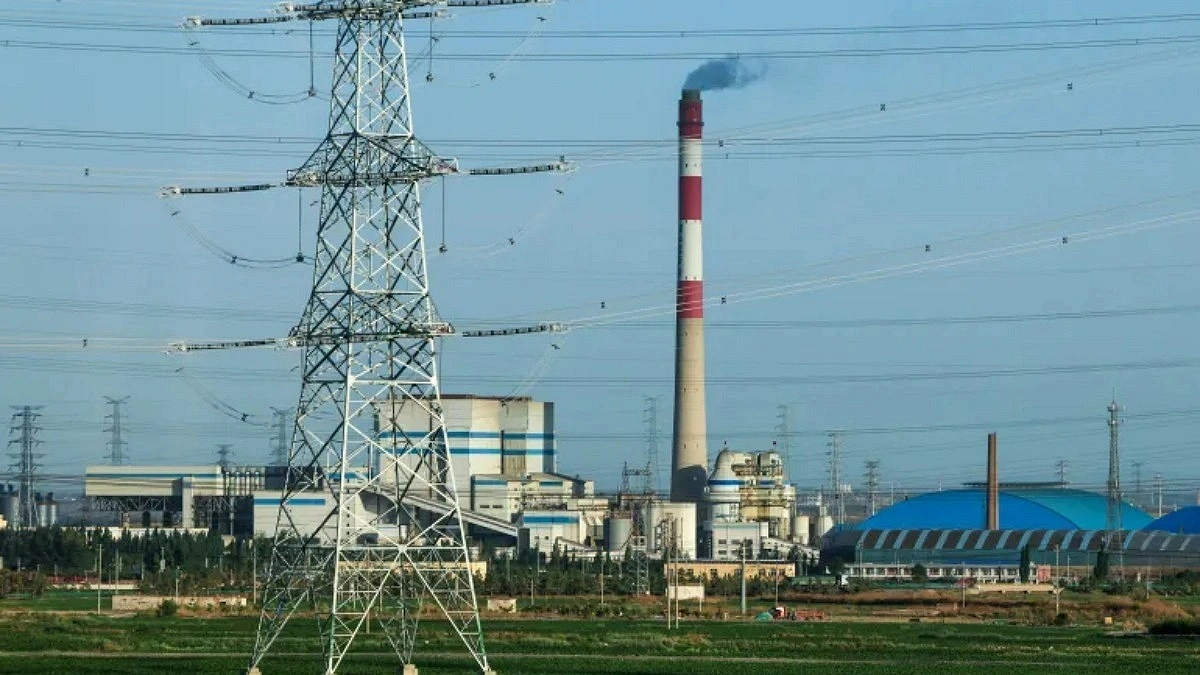
A coal fired power plant and high voltage electricity transmission towers in a field in Baotou, Inner Mongolia Autonomous Region, China. Photo: Reuters
The Iran war has severely disrupted global supplies of crude oil and natural gas. But one energy sector is benefiting from the crisis. That sector is coal.
Although coal is readily available and relatively inexpensive, it is one of the most polluting fossil fuels. Coal mining causes water pollution. When burned, it releases huge amounts of carbon into the atmosphere, contributing to global warming.
Despite this, several countries have backed away from pledges to reduce coal use in recent months. Some have delayed those plans. The trend is most visible in Asia.
According to World Bank data, global coal consumption increased in 2025. The Eurasia region and the United States increased coal use to supply electricity to data centers supporting artificial intelligence.
South African power generation company Thungela Resources said its profit doubled in the first six months of this year because more countries are being forced to buy coal as a result of the war.
Why is coal use increasing?
Soon after attacks began in Tehran on February 28, Iran closed the Strait of Hormuz. During peacetime, about one fifth of the world’s oil and liquefied natural gas, or LNG, was transported through this route.
Talks are underway to reopen the strait. However, the ongoing instability in the Middle East has created an energy crisis around the world.
The closure of the Strait of Hormuz has reduced oil and gas supplies and pushed up oil prices. As a result, many countries have turned to coal as the most readily available alternative fuel to keep power generation running.
This has also pushed up coal prices. However, coal is still much cheaper than oil. At the same time, coal remains readily available.
Asia has been affected the most. Countries in the region are heavily dependent on the Gulf region for energy.
According to data from the US Energy Information Administration, about 82 percent of the oil and gas that passed through the Strait of Hormuz in 2022 went to Asia. The main destinations were China, India, Japan and South Korea.
The war has not only disrupted the transportation of goods through the strait. Energy infrastructure in Gulf countries involved in the conflict has also been damaged by Iranian attacks.
In March, Qatar was forced to declare force majeure on its energy supply contracts. This means the country has been unable to supply LNG to various countries as required under its contracts.
The decision was made after an Iranian drone attack damaged Qatar’s Ras Laffan energy facility. It is one of the world’s largest liquefied natural gas facilities.
The facility was shut down after the attack. Qatari government officials said that by March, Iranian attacks had halted 17 percent of the country’s LNG exports.
Various energy facilities in the United Arab Emirates were also attacked, including the Das Island LNG terminal, the Fujairah oil terminal and the Ruwais refinery complex. Facilities in Saudi Arabia and Oman were also targeted.
Which countries have increased coal use?
According to an analysis by energy data organization Ember, in the worst case scenario, global coal production could increase by 1.8 percent at the end of 2026 compared with 2025.
Experts say this is a significant change because many countries have already pledged to reduce coal use and shift toward renewable energy.
After the war began, several Asian countries announced plans to increase coal fired power generation.
To address the energy crisis, Japan has relaxed restrictions on older and more polluting coal fired power plants. South Korea has also delayed plans to shut down several coal fired power plants that it had pledged to close by 2040.
In Bangladesh, the government initially introduced load shedding to address the electricity supply shortage. It also imposed limits on fuel sales for vehicles. Later, the government announced plans to increase coal fired power generation.
Thailand, the Philippines and Vietnam have also increased coal fired power generation to preserve declining gas reserves.
According to data from Pakistan’s national electricity regulator, electricity generated from imported coal increased by 90 percent in July compared with the same period a year earlier.
China and India already account for nearly 70 percent of global coal consumption. They are also major producers.
Electricity demand is increasing in India because of severe heat waves. Meanwhile, the government is planning to launch several new coal mining projects. According to Global Energy Monitor data, if these projects come into operation, they could add another 2.5 billion tons of coal to the global annual supply.
Germany has also said it will not put electricity generation at risk because of its previous climate commitments. Italy has delayed its plan to phase out coal use as well. Instead of phasing out coal by the end of 2025, the country has now set a target of 2038.
Who is benefiting from coal?
Indonesia is the world’s largest coal exporter, followed by Australia and Russia.
In March, Indonesia canceled its previous plan to reduce coal production. Instead of cutting excess supply, the country decided to increase production to take advantage of higher prices.
In July, the price of coal rose to $131.85 per ton. The price was $102.20 per ton during the same period a year earlier.
South Africa’s Thungela Resources has also made significant profits. Its profit from January to June doubled compared with the same period in 2025.
The main reason was increased production at the Ensham mine in Queensland, Australia. At the same time, demand and prices for coal increased in both the Ensham and South African operations.
During the first six months of the year, amid the most intense period of the war, production at Ensham increased by 38 percent. Production rose to 2.2 million tons from 1.6 million tons during the previous period.
Thungela said a key measure of profitability in South Africa, earnings per share, was 4.80 South African rand. In June of the previous year, it was 1.92 rand.
In a statement, Thungela said coal prices could remain high for some time as European and Asian markets prepare for winter.
What impact is this having on efforts to shift to environmentally friendly energy?
At the 2021 United Nations climate conference, COP26, in Glasgow, more than 40 countries, including Indonesia and Vietnam, pledged to reduce coal use. India and China did not sign the pledge.
Last year, South Korea joined the Powering Past Coal Alliance. The alliance helps countries dependent on coal move away from the fuel.
However, the crisis in the Middle East has dealt a blow to these plans because many countries do not have enough renewable energy available as an alternative.
Nick Headley, an energy transition analyst at South Africa’s Zero Carbon Analytics, said, “In a country like Bangladesh, when global gas supplies are disrupted, it is easy to increase coal use. This is because the country has made major investments in coal-based infrastructure over the past few decades. Much of it had remained unused for a long time.”
He said, “When gas prices rise, coal becomes cheaper than imported gas. But the important point is that, in terms of cost, coal still cannot compete with renewable energy.”
However, the situation is not entirely discouraging. Analysts said that although coal use is increasing in some countries, it is declining over the long term in regions such as Europe.
Coal production in China has also declined this year. After 82 people were killed in a devastating explosion at the Liushenyou coal mine in May, the government increased oversight of the mining sector. At the same time, Beijing is making major investments in renewable energy.
Headley also said the disruption in fossil fuel supply chains around the world could make clean energy more competitive. This could force more countries to invest in clean energy.
According to him, “The lesson here is that Asian countries need to accelerate their shift toward clean energy and electrification to protect themselves from future global crises.”
Source: Al Jazeera (Adapted)
