


UGC's 8-language program includes Arabic and Japanese
- General people will also get opportunity

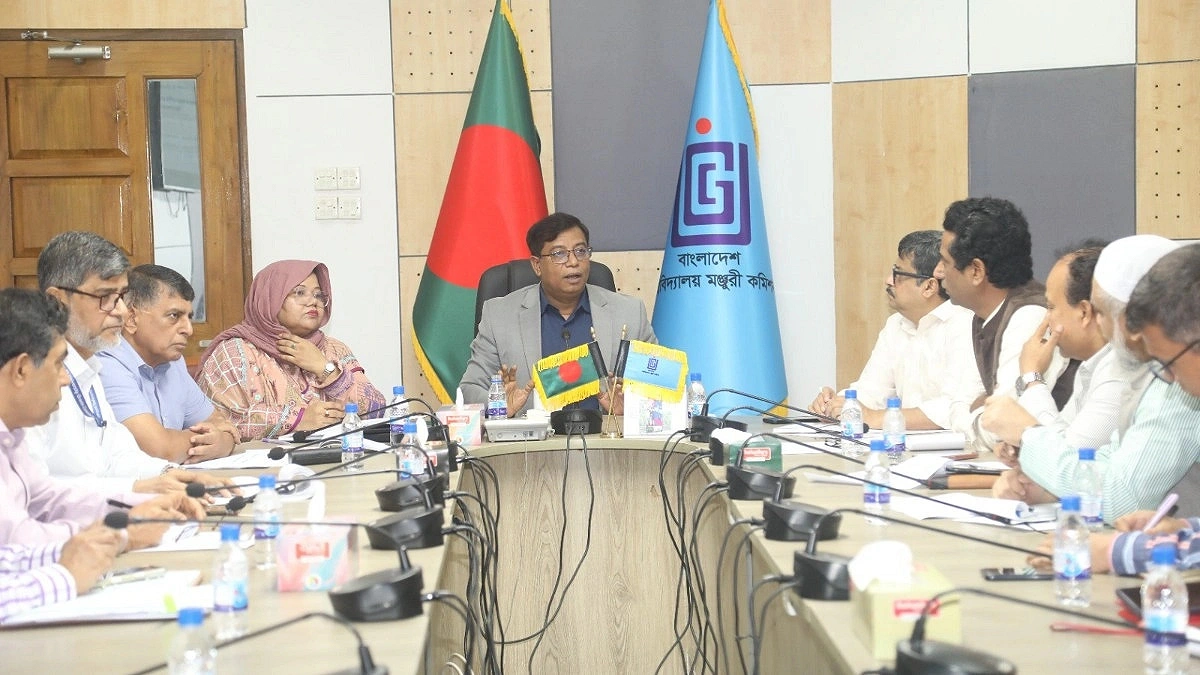
The UGC will soon formulate a unified policy and operational framework. Photo: Collected.
With the aim of enhancing students' skills and developing a competent workforce, the University Grants Commission (UGC) has taken an initiative to launch third-language education programs at 30 public and private universities across the country. The commission aims to start these programs by January 2027.
The decision was announced at a meeting held at the UGC on Wednesday, by the commission's Chairman, Professor Dr. Mamun Ahmed.
The UGC Chairman said that the plan is to teach students eight foreign languages as third languages, alongside Bengali and English. The program will include Arabic, Chinese, Japanese, Korean, French, German, Spanish, and Italian. However, in the initial phase, priority will be given to Arabic, Japanese, Korean, Chinese, and Italian.
To ensure that no region of the country's eight divisions is left out of this program, committees have been reconstituted for selecting universities, determining languages, and mapping necessary resources and locations. The program will be implemented based on the workforce demand of the respective regions, local people's interest, university capacity, and existing infrastructure.
The UGC Chairman said that alongside establishing new centers, the existing language teaching centers at 10 universities will be modernized. Among these, Dhaka University currently offers the highest number—13 languages. Strict monitoring will be ensured so that the program does not become commercialized and students can receive quality education at an affordable cost. Alongside regular university students, members of the general public will also have the opportunity to learn languages under the prescribed policy.
To sustain the plan, cooperation will be sought from foreign language experts and various institutions to create trained teachers. The UGC will soon formulate a uniform policy and operational framework for this education program, he added.
Professor Mamun Ahmed said that by analyzing data from the Bureau of Manpower Employment and Training (BMET) and other relevant information, the demand for specific languages in different regions will be identified. Based on this, it will be possible to create a practical mapping of demand-based language selection and university-specific activities.
The meeting was attended by UGC members Professor Dr. Masuma Habib, Professor Dr. Abdullah Al-Mamun, Professor Md. Mehedi Hasan Khan, Professor Dr. Md. Aslam Hossain, Professor Dr. Niaz Ahmed, UGC Secretary Dr. Md. Fakhrul Islam, along with heads of different commission departments.

