


Trump’s bizarre Iran war comments: A timeline of contradictions

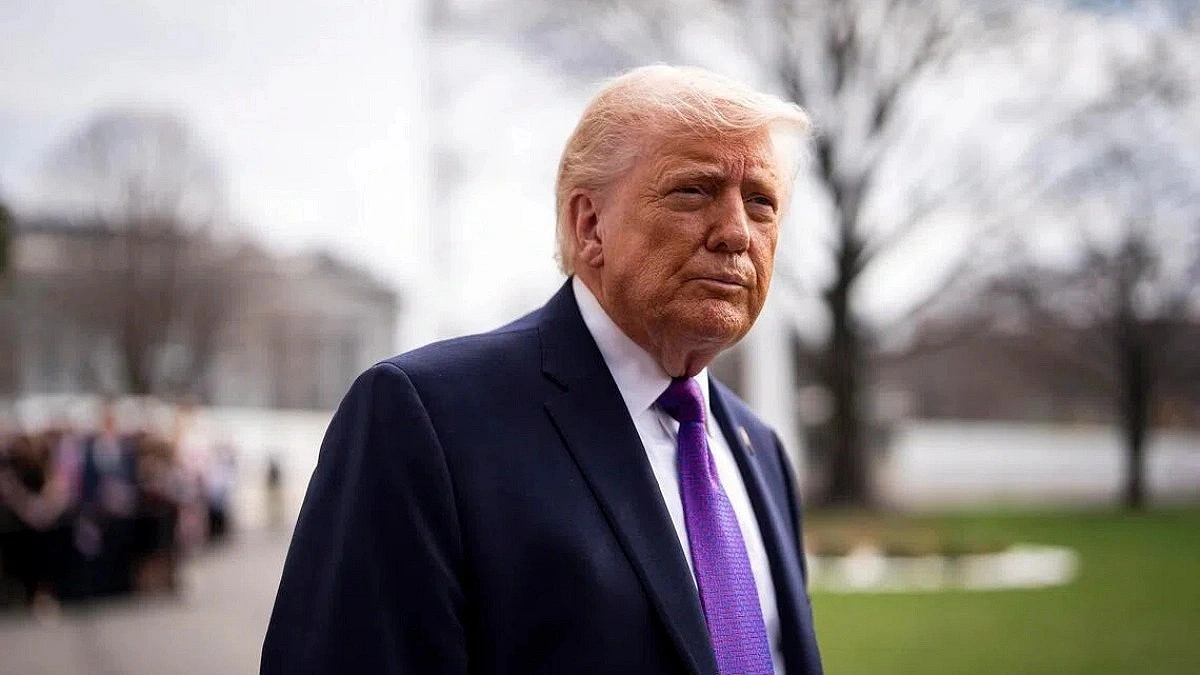
Photo: REUTERS
US President Donald Trump has recently delivered a series of unconventional remarks regarding the ongoing Iran war, ranging from threats of new conflicts to proposals for territorial expansion.
His commentary often appears detached from administrative messaging, including his recent suggestion to designate the Strait of Hormuz as a US territory. Critics note that his statements frequently oscillate between proposing unfeasible partnerships and attempting to create an alternate reality regarding the status of negotiations.
Trump’s shifting view of Iranian leadership
Trump’s assessment of Iranian officials has fluctuated wildly within short periods. At the G7 summit in France on 16 June, Trump described them as “very rational people” who are “not radicalized” and are “looking to help their country”.
However, after negotiations faltered three weeks later, he changed his tone at a NATO summit in Turkey, labeling those same leaders “cuckoo,” “evil,” and “scum”. During this shift, he accused them of constant deception, stating, “They lie. They cheat”.
Assertions of imminent deals and total compliance
Trump has repeatedly claimed that a resolution to the conflict is nearly finalized. On 17 April, he informed CBS News that Iran had “agreed to everything” the US requested, including the cessation of support for Hamas and Hezbollah and a permanent end to uranium enrichment.
Despite these claims, no evidence supports such an agreement, and a subsequent memorandum of understanding in June omitted these terms. As early as 7 April, Trump posted on social media that a deal was only two weeks away, remarking, “it is an Honor to have this Longterm problem close to resolution.”
To date, no such resolution has been reached, and Iran has continued to violate existing agreements.
Proposals for tolls and nation-building
Among his more unusual ideas, Trump suggested a “joint venture” with Iran to collect tolls from ships in the Strait of Hormuz. He told ABC News’ Jonathan Karl on 8 April, “It’s a beautiful thing,” despite Secretary of State Marco Rubio previously labeling such tolls “illegal”.
Despite his long-standing opposition to overseas nation-building, Trump suggested on 9 March that the US might “get involved with helping them rebuild their nation.”
Misrepresenting the scope of the war
Trump has also made inaccurate claims regarding the involvement of neighboring countries. On 9 March, he asserted that Saudi Arabia, UAE, and Qatar had joined the US in attacking Iran, saying, “The neighbors came on to our side and started attacking them.”
In reality, these nations have actively tried to stay out of the conflict. On that same day, Trump told CBS News, “I think the war is very complete, pretty much,” even though the war was only ten days old at the time. The conflict has now persisted for 172 days.
Contradictions on missile policy and aerial superiority
Trump’s stance on Iranian missiles has shifted from wanting to “raze their missile industry” to suggesting on 17 June that they have a right to some weaponry. He said, “In relative proportion, I think it’s OK,” arguing that “missiles aren’t the problem” because “they don’t blow up the planet”.
Regarding military control, Trump and Defense Secretary Pete Hegseth claimed total dominance over Iranian airspace. Even after Iran downed two US jets in April, Trump insisted in June, “We now have complete and total control of the skies over Iran.”
However, following these claims, the administration secretly diverted Trump to a smaller aircraft in Turkey due to fears that Iran could target Air Force One.
The fight for the Strait of Hormuz
Trump continues to insist that the US maintains “total control” of the Strait of Hormuz, saying on Wednesday, “We own it.” He has even supported the idea of making the waterway a US territory, adding on Monday, “I like the idea of declaring it a territory.”
This proposal stands in contrast to his usual rhetoric against “forever wars,” as maintaining such a territory would require a permanent military presence.
Threats against a historic partner
In a recent interview with Fox News’ Trey Yingst, Trump issued a blunt warning to Oman, a country that has historically mediated between the US and Iran. He threatened, “If Oman gets in the way, we’ll bomb the sh*t out of them.”
This threat appears to contradict a previous document signed by Trump, which empowered Oman to lead dialogues regarding future maritime services in the Strait of Hormuz.
Source: CNN (adapted)

