
Trump's 'Open' Strait of Hormuz sees only a handful of ships

Reuters File.
One side says the negotiating table is now empty. The other says the door to dialogue is not closed, but not by bowing down. Caught between these two positions is the Strait of Hormuz, one of the world's most critical energy routes. US President Donald Trump made it clear on Tuesday that no negotiations are currently taking place with Iran, and no new meetings are scheduled. At the same time, he claimed that the Strait of Hormuz is open and operational. Tehran, however, immediately responded that the waterway will not open for normal shipping unless the United States adheres to the terms of the interim agreement reached in June.
The 60-day deadline for the agreement signed between the US and Iran in June ended on Monday. However, no long-term deal was reached to halt nearly six months of conflict. Instead, the diplomatic deadlock has deepened further after the deadline expired. A senior Iranian official stated that following the failed negotiations, Tehran is now moving toward a militarily "fully offensive" posture. However, no fresh attacks between the two sides were reported on Tuesday.
On his social media platform Truth Social, Trump wrote that there are no ongoing negotiations or conversations with the Islamic Republic of Iran, and nothing is scheduled. In the same post, he claimed that the US naval blockade against Iran is fully effective and that the Strait of Hormuz is "open and operational." He also asserted that all sea mines there have been removed or disabled through controlled explosions.
However, Trump's statement does not entirely align with recent comments from his own administration. Just one day earlier, on Monday, his son-in-law and special envoy Jared Kushner had stated that negotiations with Iran were still ongoing and were likely more active than ever before. Trump's remarks on Tuesday effectively poured cold water on that optimism.
Two conflicting claims over Hormuz
At the heart of this deadlock lies the Strait of Hormuz. Before the war, about one-fifth of the world's seaborne crude oil and liquefied natural gas passed through this narrow waterway. After the war began in February, Iran severely restricted shipping. Washington, in turn, imposed a naval blockade on Iranian ports and vessels.
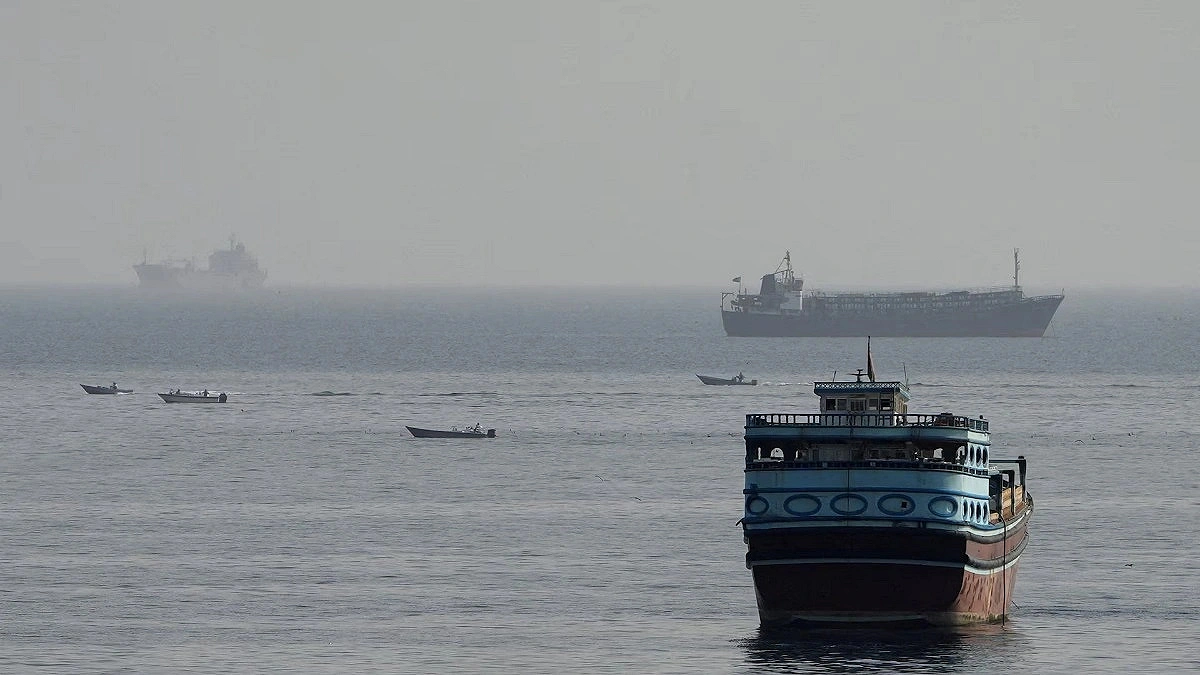
Although Trump claims the strait is operational, actual shipping data paints a different picture. Preliminary maritime data shows that the number of ships passing through Hormuz on Monday did not even reach double digits. This means the strait remains effectively severely paralyzed compared to normal commercial traffic before the war.
Iran's top negotiator and Parliament Speaker Mohammad Bagher Ghalibaf has stated that Hormuz will remain closed until the US implements the terms of the interim agreement signed in June. Tehran's demands include lifting the US blockade on Iranian ports, removing sanctions on oil exports, releasing Iran's frozen funds abroad, and ceasing all military operations and threats on all fronts.
The agreement signed on June 17 had allowed 60 days to resolve major disputes, including Iran's nuclear program and US sanctions. It also called for an "immediate and permanent" cessation of military operations on all fronts. However, due to disputes over control of the Strait of Hormuz, the agreement quickly weakened. After the 60-day period ended on Monday, Trump stated that he has no plans to extend it.
New Attack at Sea, Tensions Also Rise with UAE
On the very day of Trump's claim that "Hormuz is safe," new concerns emerged on the maritime route. The UK Maritime Trade Operations (UKMTO) reported that on Tuesday, a vessel was damaged by an unidentified projectile while departing the Strait of Hormuz. The ship's engine room sustained damage, and one crew member was injured. Oman's Coast Guard is assisting the remaining sailors. Tehran has not made any immediate comment on the incident.
On the same day, the United Arab Emirates announced that it had detected two ballistic missiles fired from Iran. The country's Defense Ministry claimed that the missiles were aimed at maritime shipping lanes, but both fell into the sea. Iran's Foreign Ministry spokesman, Esmaeil Baghaei, rejected the allegation as "baseless."
Subsequently, citing regional tensions, the UAE suspended all commercial activities, exchanges, and financial transactions with Iran until further notice. Direct maritime trade between the two countries had already ceased in March, just days after the war began. Later, in late June, cargo transport had resumed through Dubai's Jebel Ali port. The new decision has now cast uncertainty over even that limited return to normalcy.
"Negotiation Does Not Mean Surrender"
Although Trump says no talks are taking place, Tehran is not entirely closing the door to diplomacy. Mohammed Mokhber, an adviser to Iran's supreme leader, said on Tuesday that Iran remains ready for dialogue with the United States. However, Tehran does not equate negotiation with surrender. He stated that military pressure or sanctions cannot break Iran's position—Iran does not seek war, but it will protect its security, dignity, and allies.
Oman, meanwhile, is attempting to forge a separate arrangement over Hormuz. Tehran and Muscat have been discussing a new or temporary shipping route for several weeks. Iran has previously made it clear that even if that arrangement is finalized, it would not mean the full Strait of Hormuz would be opened normally—the US must first fulfill the other conditions.
This initiative has also created friction between Washington and Muscat. The Trump administration views Oman's proposed arrangement as excessive concessions to Iran. On Monday, Trump even threatened military action against Oman if it obstructed the US path over the Hormuz agreement.
The Shock of War Hits the Oil Market Too
The conflict, which began on February 28 with joint US-Israeli strikes, has now dragged on for nearly six months. During this time, thousands of people have been killed, the vast majority of them in Iran and Lebanon. In retaliatory operations, Iran has struck US military bases and various infrastructure sites in Oman, Jordan, Kuwait, Israel, the United Arab Emirates, and Saudi Arabia.
The most visible international impact has been felt in the energy markets. In the midst of the war, the international benchmark Brent crude oil at one point surged to $126 per barrel—roughly 75 percent higher than its pre-war price. Although it had eased slightly to just above $91 by Tuesday, waning hopes for a quick deal have once again heightened anxiety in the market. The effects are not limited to fuel prices alone; they are also feeding into inflation, stock markets, and borrowing costs for major economies.
Washington has also made it clear that if diplomacy does not progress, economic pressure could intensify further. A US administration official said that the President still has many tools at his disposal to squeeze Iran's economy. That too is a major concern for Tehran's leadership. A prolonged war, sanctions, and the rising cost of living could stoke fresh discontent within the country.
Just two months ago, on June 17, the agreement had seemed like a possible bridge to ending the war. But by August 18, both ends of that bridge appear to be drifting apart once again. Trump says there are no negotiations; Tehran says Hormuz will not open unless its conditions are met. In between, the global economy is watching that narrow waterway.
In the blue waters of Hormuz, therefore, it is not only oil tankers that are waiting, but also a political decision. Yet the latest rhetoric from Washington and Tehran suggests that before any ship can set sail toward peace, the anchors of both sides remain deeply entrenched.
