

BBS mega projects led by non-technical project directors

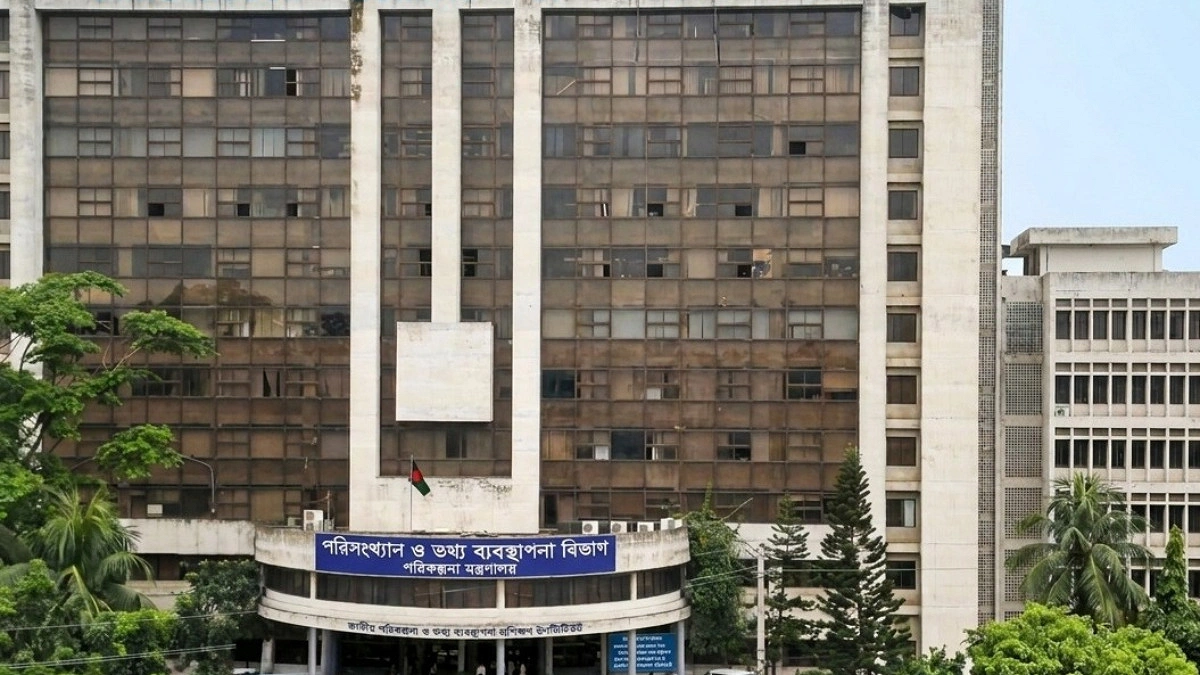
BBS Bhaban image regenerated by AI.
Non-technical officials are being appointed to lead highly technical projects at the Bangladesh Bureau of Statistics (BBS), raising concerns over delays, inefficiencies and rising costs.
According to officials familiar with the matter, senior bureaucrats from the administration cadre are increasingly being appointed as project directors (PDs) for BBS's major statistical projects, despite lacking specialised expertise in statistics. They warn that the absence of technical leadership is slowing implementation, creating operational complications and increasing the risk of cost overruns and project extensions.
The appointments have also left experienced BBS professionals, who have spent years building expertise in statistics and survey management, with limited opportunities to lead major projects.
Officials say census and survey activities are highly technical in nature and require experienced leadership to ensure quality implementation and timely completion.
Former BBS Director General Md Matiur Rahman said statistics is a specialised field that cannot be managed in the same way as other government sectors.
"You cannot simply bring someone from another ministry, assign them responsibility and expect quality results," he told Agamir Somoy. "Project directors, director generals and secretaries should be appointed based on their background in statistics. If someone who does not understand statistics is made a project director, implementation problems are inevitable."
Drawing on his experience, Rahman also criticised the organisational structure of the BBS. He noted that the agency operates under a single department in one building, yet has both a secretary and a director general performing largely overlapping responsibilities.
"It is like having two tigers in one forest," he said, adding that the arrangement prevents the organisation from functioning effectively and should be reviewed by the government.
Sources said that for large projects, the Ministry of Finance's manpower approval committee informally requires project directors to be appointed from among Grade-III officials. Since BBS directors hold Grade-IV positions, they are often ineligible to lead projects despite their extensive technical experience.
One example is the ongoing Economic Census project, which is headed by Dr Dipankar Roy, a Joint Secretary from the Ministry of Public Administration. Although he has worked at the BBS for many years, his appointment was made under the administration cadre.
Another major initiative, the World Bank-funded Statistics Capacity Enhancement and Modernisation Project, has a budget of Tk 10.96 billion. It is being led by Joint Secretary Fazle Azim, also appointed from the administration cadre. According to sources, implementation of the project has progressed very slowly.
According to a BBS source, the project was allocated Tk 300 million in the last fiscal year but managed to spend only Tk 50–70 million, with the remaining funds returned to the government.
The project is scheduled for implementation between June 2025 and June 2030. Its objective is to enhance the transparency, reliability and accessibility of official data, thereby strengthening accountability in government operations.
Meanwhile, the proposed Tk 4.5 billion SVRS project, which is currently awaiting approval, is also expected to be headed by a Grade-III official. If approved, it will mark the first time since the programme began in 1980 that a project director from the administration cadre will lead the initiative, leaving long-serving BBS professionals without the opportunity to head the project.
Several district-level BBS officials told Agamir Somoy that major projects are implemented more effectively when project directors are appointed from within the bureau. They said BBS officers have well-established working relationships with field staff, something administrators appointed from outside the organisation often lack. As a result, coordination problems and operational difficulties frequently arise during project implementation.
Officials also pointed to the National Household Database (NHD) project as a cautionary example of the challenges associated with appointing non-technical project directors.
The project aimed to build a nationwide database on the socio-economic conditions of households to identify genuinely poor families and improve the targeting of government services.
Its total budget was Tk 7.72 billion, including a World Bank loan of Tk 6.868 billion and Tk 405.2 million from the government's own funds.
Administrative cadre officials were appointed to several key positions in the project, including project director and assistant project director. According to officials, the project was later marred by allegations of irregularities, corruption and mismanagement.
An Indian company, Xerox, was contracted to implement the project and recruited 545 data entry operators. However, the company allegedly failed to pay their salaries and allowances. Officials also claimed that much of the data collected was inaccurate.
According to BBS sources, the contractor received Tk 1.124 billion after making only partial corrections to data in 14 districts while leaving data collection incomplete in the remaining 50 districts. The company subsequently ceased work, leaving the project unfinished and resulting in what officials describe as a substantial waste of public funds.
Meanwhile, the data entry operators have continued protesting over unpaid wages and demanding that their project-based positions be converted into permanent government posts. The dispute has also reached the courts.
The National Household Database project is now widely regarded within the BBS as one of the agency's most unsuccessful initiatives.

