

Pickpocketing Through Light, Even Stale Products Look Fresh!

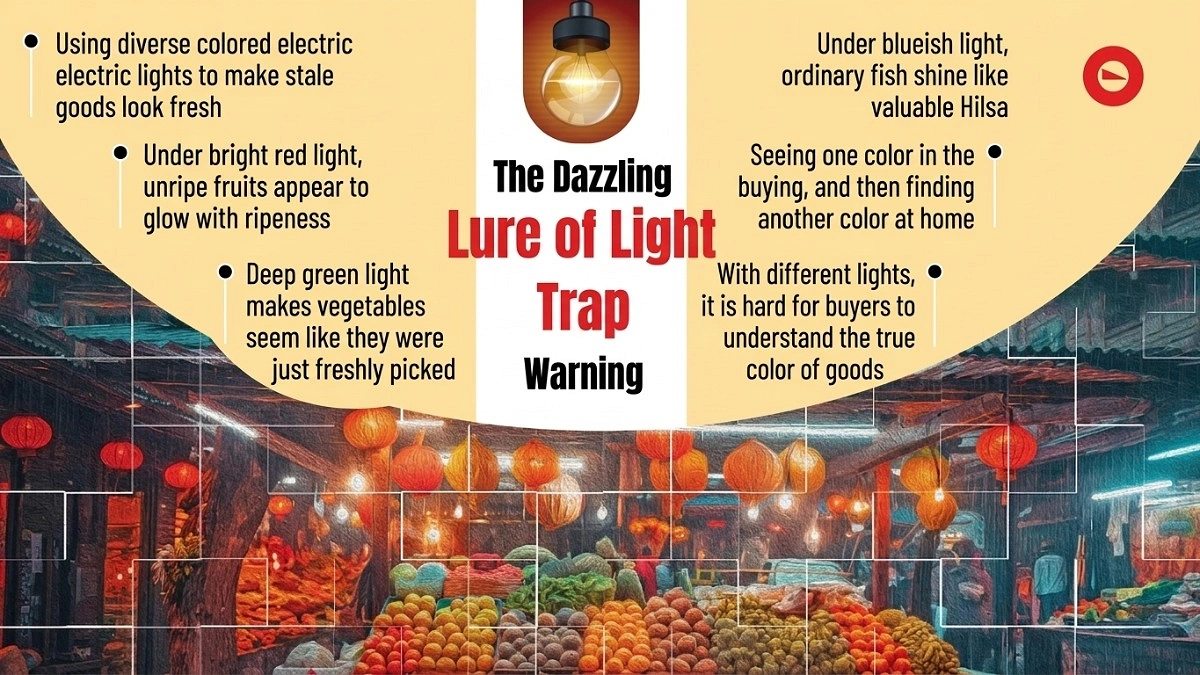
Graphics: Agamir Somoy generated by AI
A strange play of light catches the eye as soon as one enters a local market. Mangoes, potatoes, and apples glow under bright red lights. Vegetables placed beneath deep green lighting appear as if they have just been harvested. Even ordinary fish under bluish lighting sparkle like fresh hilsa. What may seem like an ordinary marketing tactic at first glance actually hides a new form of deception. Sellers are increasingly using colored electric bulbs to make stale, rotten, or low-quality products appear fresh, misleading customers who fail to understand the actual quality and color of the goods. This scene is now common in most cities and towns across Bangladesh, including the capital, Dhaka.
To deceive buyers, specific colors of light are being used for specific products. In fish markets, blue or bluish-white lights are used to make fish look fresh and shiny, making even days-old fish appear fresh under ice. Buyers often check a fish’s gills to determine freshness, but under red lighting, the gills appear much redder than they actually are.
In vegetable markets, dark green, red, or blue lighting is used to make vegetables and green chilies appear fresher. Fruit sellers use yellow, red, or orange bulbs to make fruits look ripe and attractive, making even unripe fruits seem tempting.
This deceptive lighting trick has also spread to spice and produce markets. For potatoes, white lights are used for white potatoes and red lights for red potatoes. Onion sellers often use reddish lighting to conceal loose skins and rotten spots.
One of the country’s largest wholesale and retail markets for daily essentials, Karwan Bazar in Dhaka, reveals how widespread this practice has become. Conversations with traders there suggest that the lighting is mainly used to hide product flaws.
Papaya seller Shamsul Mia said that papayas often get scratches and marks during unloading from trucks. “When green lights are turned on, the marks are no longer visible. Without the lights, customers avoid buying blemished papayas,” he explained.
Onion trader Saruj Ali shared a similar view. He said onions often have loose skins after being taken out of sacks, but colored lighting helps hide these imperfections. “Without the lights, customers get annoyed and refuse to buy,” he added.
Mizan, who has been selling potatoes for 15 years, said sellers previously used ordinary lighting. However, after seeing others increase sales using colored lights, he also switched to white lighting for white potatoes and red lighting for red potatoes. “Now almost everyone in the market follows the same method,” he said.
Customers Discover the Truth at Home: Consumers are being regularly deceived by this lighting trap. Products that look one way in the market often appear entirely different once brought home. Many buyers are unaware of the reason behind the use of colored lights.
Amirul Islam, a customer buying potatoes, said, “I never thought about why different colored lights were used. I assumed they were just for visibility. I didn’t even notice that the lights were different colors.”
Another shopper, Shanto Mia, expressed frustration: “Products look one way in the market but completely different at home. Fish causes the biggest trouble. The gills look red in the market, but after bringing it home, they turn out darkish. What seemed fresh turns out to be stale. There’s no way to return these items afterward. Only white lighting should be allowed in markets.”
When Agamir Somoy contacted Assistant Director Abdul Jabbar Mondal of the National Consumer Rights Protection Directorate regarding measures to stop this open deception, he declined to comment and suggested speaking with senior officials. Repeated attempts to contact Director General Faruk Ahmed by phone were unsuccessful, as his number remained switched off.
Consumers are demanding immediate action, including mobile court drives to stop the use of deceptive colored lighting in markets. They warn that unless action is taken, ordinary people will continue paying for stale and substandard products under this illusion of freshness.

