

National Professor Dr. A K Azad Khan
'Gastroenterologists from every country in the world know my name'

Collected Photo
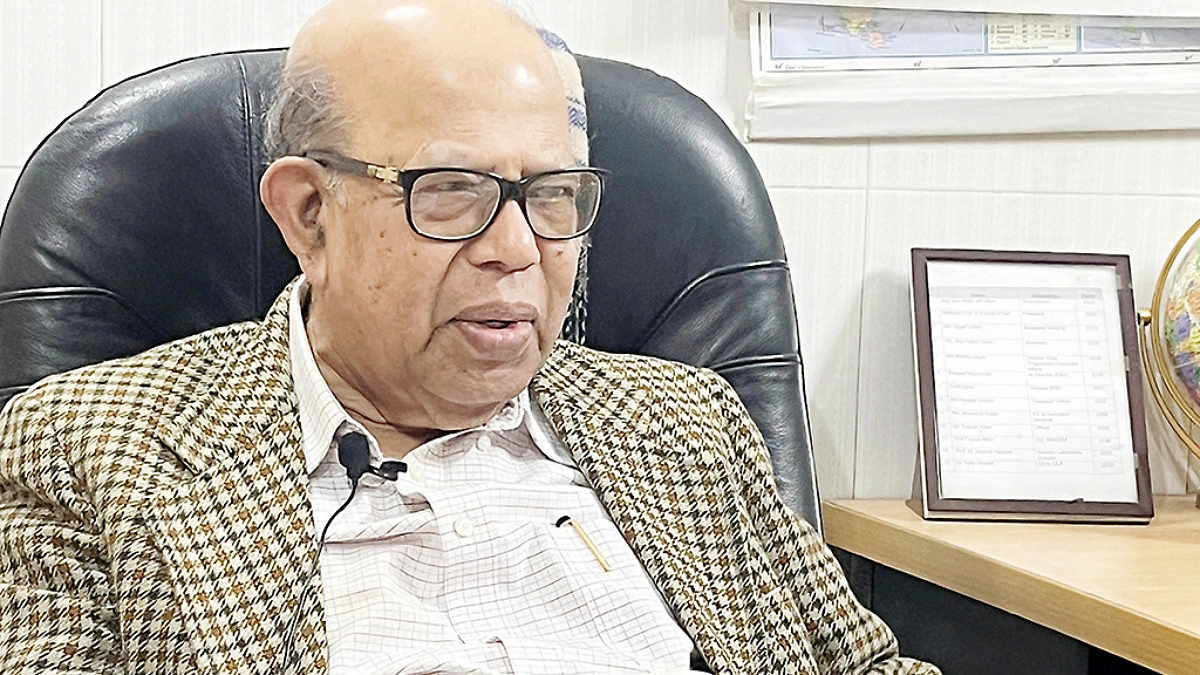
National Professor Dr. A K Azad Khan is the President of the Bangladesh Diabetic Association. He holds a DPhil from Oxford. He is one of those who brought BIRDEM to its current standing. Omar Shahed, Mumitul Mimma, and Akhlakuzzaman Anik spoke with him. Photo: Sazzad Hossain
When were you born?
I was born on May 2, 1941, in Krishnakathi village of Bakerganj upazila in Barisal. My father was Fazlur Rahman Khan and my mother was Fakhrunnesa Khatun. They are no longer with us. When I was born, three of my sisters were alive. I was born after all my sisters. After me, two more brothers were born. We are six siblings.
How was your childhood?
We are people from a very remote village. As far as I can remember, there were no brick houses in the village. Everything was made of wood with mud floors. My ancestors came there from Afghanistan. In that sense, I am not exactly the child of a wealthy family. On the other hand, it is not that we went hungry or starved either. My father was known as a very honest man. If anyone fell into any kind of complication, they would come to him for advice. Around the time of my birth, the family faced some financial difficulties because my grandfather had bequeathed all the property as Waqf. He had kept only some small plots of land. He had a small estate like a talukdari, and we had tenants. I remember that some money used to come from that. My father would go to collect rent and take me along. Being born after three daughters, I was raised with a lot of affection. However, when the State Acquisition and Tenancy Act was passed, it turned out well for others, but it brought difficulties for families like ours because the collection of rent ceased to exist. We had our own land, and the rice grown on it was enough to get by. Mustard oil was also made from the mustard grown in our own fields. Vegetables and fish came from our own ponds and water bodies. The ducks and chickens we had were enough to sustain us. However, if an important guest visited the house, a goat or a lamb would be slaughtered for the feast.
How were you in your studies?
I passed my Matriculation with the highest marks from St. Alfred's School in Padri Shibpur, near our village. It was a Roman Catholic Mission. Their main objective was preaching religion. Therefore, if someone was a Christian, they could become a teacher. For that reason, there weren't high-caliber teachers like that. But the rules and regulations were very strict. I took my Matriculation examination in 1958; back then, exam centers were allocated at the district headquarters. Our school had a good reputation for being very disciplined. They would keep a student even if they failed at school, but if anyone cheated, they wouldn't keep them anymore. I was admitted to Class Two. I completed my primary and high school education entirely there.
Where did you study your Intermediate?
At Dhaka College. We got admitted in 1958. Before that, Dhaka College was in a very dilapidated state at Siddique Bazar in Dhaka. It shifted to its current location that very year. Since I came from a mission school, it was more or less decided from home that I would get admitted to Notre Dame College. Father Martin was the principal back then. But there was no hostel for Muslim boys there; there was only for Christian boys. I had come from a village and had no relatives in Dhaka city to stay with. Renting a house to stay would not be financially feasible. So, leaving that aside, I came to study at Dhaka College. Today I say that getting admitted to this college was a wise decision. There is simply no comparison between the standard of teachers at Dhaka College and Notre Dame. Some teachers were even better than those at Dhaka University. For instance, our Bengali teacher was Md. Mansur Uddin Ahmad, the collector of Maimansingha Gitika. The famous writer Abu Rushd taught us English; he was the Head of the Department of English. Therefore, I believe that getting admitted to Dhaka College turned out well by chance.
Dhaka College had two hostels—the North and South Hostels. They were newly built. At that time, they weren't fully set up or organized yet. College hours were from 9:00 AM to 5:00 PM. Meals were served twice a day. One was before 9:00 AM, meaning we would eat around 8:30 or 8:45 AM before leaving. Then we would eat again between 7:00 and 7:30 PM. Among those of us who took the Intermediate examination, only 19 achieved a first division. I was one of them. There were famous people among us too. The renowned playwright Abdullah Al Mamun and actor ATM Shamsuzzaman were my classmates. Hero Bulbul Ahmed used to study in commerce.
Why did you get admitted into medicine, sir?
That is a very valid question. Don't people have ambitions during childhood? They do. In my childhood, I saw so many people die due to a lack of medical care; for example, my own sister died of cholera. At that time, a lot of people used to die of cholera. Therefore, at that time, I felt that if I became a doctor, I would be able to work for the people. My goal back then was to become a doctor and go back to the village to treat the village people.
Were you a student of Dhaka Medical College?
Yes, there were only three medical colleges back then. Rajshahi and Chittagong had just newly started. All three were considered to be of the same standard. People would get admitted to whichever was closest to their locality. In the beginning, I was frustrated, wondering if I had made the wrong choice. This was because medical studies require a lot of memorization, and memory plays a huge role; but I couldn't memorize well. So, I used to feel that I was a misfit here. But later when I went to Oxford, I realized that memory is not that important. Understanding is more important than memory. Nowadays, memory is hardly required at all because your mobile phone can be your memory. You just have to know where the information is. Isn't that right? My financial background was not good. When I got admitted, I received a first-grade scholarship based on my ISC results. I received that stipend for two years. Back then, if you stood first in the medical college exams, you would get 30 taka. I didn't have to pay tuition fees either. That was a big help. For those from reasonably wealthy families, this was no significant amount, but for me, it was a lot.
Here is the English translation of the text, keeping it straightforward and without any highlights:
Tell us a bit about your life at Oxford.
In 1972, I went to study at Oxford under a Commonwealth Fellowship. I was working at PG Hospital at the time. Life at Oxford was highly enjoyable and very productive. The scientific work I did there is still widely cited. I did not patent the medicine I discovered so that people could get it cheaply. The medicine I discovered for that disease remains the primary treatment today. That is why gastroenterologists from every country in the world know my name. They know that Azad Khan discovered it.
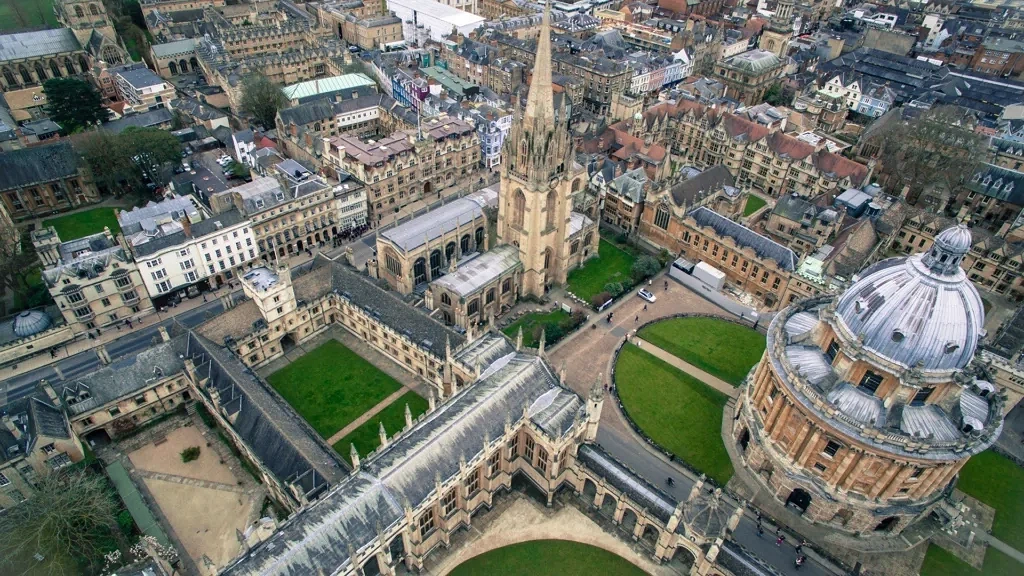
University of Oxford Campus. Photo: Courtesy: Oxford Magazine.
What is the medicine for?
It is a medicine for inflammatory bowel disease. I discovered this medicine for bleeding with diarrhea. It is a 5-ASA based drug, 5-ASA. It is now available under various names like Asacol and Mesacol.
How did you like Oxford?
Basically, Oxford suited me very well. Because what happens at Oxford is that memory is not that important. Understanding is what is important. What matters is being able to think originally. That is the real thing. Basically, those who cannot be self-educated are not suitable for Oxford. You must be able to be self-educated. Your tutor will guide you, but you have to educate yourself. You cannot be educated by formal lectures. There are no formal lectures there.
Why did the idea of not patenting the medicine cross your mind?
First of all, patents are done for commercial reasons. It occurred to me that if I patented it, the price of the medicine would increase. Isn't that so? Back then at Oxford, they would have said I was chasing money. Nowadays, many people do patents. Now everyone is chasing money under American influence.
How is this medicine saving people's lives?
This is the only medicine to keep ulcerative colitis in remission. There is no other medicine. It benefits the lives of millions of people.
Did you have an offer to stay back at Oxford?
I went for one year, but a few days after I started researching ulcerative colitis, they requested me to stay. They said, the work you have started has become so exciting, you should stay. My supervisor had a beautiful name, Sidney Charles Truelove, everyone called him SC Truelove. He was a man of true love—just like that, he was like my friend, like my father, like my brother. I don't think even his own children were closer to him than I was. He said, you stay. I said, if I want to stay, the government will not take it well. Since you are asking me to stay, write to my government. He asked, whom should I write to? I told him to write to the Secretary, who would then give a copy to the Minister. So he wrote. Eventually, a reply came stating that an application had to be submitted. I came back in 1977, and even then, they tried very hard to keep me. I said, no, I came here for a specific purpose. Therefore, it never crossed my mind to settle there. There were many offers back then. By that time, I had discovered the medicine and completed my doctorate at Oxford. Be it America or Sweden—offers to stay were coming from many places.
How was life at PG Hospital?
I started my career at PG Hospital in the Department of Medicine. Back then, sub-specialties had not formed yet. No department other than Cardiology had been launched. Later, Neurology was established. I actually started Gastroenterology in this country, and I was the first Assistant Professor of this department. I was its first Associate Professor and first full Professor. For this reason, I was never transferred anywhere else. I spent 25 years at PG Hospital, which included five and a half years at Oxford. Initially, I was a houseman at PG Hospital, then a Registrar. My first appointment was as a Research Assistant, a post that did not exist anywhere else. Then, while serving as a Registrar, I completed my FCPS. I became a Registrar in 1970 and later became an Assistant Professor. Life there was conventional, but it was good. PG Hospital was small back then. I was at PG Hospital throughout the entire year of 1971.
Here is the English translation of the final segment, keeping it straightforward and without any highlights:
You came to BIRDEM in 1992. How did you work here?
Those who run the Bangladesh Diabetic Association—the council members—do not take any salary. They cannot be associated with any private healthcare institution. It is entirely voluntary work. I see some private patients and sit in Segunbagicha. We never sit in any private clinic. I believe that it is not ethical for doctors to sit in private clinics. I hold this belief firmly and do not practice otherwise.
You have done a lot of work at BIRDEM.
That is for the people to judge. Initially, I came here to improve research work. Back then, Dr. Ibrahim tried to get me involved, but I did not get deeply involved at that time. That was a failure of my judgment. Especially after his death, when employee troubles arose, I saw there was no one to take ownership. Then I gradually became fully involved. Since diabetic patients suffer more from heart diseases, the Ibrahim Cardiac Hospital and Research Institute was established during my time. We all achieved it together. After that, we developed human resources and established a medical college and a nursing college. Simply producing doctors is not enough; many things need to be done in the healthcare sector. That is why we established the Bangladesh University of Health Sciences.
How did BIRDEM grow so large from such a small institution?
with People's demand, people's help, and government assistance—it grew through a combination of all of these. The main limitation of this BIRDEM here in Shahbagh is space constraint. That is why that university (Bangladesh University of Health Sciences) was set up, and that land was actually given by Khaleda Zia. It was allocated during her tenure. That place is three times larger than this—around six acres of land.
You worked on raising awareness about diabetes among religious leaders, especially Qazis and Imams.
I consider this to be a very fundamental contribution. Diabetes is largely preventable. If lifestyles are changed, it can be prevented to a great extent. It is not a hundred percent preventable; if genetic factors are very strong, some people will inevitably develop it. However, seventy to eighty percent is preventable. It is preventable in a big way. Then why is prevention not happening? The medical personnel working in this field say that we keep advising, but people do not listen. Then it occurred to me that we do not know what kind of language to use to make them listen. I thought, let's try different methods. I noticed that there are very strong messages within the Islamic religion—very, very strong messages about maintaining good health. We then wondered if having it spoken during the Khutbah (sermon) would have an effect. Shaykh al-Hadith Allama Azizul Haq used to affectionate me like a son. In fact, his eldest son Mahbub used to feel a bit jealous, saying, "Wow, he shows more affection to you than to me." Allama Azizul Haq Sahab was a highly learned scholar. I approached him and asked him to organize a conference for me with the Imams who are genuinely educated. There, I told them that they must talk about diabetes prevention in their Khutbah. They agreed. Allama Azizul Haq had them draft a Khutbah. We then sent it to Al-Azhar in Cairo. They informed us that it was absolutely correct. After that, I approached the government, because the Imams are under the Ministry of Religious Affairs. The government agreed and printed 10 lakh copies of it. Next, I spoke with the Islamic Foundation, as they also work with Imams, and they agreed. I told the Shaykh al-Hadith's son Mahbub to go and show it to the Imams of the Holy Kaaba in Mecca. That was done. Following this, we raised funds and trained the Imams. We told them to deliver the Khutbah in a way that impacts people's minds. Afterward, it was found that the number of patients dropped by 40 to 45 percent.
How did you get introduced to Dr. Ibrahim?
I got introduced to him through his eldest daughter, Emeritus Professor Dr. Hajera Mahtab. She and I completed our FCPS together. Although she was one year senior to me in medical college, our relationship is like that of siblings. Her children do not call me Khalu; they call me Mama. I married her sister, who is nine years younger than her, in 1970.
(April 22, 2026, BIRDEM, Shahbagh, Dhaka)

