The Rich Are Happy, Middle Class at Ease, The Small Traders Worried

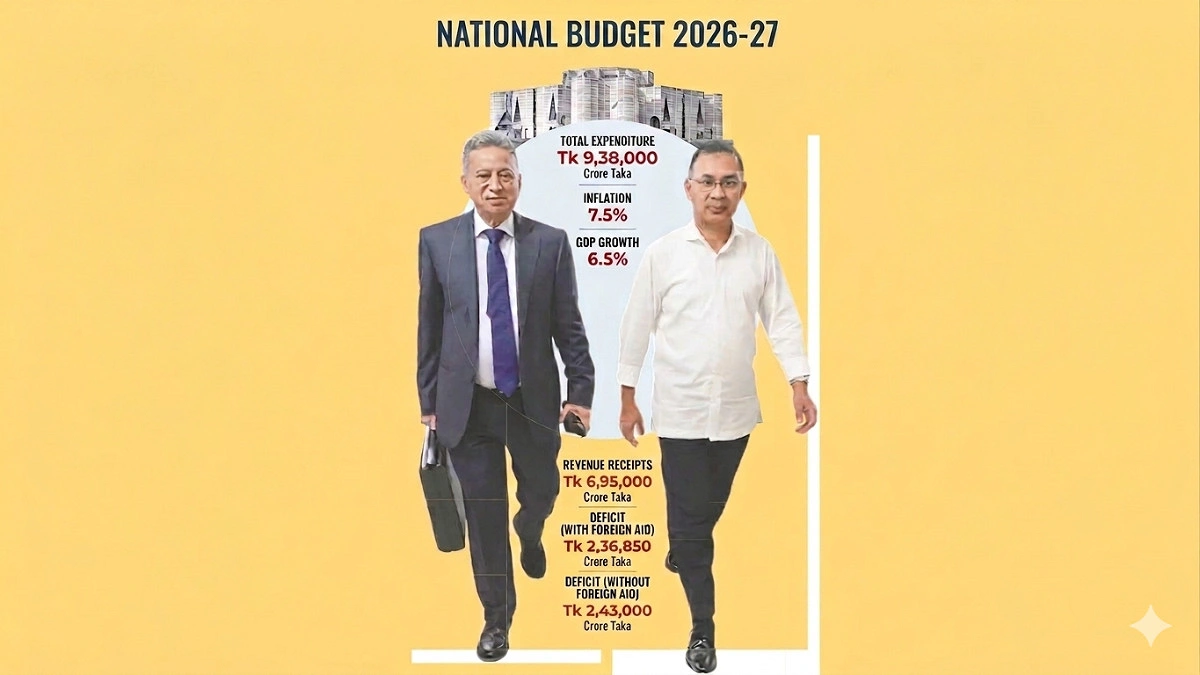
Agamir Somoy graphics regenerated by AI.
Finance Minister, Amir Khasru Mahmud Chowdhury, has followed the concept of the famous American economist Laffer Curve, which suggests that lowering tax rates can often increase total revenue because it stimulates economic growth. The Laffer Curve concept gained worldwide recognition in the 1970s as an important theory for understanding tax policy. The idea has been used in the tax and budget policies of many countries, including the United States. Following this theory, the finance minister announced significant tax cuts for the industry and export sectors in his first budget, which has pleased the wealthy. Additionally, the proposed budget has brought great relief to the middle class. The finance minister announced that a new pay scale for government officials and employees will take effect from July 1. Moreover, taxes and VAT have been waived on 60 essential commodities.
In the proposed budget for the 2026-27 fiscal year, alongside tax cuts, the government has also expanded the tax net. An advance income tax (AIT) has been imposed on the transactions of small shopkeepers. If a rural retailer sells goods worth one thousand taka, they will have to pay two taka in VAT. As a result, a large number of small traders will come under the tax net for the first time. This proposal has caused concern among the lower-income group. However, to implement its election promises and alleviate these concerns, the BNP government has increased the social safety net. A total of 1,44,338 crore taka has been allocated for this sector, benefiting over three crore poor people.
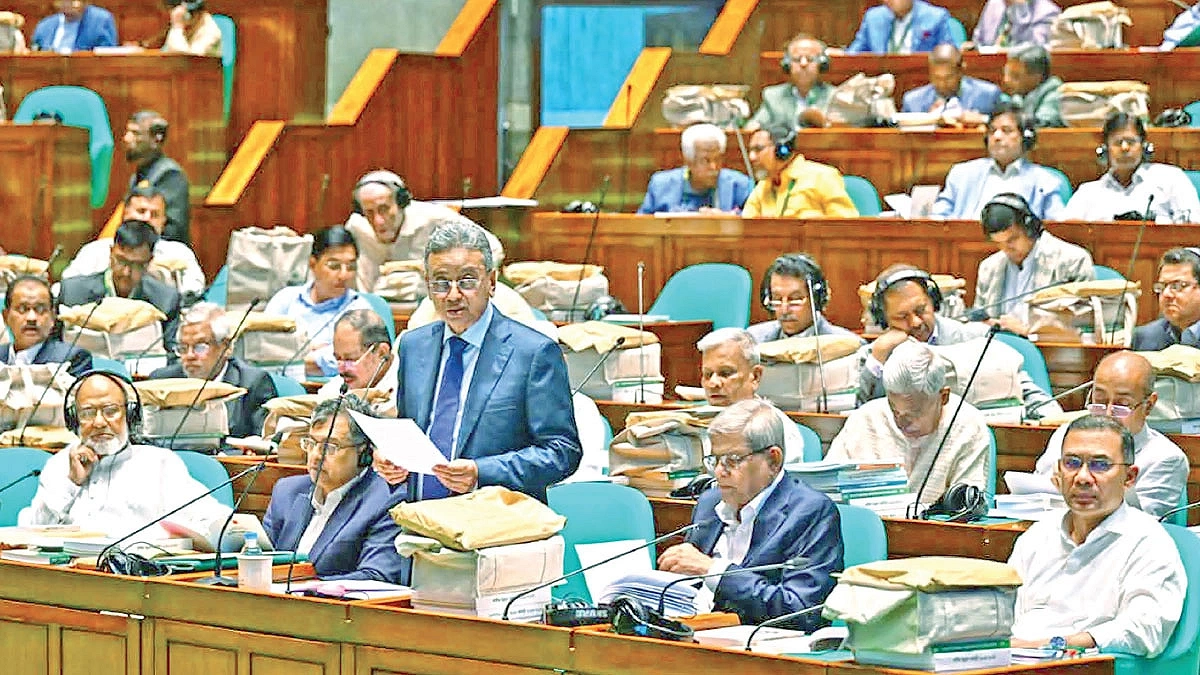
With these measures, Finance Minister Amir Khasru Mahmud Chowdhury presented a proposed budget of 9,38,000 crore taka in the national parliament on Thursday. The total revenue is 7,01,150 crore taka, of which the revenue collection target is 6,95,000 crore taka and grants are 6,150 crore taka. The deficit (including grants) is 2,36,850 crore taka, and without grants, it is 2,43,000 crore taka. The budget was approved by the cabinet in a meeting before it was presented at 3 pm.
In his budget speech, the finance minister said that due to geopolitical instability, the country is facing new and intensified challenges. Alongside the war situation in the Middle East, the new political and economic polarization across the world has posed major challenges for the global community, particularly for Bangladesh. He noted that besides the fragile state of the domestic economy, the government must also cope with new risks arising from global instability. However, he expressed hope of reaching a trillion-dollar economy by 2034, based on a master plan prioritizing stability, investment, production, employment, and overall fairness.
The finance minister announced targets to reduce inflation to 7.5 percent and increase economic growth to 6.5 percent in the next fiscal year. The proposed budget considers ten main priorities. Although significant tax and VAT cuts have been offered on many essential items to provide relief to the lower and middle classes, various incentives through tax exemptions have also been announced to attract domestic and foreign investors to establish new industries. The finance minister believes this will create new employment opportunities.
In the next fiscal year, alongside tax cuts, the tax net is being strategically expanded. To manage the pressure of a large budget, the government's eyes will be on revenue collection from cities to villages. The National Board of Revenue (NBR) will need to collect over 6,04,000 crore taka. However, past experience with revenue collection has not been pleasant. Analysts say that without reforms, achieving such a massive revenue target is impossible.
For the 2026-27 and 2027-28 fiscal years, the annual tax-free income limit for individual taxpayers will be raised from 3.5 lakh taka to 4.75 lakh taka. Additionally, the government has announced a reduction in the tax at source on 60 essential commodities. In the case of agricultural and consumer goods supply, taxpayers currently pay tax at source at rates of 5, 2, or 1 percent. In the proposed budget, this has been reduced to 0.5 percent.
Other measures include a waiver of the 5 percent advance tax on the import of kidney dialysis filters, a reduction of advance income tax from 2 percent to 1 percent on the import of 15 products used by people with special needs, a reduction of tax at source on gold and gold jewelry supply from 5 percent to 0.5 percent, and a reduction of advance tax on the import of computer printers, laptops/portable data processing machines, flash memory, and monitors from 5 percent to 2 percent. Furthermore, advance tax on the import of 22 raw materials for the local mobile phone manufacturing industry will be reduced from 5 and 2 percent to 1 percent.
In the new budget, among the initiatives for investment and industrialization, customs duties and taxes on the import of solar power sector materials will remain zero, a benefit that will continue until 2031. Additionally, substantial duty and tax exemptions have been granted for the production of electric cars, buses, and trucks, which will remain effective until 2031. Concessional benefits will be available for importing raw materials and parts for the e-bike industry. Existing tax and duty benefits for the production of mobile phones, refrigerators, air conditioners, washing machines, ATMs, and CCTV cameras, as well as duty and tax exemptions for the computer and digital device industry, will continue until 2030. Additional import duties have been waived on 10 raw materials for the production of smart cards and bank cards.
The import duty on raw materials for baby food production has been proposed to be reduced from 15 percent to 10 percent, which will help lower baby food prices in the market. Additionally, the 5 percent regulatory duty on all types of spices and the 5 percent regulatory duty on date imports will be fully withdrawn. To encourage local production in the agricultural sector, VAT has been waived on 36 raw materials for the production of insecticides and pesticides, and the duty on importing zinc ash, a raw material for zinc sulfate fertilizer, has been proposed to be reduced to zero.
Currently, the total duty and tax burden on importing electric vehicles (EVs) is 93 percent. Under the new proposal, for EVs priced up to 25,000 US dollars, the duty and tax rate will be 64 percent, and for EVs priced between 25,000 and 50,000 dollars, the rate will be 80 percent. Advance tax is deducted during EV registration and fitness certificate renewal, and there is an initiative to reduce that as well. It has been proposed to withdraw the regulatory duty on importing brand-new hybrid cars with an engine capacity of up to 1800 cc.
Tax at source is currently deducted at various rates on export incentive money. In the next fiscal year, the tax at source will be reduced from 10 percent to 5 percent. Furthermore, the tax at source on interest payments for loans taken by private sector entrepreneurs from various foreign sources will be reduced from 20 percent to 10 percent. Previously, this tax at source was exempted.
To increase the use of renewable energy, a tax exemption on income has been granted to companies involved in the production and supply of solar power through establishing solar power plants, valid until June 30, 2035.
The VAT at the production stage for air conditioners and refrigerators has been proposed to be reduced from 15 percent to 7.5 percent. Additionally, the advance tax on importing 22 types of raw materials for mobile phone production has been proposed to be reduced from 5 percent to 1 percent. This could potentially lower the price of locally manufactured mobile phones.
To encourage cashless transactions, an initiative has been taken to reduce the import duty on point-of-sale (POS) machines from 10 percent to 5 percent, which may reduce the price of POS machines.
It has been proposed to keep all types of duties and taxes at zero until 2031 on the import of necessary materials for the solar power industry. At the same time, substantial duty and tax exemptions have been granted for the import of parts and raw materials used in the domestic production of electric cars, buses, and trucks, which will remain in effect until 2031.
It has been proposed to fully withdraw the existing 39.75 percent tax burden on the import of electric vehicle chargers and charging stations, and to reduce taxes on the import of electric vehicles and plug-in hybrid vehicles. In contrast, it has been proposed to increase the tax rate on petrol and diesel vehicles with engine capacities from 1200cc to 1600cc.
For the development of the information technology sector, significant duty and tax reductions have been proposed for the import of computers, laptops, servers, printers, monitors, and SSDs, along with a tax reduction on the import of POS machines. At the same time, VAT exemptions for startups, freelancers, and content creators, as well as the withdrawal of the 300 taka tax imposed on mobile SIM cards, have been proposed.
In the agriculture sector, tax exemptions on fertilizers and pesticides have been proposed. In the health sector, VAT and tax exemptions on heart stents, eye lenses, and dialysis supplies, as well as a full waiver of duties and taxes on the import of 21 types of assistive materials for people with special needs, have also been proposed.
Due to various tax-related changes in the budget, the prices of some products will increase. For example, the price tiers for tobacco products, including cigarettes and bidis, have been increased by up to 15 percent.
Budget structure: Total expenditure is 9,38,000 crore taka, and total revenue is 7,01,150 crore taka. This includes tax revenue of 6,95,000 crore taka and foreign grants of 6,150 crore taka. The deficit (including grants) is 2,36,850 crore taka, and the deficit (excluding grants) is 2,43,000 crore taka. To collect revenue, the National Board of Revenue (NBR) has a tax collection target of 6,04,000 crore taka, non-NBR revenue is 25,000 crore taka, and non-tax receipts are 66,000 crore taka. Additionally, foreign grants stand at 6,150 crore taka. To cover the deficit, loans will be taken from foreign sources amounting to 1,09,850 crore taka, from banks 1,12,000 crore taka, from savings certificates 8,500 crore taka, and from other sectors 6,500 crore taka. The inflation target is 7.5 percent, and the GDP growth target is 6.5 percent. However, there are not many specific measures to control inflation.
What is in the operational sector: The operational budget expenditure has been set at 6,05,740 crore taka. Of this, interest payments will cost 1,27,000 crore taka. The allocation for the Annual Development Programme is 3,00,000 crore taka. Additionally, a new pay scale for employees has been announced, with an extra allocation of 35,000 crore taka in the budget. Eight new programmes are being added to the social safety net sector. Furthermore, 300 crore taka has been allocated for the creative economy.
Ten priority sectors: The proposed budget gives priority to ten sectors. These include universal social protection, investment-driven and production-oriented economy, deregulation and an eased business environment, financial sector stability, energy security, information and communication technology development, environment and water resource management, and a transparent, efficient, and accountable administrative system. At the same time, initiatives have been taken to transform the creative economy, green economy, and blue economy, which have so far remained outside the mainstream, into important parts of the national economy.
To increase investment, the government is emphasizing the "value for money" policy. This means ensuring optimal use of limited resources, evaluating the economic benefits of investment, prioritizing the direct contribution of public investment to employment creation, and prioritizing environmental protection. It has also been stated that environmental conservation will be integrated into development planning.
However, the finance minister expressed concern over the global situation. Due to the crisis in the Middle East, the prices of fuel oil, LNG, and fertilizers have more than doubled on the international market. As a result, production costs have increased in the electricity, agriculture, transport, and industrial sectors. Consequently, inflationary pressure and the burden of subsidies have increased, and foreign exchange reserves have come under pressure due to rising import costs. Additionally, since the Middle East is the most important destination for Bangladesh's expatriate labour market, prolonged instability there could negatively affect remittances and employment.
According to the government, war, energy market volatility, high interest rates, trade tariff uncertainty, and disruptions to global supply chains are now permanent realities of the global economy. Therefore, the main goal of the economic strategy will be to maintain internal stability by withstanding external shocks.
In this context, targets have been set to raise real GDP growth to 8.5 percent by the 2030-31 fiscal year, reduce inflation to 5 percent, increase foreign direct investment to 2.7 percent of GDP, and raise total investment to 40 percent of GDP. Plans are also in place to increase the tax-to-GDP ratio from the current 6.8 percent to 9.6 percent and the revenue-to-GDP ratio from 8 percent to 11 percent.
Three phases of economic reconstruction: The government has planned the economic reconstruction in three phases. The first phase will involve a one-year recovery programme, the second phase will focus on economic transition within one to three years, and the third phase will implement the goal of building a prosperous economy over the next five years.
To control inflation, money supply in the market will be managed through effective coordination of monetary and fiscal policy. However, care will be taken to ensure that credit flow to the private sector is not disrupted. At the same time, emphasis has been placed on moving away from credit-driven growth and building an economy based on production, employment, and private investment.
To restore confidence in the banking and financial sectors, initiatives have been taken to reduce non-performing loans, ensure transparency in loan approval and rescheduling systems, and ensure accountability in bank management. Risk-based supervision, recapitalization, and management reform activities will be carried out for weak banks. Notably, the government is spending approximately 40,000 crore taka this fiscal year to recapitalize weak banks.
The total revenue collection target for the next fiscal year has been set at 6,95,000 crore taka, which is 10.2 percent of GDP. Of this, plans are in place to collect 6,04,000 crore taka through the National Board of Revenue and 91,000 crore taka from other sources. Total expenditure has been proposed at 9,38,000 crore taka, which is 13.7 percent of GDP. The budget deficit will be 2,43,000 crore taka, or 3.6 percent of GDP. It has been proposed to reduce the amount of borrowing from the banking system to 1,12,000 crore taka.
The allocation for the education sector has been increased to 1,36,606 crore taka, and for the health sector to 69,409 crore taka. In agriculture and food security, an initiative has been taken to introduce farmer cards for 4,250,000 farmers in 100 upazilas. Landless and marginal farmers will receive 2,500 taka in cash assistance once a year through this card. An initial allocation of 1,062.50 crore taka has been set aside for this sector.
Additionally, emphasizing the blue economy, a target has been set to increase fish export earnings to 1 billion US dollars by 2030. On the other hand, to raise the creative economy to 1.5 percent of GDP, an initial allocation of 300 crore taka has been made, along with plans to collect an additional 500 crore taka from the Bangladesh Bank's CSR fund.
The government expects that it will be possible to make the private sector the main driver of growth by creating an investment-friendly environment, fostering entrepreneurship, expanding productive sectors, and creating new opportunities for youth and women.