
Salehuddin Ahmed
Media Criticism Kept Us From Becoming Reckless

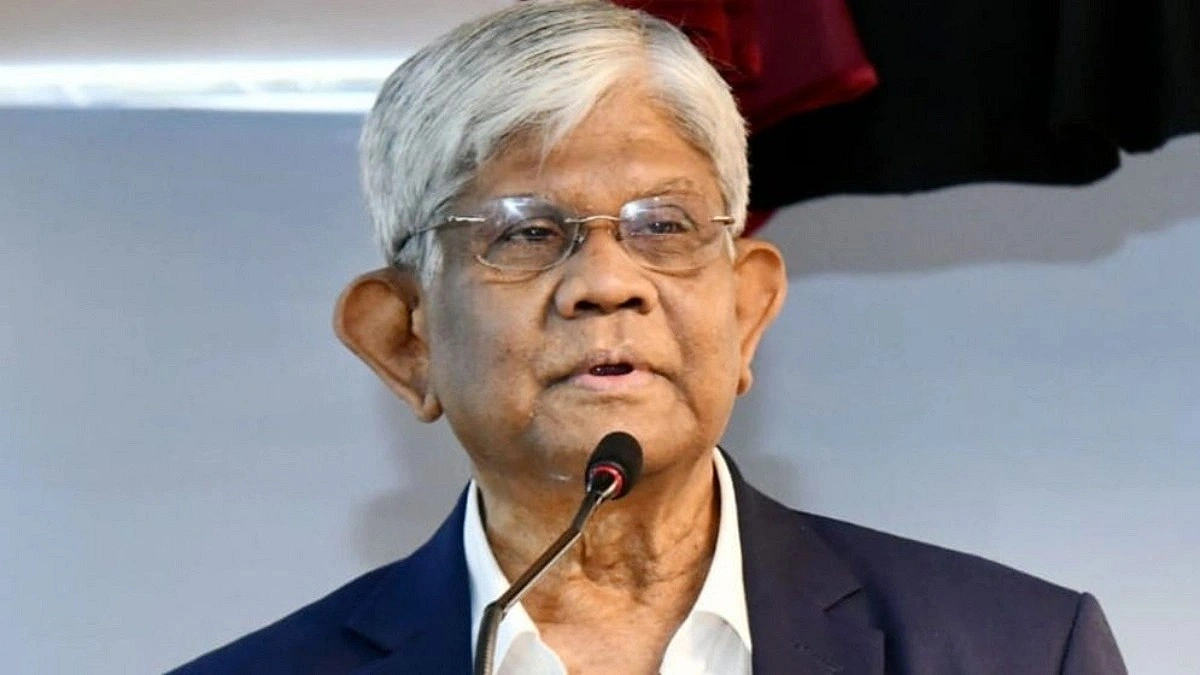
Collected Photo
Former Finance Adviser to Bangladesh’s interim government Dr. Salehuddin Ahmed has said media scrutiny and public opinion played a crucial role in keeping the government accountable, adding that without criticism from the press, officials ‘might have become reckless.’
Speaking in an interview with Agamir Somoy, Salehuddin made the remarks while discussing the demolition of the house at Dhanmondi 32 in the capital.
He said he did not morally support the vandalism of the historic residence or any form of mob violence. However, he described the incident as a reflection of the excesses that had accumulated over the past 15 years.
According to Salehuddin, Dhanmondi 32 had been a symbolic location since the Pakistan era. But he argued that naming numerous institutions and public facilities after members of the same family fueled public resentment, which later manifested in attacks on the Dhanmondi 32 house and the sculpture at Bijoy Sarani.
The former adviser said that although many places in Pakistan are named after Muhammad Ali Jinnah, not every road or public structure bears his name. Likewise, many institutions in Bangladesh were named after Bangabandhu Sheikh Mujibur Rahman, a practice that initially faced little public opposition.
He cited Bangabandhu Sheikh Mujib Medical University as an example but said public sentiment shifted when the trend expanded to naming nearly everything after a single individual. Even so, he stressed that demolishing the building was unjustifiable because it functioned as a museum.
“The events unfolded very quickly and unexpectedly,” Salehuddin said. “Bulldozers were brought in and the demolition began before authorities could fully grasp what was happening. We tried to stop it from our position, but it was impossible to contain the force of the public's accumulated anger.”
Salehuddin also spoke about political pressure his administration faced while in office.
He said major political parties, including the Bangladesh Nationalist Party (BNP) and Bangladesh Jamaat-e-Islami, urged the interim government to avoid major policy reforms.
“They would tell us, 'Why are you trying to implement these reforms? You are here in a caretaker role. Don’t touch the tax structure—we’ll deal with those issues once we come to power,'“ he said.
He added that politicians were also influenced by business groups.
According to Salehuddin, indirect pressure also came through the media, as business leaders and politicians sometimes used news coverage to discourage the government from taking certain actions.
Despite that, he described media scrutiny as beneficial.
“A system of checks and balances is essential in governing a country,” he said. “Without criticism from the media, we might have become reckless. We always remained conscious of accountability, and that is why we did not become reckless.”
