


Trump warns of severe punishment for doing business with Iran

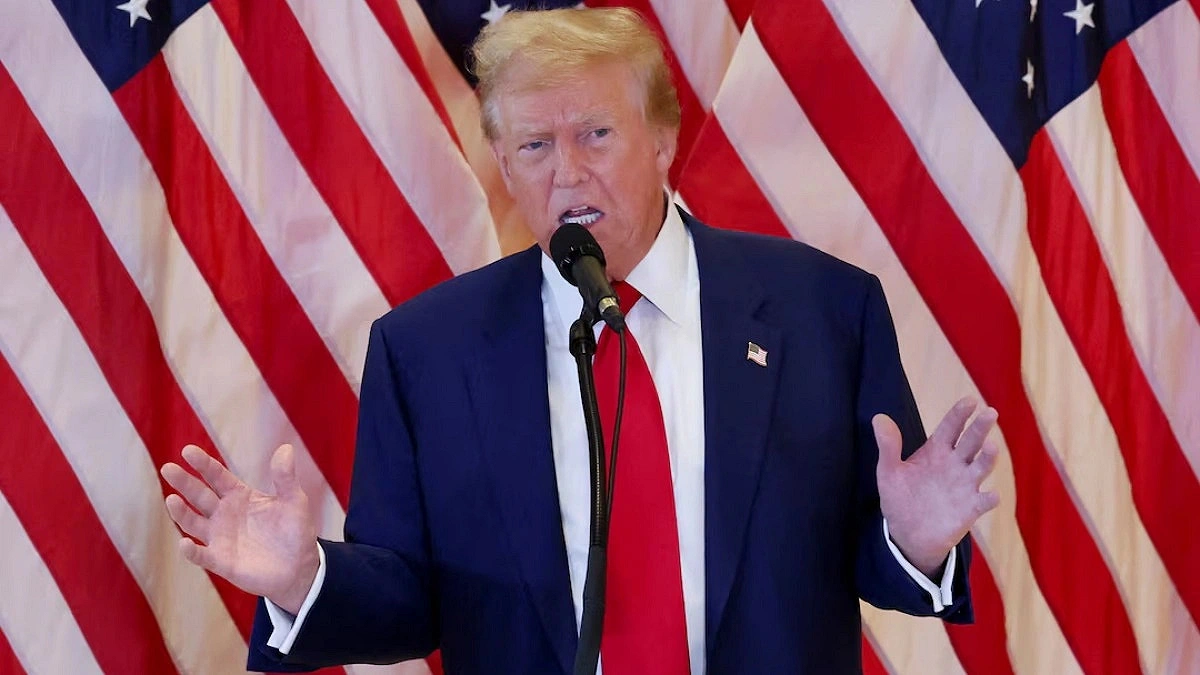
US President Donald Trump. File photo, Reuters.
Negotiations to end the more than five-month-long war with Iran have stalled. In the meantime, US President Donald Trump has announced the "toughest economic campaign" against the country. He also threatened sanctions against any nation that does business with Tehran.
In a post on his own social media platform, Truth Social, on Wednesday local time, Trump said Iran has failed to take advantage of the deal. Now, an "unprecedented level of economic war and isolation" will be created against the country.
Trump wrote, "Any country that provides any kind of assistance to Iran through its financial institutions, businesses, airports, or government agencies will also face severe economic consequences."
He called for an end to all Iranian oil smuggling, financial transactions, exchange systems, ship registrations, and business through companies operating under various names.
Trump further said, "This will be the economic D-Day." He also called on US allies to stand by in isolating Iran.
The term D-Day historically refers to June 6, 1944, when US-led Allied forces launched a major military operation in Normandy during World War II—meaning the start of a large, decisive operation.
This is not the first time Trump has threatened economic sanctions against Iran.
Since April, his administration has been increasing pressure on Iran under the name "Operation Economic Fury." The goal is to isolate Tehran and cut off the country's revenue streams.
The US has already imposed extensive sanctions on Iran's oil, shipping, and financial sectors. One of the key objectives is to reduce Iran's income from energy exports.
The US has also imposed a naval blockade on Iranian ports. Measures have also been taken against various companies, intermediaries, and oil tankers accused of assisting Iran's oil sales.
There was no immediate reaction from Iranian officials to Trump's new announcement. However, Iranian media outlets have noted that this is nothing new.
Iran's state broadcaster IRIB said the announcement came after military strikes failed. The semi-official Tasnim News Agency said that the US has been trying for years to cut off financial and economic relations with Iran.
However, Tasnim also pointed out that Iran has learned ways to circumvent these sanctions and has become adept at doing so.
Another semi-official news agency, Fars, described Trump's remarks as "baseless." They said the US had previously spoken of Iran's "imminent collapse" and military destruction, but in reality, none of that materialized.
Al Jazeera correspondent Mike Hanna in Washington said Trump's new announcement highlights his "frustration" over the ongoing stalemate regarding the war.
In his view, the question is—what additional economic pressure could possibly be applied to Iran that the US has not already imposed?
He said Iranian officials may see this as "just another threat announcement."
However, the target may also be the American public, as many people in the US still oppose the ongoing war.
Hanna commented that Trump may want to show a tough stance to ordinary citizens. But whether the new measures will actually be effective remains unclear, as details are still scarce.
Just hours before Trump's announcement, the United Arab Emirates, a key trading partner of Iran, suspended all financial ties with the country.
The UAE took this decision after accusing Iran of firing two ballistic missiles toward it. However, Tehran denied the accusation, calling it a "false operation."
According to analysts, other countries that trade with Iran and may come under Trump's pressure include China, Iraq, and Turkey.
Nader Habibi, professor of Middle East economics at Brandeis University, said that in China's case, the US could target those Chinese financial institutions that facilitate the purchase of Iranian oil.
Iranian oil is still being bought by some small Chinese refineries. Therefore, putting pressure on Chinese banks and financial institutions that work with these refineries could be important for the US.
However, Habibi said the Chinese government has already warned its institutions not to comply with US sanctions. So, if the US takes action against specific Chinese entities, Beijing's reaction will be crucial.
He also believes that completely shutting down Iran's overland trade with Turkey, Iraq, and Central Asia would be difficult for the US.
Brett Erickson, managing partner of Obsidian Risk Advisory, said the steps Trump is now threatening have not been taken before, and the risks are already clear.
In his view, if these measures did not carry more risk than benefit for the Trump administration, they would have been implemented long ago.
Erickson said pressuring Chinese banks could be the most important tool in Trump's arsenal.
However, he believes that this measure alone will not secure victory over Iran. If the UAE's trade suspension measures are also effectively implemented, the pressure could increase significantly.
Erickson added that the biggest limitation is time. An economic war against Iran must not only yield results but do so quickly. Delays could make the situation more complex and could backfire on Washington.
Source: Al Jazeera

