
Nation Requires a New Education Movement: Debapriya Bhattacharya

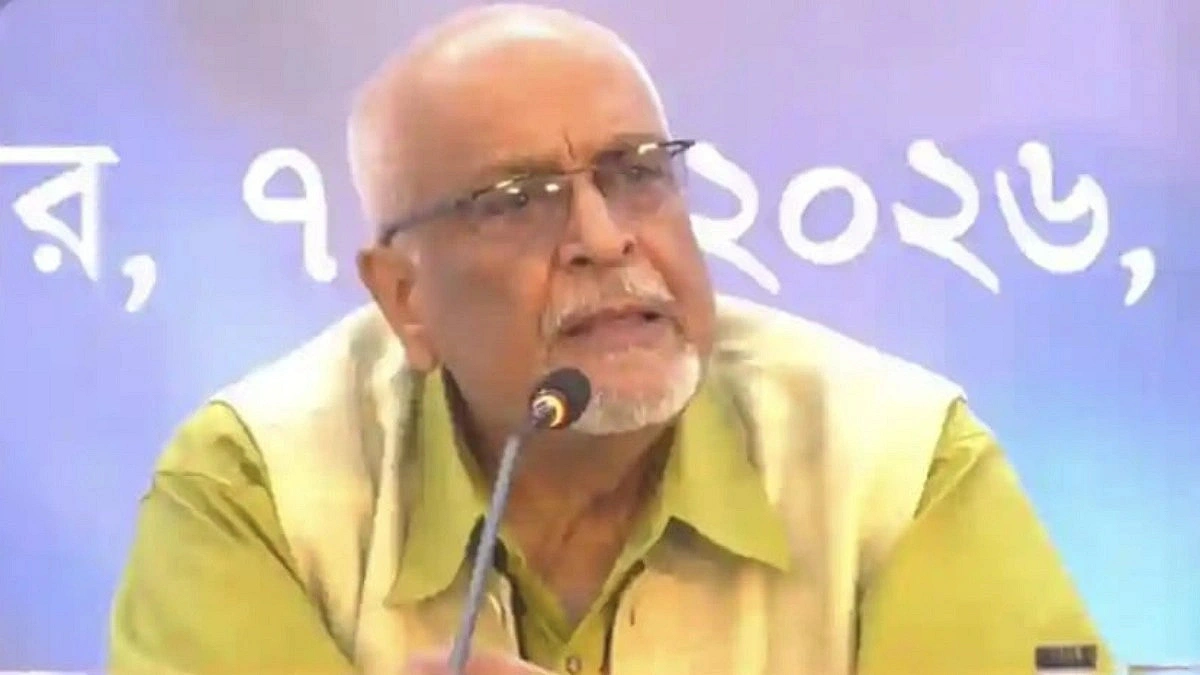
Collected Photo
"If the education movement cannot be transformed into a socio-political movement, it will be difficult to achieve the changes we desire," said Dr. Debapriya Bhattacharya, Convenor of the Citizen's Platform for SDG Implementation and a Distinguished Fellow of the Centre for Policy Dialogue (CPD).
He said the biggest challenge now is not merely enrolling students in schools but ensuring quality education. This movement must transition from a fight for enrollment to a struggle for the actual quality and outcomes of education.
He made these remarks on Thursday (May 7) morning at a dialogue titled "Government Priorities and the Education Sector: Budget and Reality," organized by the Citizen's Platform for SDG Implementation in the capital.
The keynote paper of the dialogue was presented by Towfiqul Islam Khan, Additional Research Director at CPD.
He pointed out that "Previously, we campaigned for access to education. Now, the time has come to campaign for the outcomes of education. Students are enrolling in schools, but the standard of knowledge they graduate with is now the primary concern."
He said there are plans to form an alliance with new members of parliament to transform the education movement into a socio-political one. In his view, changing the education system through technical opinions alone is impossible; it requires social and political participation.
The eminent economist added, "Unless we turn the education movement into a socio-political movement, the transformation we seek will be hard to attain."
Referring to the government's stipend programs, Debapriya Bhattacharya said, "It has been stated at various times that stipends are provided to reduce the burden on students. However, it is impossible to tackle the cost of education with stipends alone. Families face various other expenses that create significant pressure on poor and marginalized communities. Conversations with ordinary people across different regions of Bangladesh reveal that everyone is worried about the quality of education. People believe that desired development will not be possible unless the existing chaos in the education sector is removed and marginalized groups are retained within the system."
Describing the rate of student dropouts—especially among girls—and the rise in child marriage and child labor as alarming, he noted, "Progress in education will not be genuine unless these issues are resolved. Simultaneously, it will be impossible to ensure internationally acceptable and comparable standards of education."
"The future labor market is facing major shifts. Due to the expansion of Artificial Intelligence, robotics, and technology, approximately 5.6 million jobs could disappear. Conversely, about 5 million new job opportunities will be created. However, there are serious concerns regarding whether the country's youth are prepared for these new types of work," he commented.
Debapriya Bhattacharya concluded, "Our primary goal used to be bringing everyone under the umbrella of education. Now is the time to ensure the outcomes of that education. As the saying goes, it was previously a 'fight for education'; now it is time for a 'fight for the outcome of education.' The education movement must not be confined to technical discourse; it must be shaped into a political and social movement."
