


Dengue Surge Overwhelms as Measles Outbreak Worsens

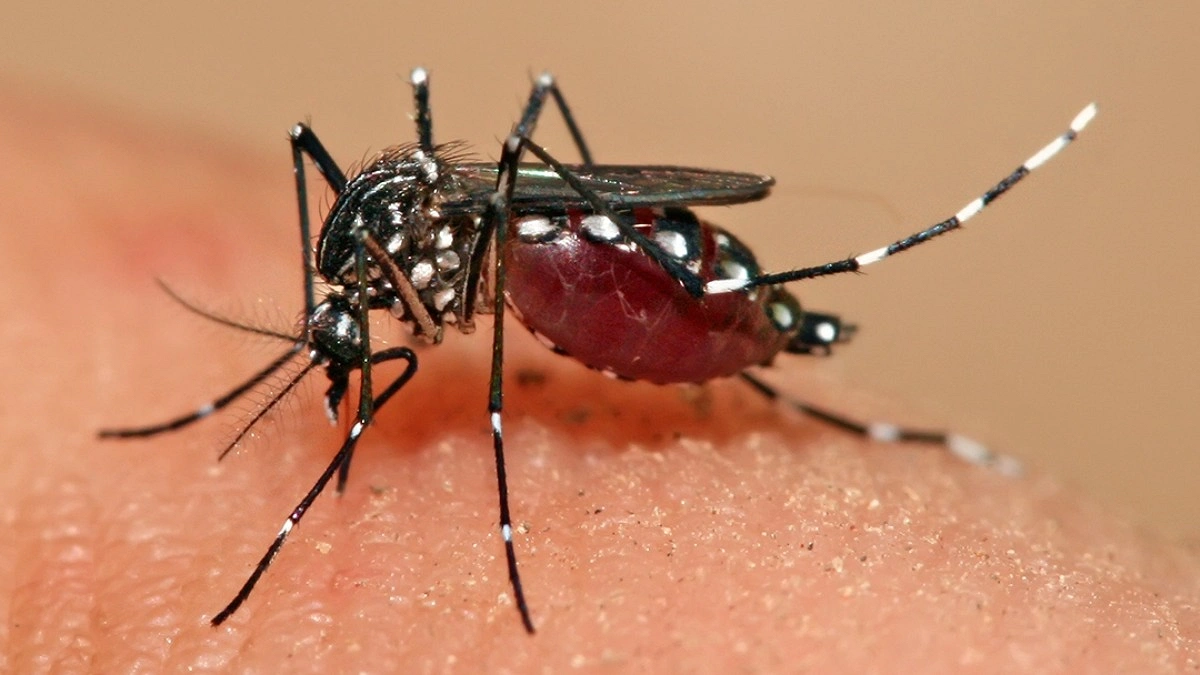
Collected Photo
As Bangladesh struggles to contain a widespread measles outbreak, a surge in dengue patients is overwhelming hospitals.
Directorate General of Health Services (DGHS) statistics reveal that of the 6,000 infections this year, nearly 3,000 occurred in June, with monthly deaths rising from five to 19. Experts warned that the situation could take a deadly turn in the coming months.
Medical Entomologist and Scientist Kabirul Bashar said, “Especially from July to September, the dengue situation may take a deadly turn. During that time, there is a risk that both infections and deaths will jump significantly.”
Health Minister Sardar Md. Sakhawat Husain told reporters on Thursday, “For two months, we have been conducting cleanliness drives from district towns to upazilas. Besides, a special tablet is available to kill mosquito larvae. We are procuring them within the next week to kill the larvae.”
The crisis is visible at Mugda Medical College Hospital, where Fayyaz Ahmed Ratul, a third-grade student, was admitted after a sudden high fever was confirmed as dengue.
His mother, Rebeka Khatun, said, “After hearing this, I didn't go home. I have been at the hospital for two days with my son.”
Mugda Hospital has admitted over 250 dengue patients this year, resulting in at least two deaths. Atiqul Islam, in charge of the dengue ward at Bangladesh Shishu Hospital and Institute, noted that new patients arrive almost daily.
While cases are climbing across Barisal, Chittagong, Khulna, and Rajshahi, Mymensingh division has recorded the highest death toll outside Dhaka, with at least five fatalities.
Surveys conducted by the two Dhaka City Corporations and Dr. Bashar indicate a massive increase in Aedes mosquito larvae. The Breteau Index (BI), which measures larvae presence, is two to three times higher than the usual 10 or 12.
In Dhaka North, the BI averaged over 40, while in Dhaka South, 63 out of 75 wards recorded a BI over 20. High risks were also identified in Cox's Bazar at 43 BI, Barisal at 34 BI, and Pirojpur at 43 BI.
Kabirul said, “After the July uprising, the local government across the country collapsed. Public representatives have been absent in City Corporations or upazilas for almost two years. As a result, mosquito extermination work was not done that way. That's why mosquitoes have increased.”
Public health expert Be-Nazir Ahmed warned of a major disaster if the situation is not managed. “And a disaster coming means the certain death of many people. The government does not have the preparation and skills to deal with these well. Therefore, action should be taken before the disaster occurs,” he added.
In response, Dhaka South City Corporation Administrator Abdus Salam affirmed a zero-tolerance policy, treating the outbreak as an emergency civic service.
Officials have conducted a five-day “mosquito extermination crash program” in 27 high-risk wards. Meanwhile, the Health Minister has instructed hospitals not to discharge patients until they are fully recovered to prevent deaths from plasma leakage.
Source: BBC Bangla (adapted)

