
Prevention Over Cure: A 'Revolutionary' Vision in Health Education Feasible!

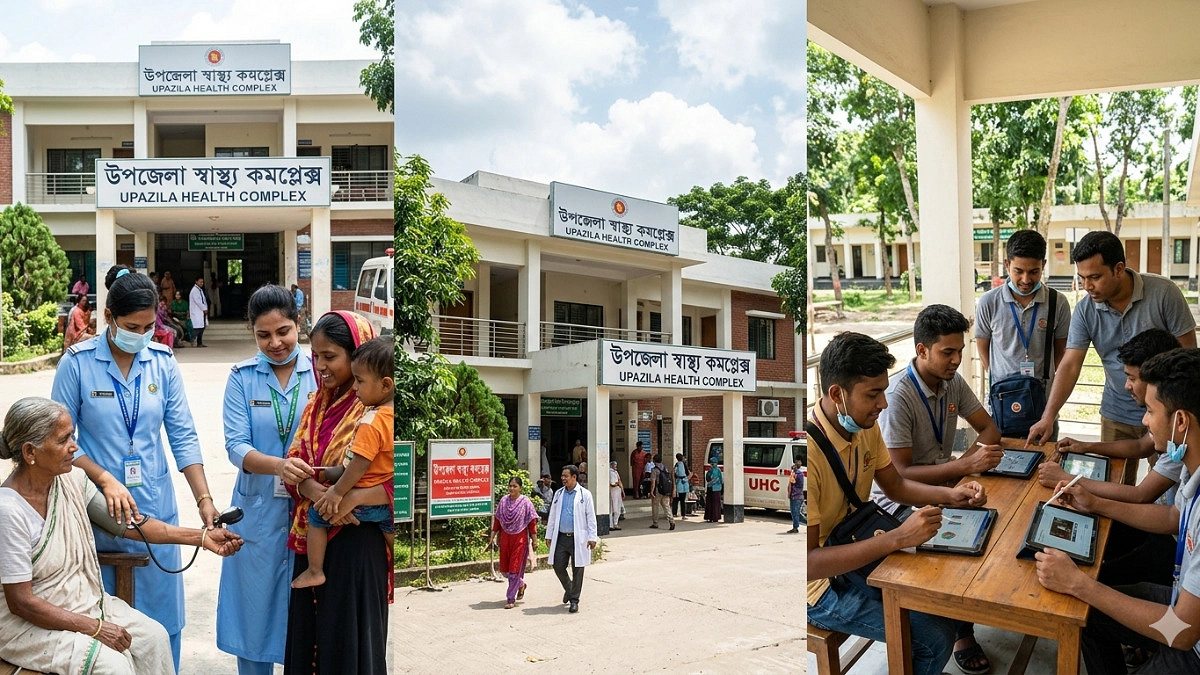
Representational image generated by AI.
For a long time, Bangladesh’s healthcare system has prioritized disease diagnosis and treatment over prevention. However, the proposed budget for the 2026–27 fiscal year not only increases allocations for the health sector but also introduces various initiatives to transform the healthcare framework. According to the plan, healthcare services will become prevention-focused—emphasizing disease prevention before illness occurs, rather than treatment afterward.
Dr. Ziauddin Hyder, the Prime Minister's Special Assistant for Health Affairs (with the rank of State Minister), said: “In a populous country like Bangladesh, it is not possible to ensure healthcare for every patient after they go to hospitals. That is why primary healthcare is being emphasized to reduce the incidence of disease, or to ensure quick recovery if illness occurs. Gradually, the system will be developed to such an extent that no one will be able to receive tertiary-level hospital care without first seeking primary healthcare.
To ensure quality and universal health protection for all, the government has proposed allocating Tk 69,409 crore to the Ministry of Health and Family Welfare for the next fiscal year—nearly double the revised budget of the previous year, marking a record allocation for the sector. Such a high allocation has never been made to health before. Both the Health Services Division and the Health Education and Family Welfare Division have seen development allocations increased several times compared to the past. However, the government’s primary focus is on primary healthcare.
The government’s plan is to establish robust primary healthcare systems in villages and towns to make the health system prevention-oriented. This includes measures for disease prevention, nutrition improvement, maternal and child health, immunization, and early detection of non-communicable diseases such as cancer and diabetes. To this end, plans have been made to set up one or more modern primary healthcare units in every union and every ward of cities—implementation of which has already begun. Once realized, this will reduce unnecessary pressure on hospitals as well as lower healthcare costs for the public.
In his budget speech, Finance Minister Amir Khasru Mahmud Chowdhury said that to make healthcare services quality-driven and people-friendly, a process to recruit one lakh new health workers—80% of whom will be women—has begun. Additionally, 5,000 MBBS doctors will be recruited soon. Maximum importance will be placed on public awareness.
Ziauddin Hyder, advisor to the BNP Chairperson and former World Bank health and nutrition specialist, added: “A large portion of the health budget will be spent on primary healthcare. Awareness about preventable diseases among the general public is low. Often, people do not see a doctor until their condition becomes extremely serious. To change this mindset, the government has adopted a policy to transform the health sector into a prevention-centered one, thereby reducing the number of patients.”
Ziauddin Hyder also informed about the future, stating that the government has formed a special cell to ensure the proper distribution and expenditure of the allocated funds in the health sector. Everything will be monitored from there. Additionally, he announced that 25,000 midwives will be recruited soon.
Professor Rumana Haque of the Economics Department at the University of Dhaka views the increased allocation and attention to the health sector positively. She said, "The current budget has set a very high revenue collection target. If that target is not met, the allocations will have to be funded through loans. To ensure the doubled health budget is spent in a planned and rational manner, the distribution and expenditure of funds must be monitored from the very first month. If any shortcomings are identified, they need to be promptly evaluated and addressed. Otherwise, long-standing issues in the health sector will become major challenges to budget implementation." She added that transparency in procurement and recruitment is crucial. She stated, "Inclusive healthcare is needed alongside maternal and child health at both rural and urban levels. This will make healthcare easily accessible to everyone."
According to the government's current plan for the health sector, a sustainable, modern medicine and vaccine supply network will be established nationwide to deliver healthcare to rural and marginalized communities. This will ensure that essential medicines and vaccines reach remote areas in a timely manner, facilitating the elimination of infectious diseases like measles. In addition to increasing bed numbers at upazila health complexes, facilities for maternal, newborn, child, and reproductive healthcare, as well as physiotherapy, will be provided. Under universal health coverage, every citizen will receive an 'e-Health Card' under the National Health System.
Public health expert Mushtuq Hussain agrees with the government's assertion that focusing on primary healthcare will bring rapid positive changes to the sector. The former Chief Scientific Officer of the Institute of Epidemiology, Disease Control and Research (IEDCR) said, "To strengthen primary healthcare, community-based ordinary people must be empowered in such a way that they become motivated to prevent diseases themselves. For this, training pharmacists alongside health workers would yield good results."
However, Mushtuq Hussain also expressed the opinion that an 'Independent Health Commission' is highly essential for the overall improvement of the healthcare system. He also called for appropriate steps to stop irregularities and corruption.
The budget proposal has increased the one-time medical allowance for six diseases, including cancer, from Tk 50,000 to Tk 100,000 to reduce the financial burden of healthcare costs on low-income people and ensure access to quality medicines.
Discussions with several individuals involved in the healthcare sector regarding the government's plans and budget revealed that reducing the price of stents used in heart surgeries will lower the cost of heart disease treatment. The withdrawal of the 7.5% advance VAT on the import of blood tubing sets used for hemodialysis for kidney patients will reduce the cost of this service. Import duties on 51 new raw materials for manufacturing Active Pharmaceutical Ingredients (APIs) have been completely withdrawn. Furthermore, the removal of duties on 17 new basic raw materials for the pharmaceutical industry will lower medicine prices.
Additionally, with the aim of making specialized treatment for complex diseases more accessible and systematic, transforming every district hospital and all relevant upazila health complexes across the country into integrated, full-fledged 'Secondary Healthcare Units' would also reduce people's treatment costs.
