
Allocations Increase for Power, Energy Sectors
- Middle East crisis puts pressure on economy
- Target of 35,000 MW production in 2030

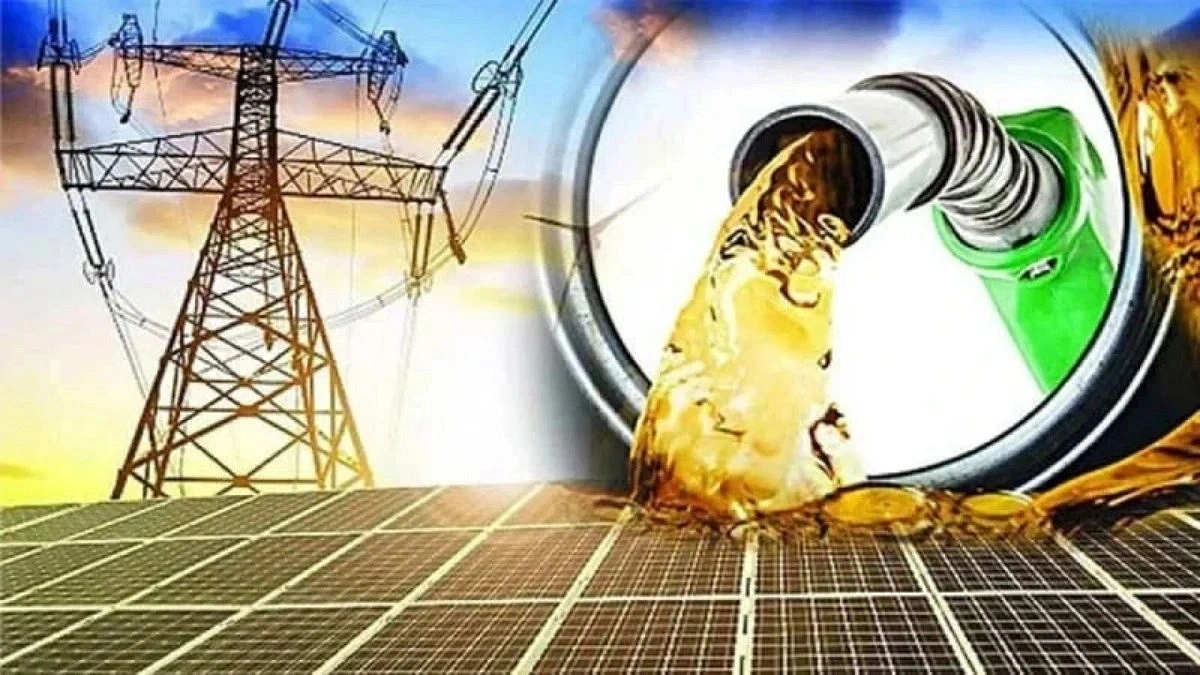
Collected Photo
In the proposed budget for the upcoming 2026-27 fiscal year presented to the National Parliament, a total allocation of Tk 17,345 crore has been proposed for the power and energy sector. In the recently concluded 2025-26 fiscal year, the allocation for this sector was Tk 16,952 crore; meaning the allocation is increasing by Tk 393 crore in the new fiscal year.
During his budget speech today, Thursday, Finance Minister Amir Khasru Mahmud Chowdhury announced this allocation, considering the importance of the power and energy sector. At the same time, he highlighted the multifaceted pressures on the country's economy due to the ongoing global geopolitical context, particularly the Middle East crisis.
Impact of the Global Situation and the Middle East Crisis
In his budget speech, the Finance Minister stated that just 10 days after the current government assumed office, a new crisis erupted in the Middle East, creating an unexpected and major risk for Bangladesh's economy. Due to the direct impact of this crisis, the prices of fuel oil, LNG, and fertilizers on the international market have more than doubled. As a result, production costs in the domestic power, agriculture, transport, and industrial sectors have increased dramatically, putting intense pressure on overall inflation and government subsidies.
Simultaneously, the abnormal increase in import costs has also negatively impacted foreign exchange reserves. The Finance Minister expressed concern, saying that since the Middle East is the largest and most important destination for Bangladesh's expatriate workforce, prolonged instability there could also hinder future employment and remittance flows.
Power Sector Subsidy Exceeds Tk 40,000 Crore
Regarding the internal crisis in the country's power sector, the Finance Minister sharply criticized the policies and management of the previous government. He stated that due to the unplanned power and energy policies, corruption, plunder, and extreme mismanagement of the previous government, the cost of electricity production has skyrocketed today. Notably, a huge amount of money has been wasted in the power sector under the guise of 'capacity charges' (rent for power plants) even when no electricity was produced, and there are serious allegations of money laundering in this regard.
Furthermore, due to one-sided and controversial conditions in some mega projects, the burden of additional costs created in the import and purchase of electricity is still being borne by the people of the country. And because of these reasons, the annual subsidy in the power sector has now exceeded Tk 40,000 crore. The Finance Minister noted that although the country's installed power generation capacity, including power imports and on-grid renewable energy, has now reached 28,919 megawatts, uninterrupted and quality power supply for the people has still not been ensured due to incorrect policies.
Power Sector Reforms
To overcome the crisis and deadlock, the government has undertaken short, medium, and long-term multi-faceted plans and reform initiatives in the electricity generation, transmission, and distribution systems. The Finance Minister stated that measures have been taken to prevent corruption and irregularities at all levels of the sector, ensure transparency and accountability, take strict legal action against those involved in corruption, and implement intensive monitoring.
Additionally, initiatives have been taken to close or modernize inefficient and old power plants, implement plans for electricity generation at minimum cost, and re-evaluate previous controversial capacity charge and power purchase agreements. Work is ongoing to modernize the transmission and distribution network and reduce system losses to make power supply more reliable.
Production Target
According to the government's long-term goal, the country's electricity generation capacity will be increased to 35,000 megawatts by 2030.
At least 20 percent of total electricity demand will come from renewable energy sources. A target has been set to expand power transmission lines to 25,000 circuit kilometers.
Rooppur Nuclear Power Plant
It will be possible to add 1,200 megawatts of electricity from the first unit of this 2,400-megawatt mega project to the national grid by January 2027.
Need to Move Away from Import-Dependent Fuel
Meanwhile, the Finance Minister also announced major policy changes to overcome the energy sector crisis. He said that in the past, prolonged incorrect policies, mismanagement, and excessive import dependence in the energy sector had rendered the entire sector fragile. During that time, no effective initiatives were taken to explore domestic gas, increase refining capacity, or build reserves.
However, although the prices of diesel and LNG on the international market have increased abnormally due to the recent Middle East crisis, the government is providing large subsidies in the interest of the people. While the price of fuel oil has been slightly adjusted, gas supply has been kept normal and its price has remained unchanged.
Here is the English translation of the provided Bengali news report:
To ensure the country's long-term energy security, the government is now placing maximum emphasis on increasing domestic gas exploration and production. Over the next three years, through the state-owned enterprise BAPEX, 270 kilometers of geological survey, 700 line-kilometers of 2D, and 700 square kilometers of 3D seismic surveys will be completed.
As part of the medium-term plan, 69 new wells will be drilled during this period, and workovers (repairs) will be performed on 31 old wells. Additionally, the process of procuring new exploration rigs has begun. To accelerate oil and gas exploration in the maritime area, the PSC (Production Sharing Contract) framework has been revised, and a new 'Bangladesh Offshore Bidding Round' has been announced.
Diversification of Energy Infrastructure
To reduce dependence on any single source for energy imports, the government has adopted a strategic diversification policy. Alongside the two existing floating LNG terminals in Maheshkhali, the government is currently reviewing the establishment of an additional terminal. Simultaneously, work is progressing on establishing a land-based LNG terminal in Matarbari.
In addition to ensuring maximum utilization of the country's 601.50 kilometers of pipelines, initiatives have been taken for the rapid commissioning of the Single Point Mooring (SPM). Furthermore, a long-term plan has been undertaken to build a new oil refinery with a capacity of 5 million metric tons in phases in Chattogram or the coastal industrial zone to increase the country's oil refining capacity.
At the end of his speech, the Finance Minister expressed hope that if these integrated and reform-oriented initiatives in the power and energy sector are fully implemented, the country's overall energy security will be further consolidated. As a result, it will be possible to ensure uninterrupted and environmentally friendly power and energy supply at relatively affordable prices for the country's people and industries.
