
Interview with Samantha Sharmin
'My Stance on the Jamaat-NCP Alliance Remains Unchanged'

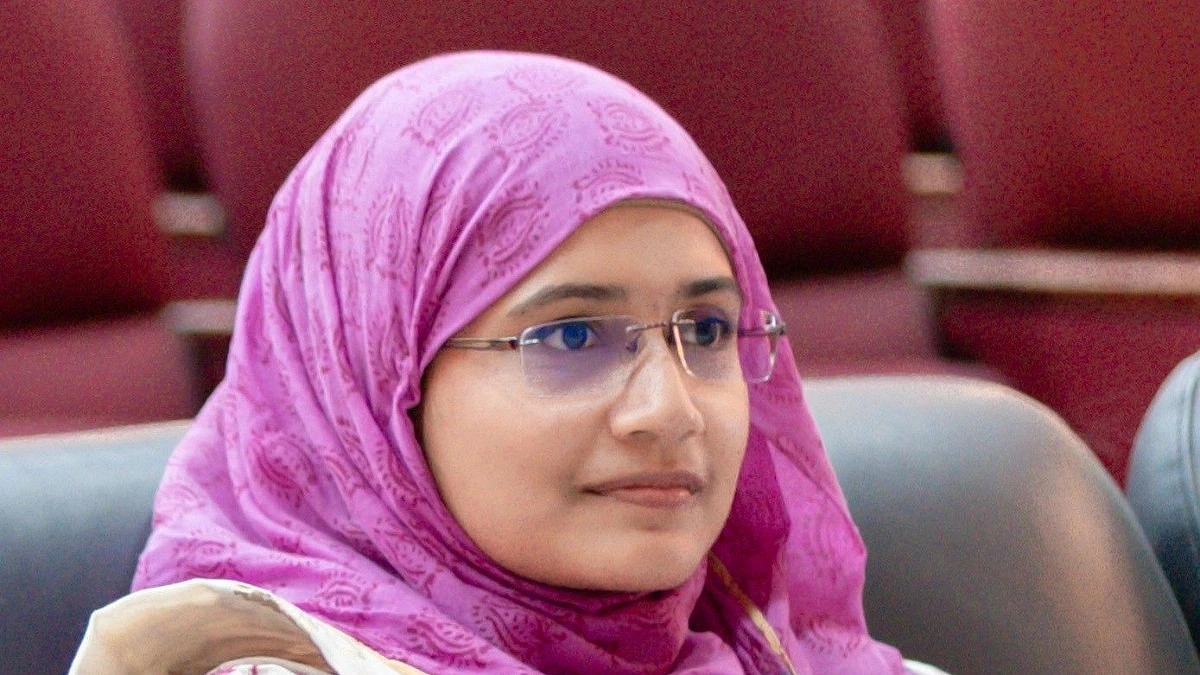
Samantha Sharmin. Photo: From Her Facebook Page.
Samantha Sharmin was one of the prominent women who led from the front during the turbulent times of the July mass uprising. Drawing from that experience, she later took on top-level leadership roles in the National Citizens' Committee and the National Citizens' Party (NCP).
Later, just before the national elections, she moved somewhat into the shadows after publicly speaking out regarding a differing stance on alliance politics. Her silence has raised new questions—will Samantha return to active politics? To find answers to these buzzing political questions, Agamir Somoy sat down for an exclusive conversation. Her positions, experiences, and future thoughts were discussed. The interview was conducted by Amzad Hossain Hridoy.
Agamir Somoy: What is your current position regarding the NCP? Will you return to active operations?
Samantha Sharmin: The NCP is a party we built with our own hands. Naturally, I have a sense of affection, compassion, and aspiration toward it. In political reality, there can be disagreements or ideological struggles—I see this as normal and am not frustrated by it. I had mentioned earlier that I would not be active during the election period. Consequently, it is natural that I wasn't visibly active during that time. Now, I see that the NCP is entering a new phase of restructuring. At this stage, I will try to participate actively again and make a contribution.
Agamir Somoy: How have you spent your time from the election period until now? Were you away from politics?
Samantha Sharmin: I was never truly outside of politics. Insha'Allah, I will remain in politics in the future as well. There are different phases in a person's political life—this electoral period was a time of observation for me.
I analyzed the situation from a distance and tried to understand the relationship between recent national events and history. At the same time, because I was busy with the organization for a long time, I took this opportunity to speak with various people, both within and outside the party, whom I hadn't talked to before. I learned from them what the future of the NCP could be, what my duties as a politician should be, and how they view the future of Bangladesh. This time has been very important and interesting to me.
Agamir Somoy: Regarding the alliance with Jamaat, is your position still the same as before?
Samantha Sharmin: I always try to maintain consistency in my political stance. I don't make statements that suddenly take a completely opposite position. I still stand by the position I took during the formation of the alliance. However, whether a position is right or wrong will be determined by history. Time will show how effective those decisions were for the NCP.
Electoral politics in Bangladesh is very complex. Here, many parties enter into various compromises when they fail to attract the public with their own ideology. In the past, we have seen various parties form alliances during elections despite having ideological conflicts. In this reality, Jamaat has often acted as a "trump card." But the important thing is that the NCP is still in a position to determine its own future.
Agamir Somoy: In the future, will you take part in any alliance activities with Jamaat?
Samantha Sharmin: I believe in the NCP and am always ready to work for it. However, I may not be seen participating in alliance-based activities. Still, whenever the NCP needs support—especially during crises or difficult times—I will definitely stand by it.
Agamir Somoy: Is the NCP on the right path regarding elections and alliances?
Samantha Sharmin: If you look at the NCP’s manifesto, you’ll see that two strands are working together. On one hand, there is a belief in democratic processes; on the other, revolution is not seen as something outside of democracy. To reconcile these two strands, we have proposed a Constituent Assembly election. I believe such an election is essential for sustainable change. In the current situation, the necessity of the NCP has actually increased. I do not see in the older political parties the vision and implementation roadmap that should be there. The NCP has the opportunity to rebuild itself—that is our strength. However, I think it would be wrong to consider parliamentary success as the ultimate outcome for the NCP. Achieving its core aspirations will take more time.
Agamir Somoy: There was discussion about you regarding a reserved women’s seat—did you receive any proposal?
Yes, I received proposals not only from the NCP but also from various other parties. This is probably a reflection of the lack of female leadership. I see reserved women’s seats as a form of affirmative action, but at the same time, I consider it a humiliating practice. As long as it remains necessary, it will continue to be a dark chapter in our political reality. Personally, I support direct elections. If I ever go to parliament, I want to be elected through direct votes from the people.
Agamir Somoy: To what extent is the elected government embracing the spirit of “July” and reform?
Samantha Sharmin: I think the government has not truly embraced the spirit of July. Rather, in many cases, it has been used. The political position created through July is being used by various parties for their own interests. But when it comes to reform, there is still fear—especially among major political parties. As I have said before, many view reform as something to be afraid of. If this mindset could be overcome, significant political change would be possible.
Agamir Somoy: What should the current generation of youth and political parties do?
Samantha Sharmin: First, a few key issues need to be brought forward and firmly established in public awareness. For example, the idea that no constitutional change can be made permanent without a Constituent Assembly election—this must be spread among the people. Second, a transformation in political culture is essential. At present, many parties do not practice democracy; instead, they operate through power consolidation, syndicates, and extortion. To change this culture, transformation must come from within. At the grassroots level, conscious and dedicated activists need to be developed. Sustainable political change will only be possible when there is a shift in people’s mindset.
Building this foundation should be the responsibility of the NCP. There is nothing else other than this.
Agamir Somoy: Thank you for your time.
Samantha Sharmin: Thank you, as well. And, my best wishes to Agamir Somoy.
