
What is nuclear fuel, how loading works

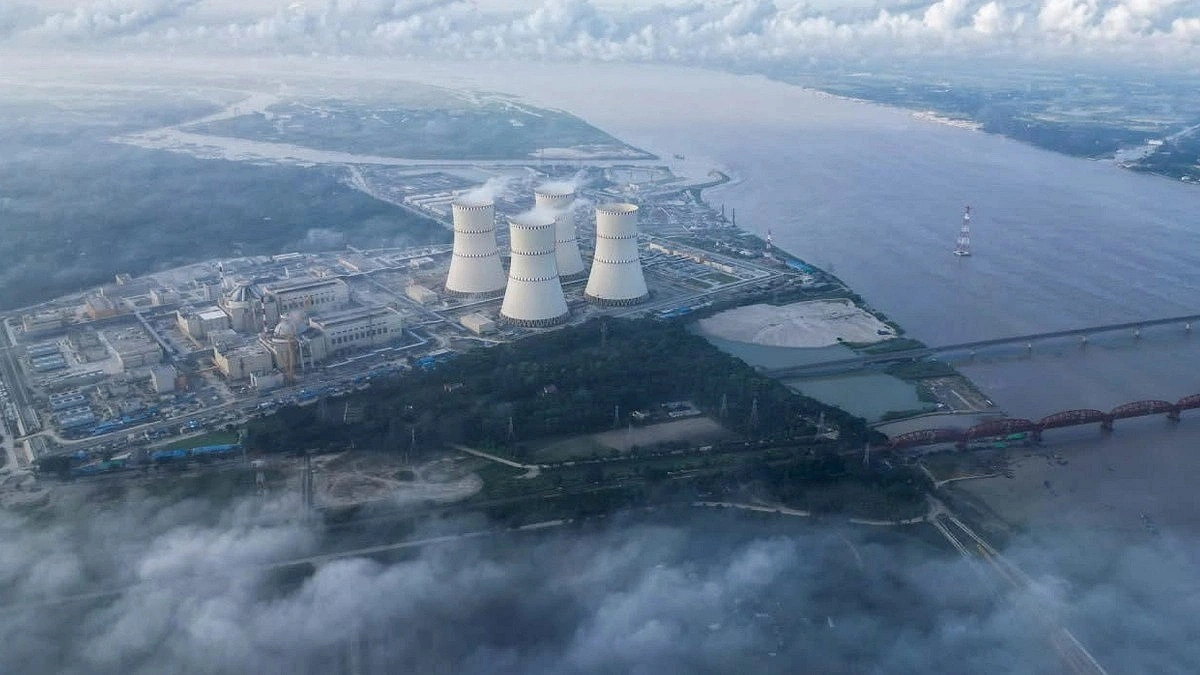
Collected Photo
Fuel loading at the Bangladesh’s first nuclear power plant in Rooppur Nuclear Power Plant will begin today. Through this, Bangladesh will become the 33rd country in the world to use nuclear energy.
The question is, what is this nuclear fuel? And how is it loaded?
Simply put, uranium is used as nuclear fuel. This uranium is found underground in mines in the form of ore.
Major uranium-producing countries in the world include Kazakhstan, Russia, Canada, Australia, and Namibia.
After extracting uranium from mines, workers process it and then make it usable as fuel.
Unlike oil, gas, and coal, which power plants use directly as fuel, the process for nuclear fuel is somewhat different.
Workers convert uranium extracted from mines into small pellets. They then fill these pellets into long metal tubes, called fuel rods. They assemble multiple fuel rods together to form a fuel assembly.
They place these assemblies inside the reactor—known as the heart of the power plant—in a specific arrangement through an automated process.
The entire system remains enclosed within a robust reactor vessel.
According to the reactor design (VVER-1200) of the Rooppur Nuclear Power Plant, operators must install 163 fuel assemblies in the reactor core, which will take about 30 days. Each assembly used at Rooppur contains 312 fuel rods.
During fuel loading, operators place control rods between each assembly to keep the fission process under control. They do this primarily to ensure safety.
They complete the entire process with extreme caution by following international safety guidelines, and they monitor every stage through specialized systems.
After completing all fuel loading, operators gradually withdraw the control rods, which initiates the fission process. That is, uranium inside the fuel rods splits when it collides with neutrons.
This reaction produces heat and new neutrons. These neutrons then split other uranium atoms. In this way, a chain reaction continues and generates a large amount of heat.
This heat converts water into steam, which spins a turbine. A generator connected to the turbine produces electricity. This operates through a controlled and automated chain reaction process.
They send the generated steam to the cooling tower. There, they cool it and convert it back into water, which they reuse to produce steam again.
Once loaded, the fuel can run the plant for about one and a half years. As a result, operators will not face the kind of regular fuel management required for oil, gas, or coal. After one and a half years, they will need to replace one-third of the fuel.
Under the construction agreement, Russia will supply fuel for three years. That means there will be no major pressure of fuel imports during this period. After that, Bangladesh will have to import uranium on its own. However, it will only need replacement every two years.
On September 28, 2023, the first shipment of nuclear fuel from Russia arrived in Dhaka by air. Several more shipments followed. Authorities transported them to Rooppur by road under special security, and they are currently stored there.
International nuclear researcher and former chairman of the Bangladesh Atomic Energy Commission, Shawkat Akbar, said that fuel loading at the Rooppur Nuclear Power Plant is a major milestone. It marks an initial stage of electricity generation and signals a transition from the construction phase toward the start of operations.
He said fuel loading does not mean electricity generation has begun; rather, it marks the start of a precise and lengthy technical process. After loading fuel, operators initiate a controlled and sustained chain reaction, or fission, inside the reactor for the first time. They gradually increase production capacity while conducting various tests.
He also said that although geopolitical complexities have created various uncertainties around fossil fuels, the risk is comparatively lower in the case of nuclear fuel. It will play an important role in the country’s energy security and support environmentally friendly electricity generation.
The Rooppur Nuclear Power Plant will have a total generation capacity of 2,400 megawatts from its two units. Fuel loading is starting in the first unit, while work on the second unit is progressing in full swing.
