
'Creative Budget' Will Help the Economy Turn Around

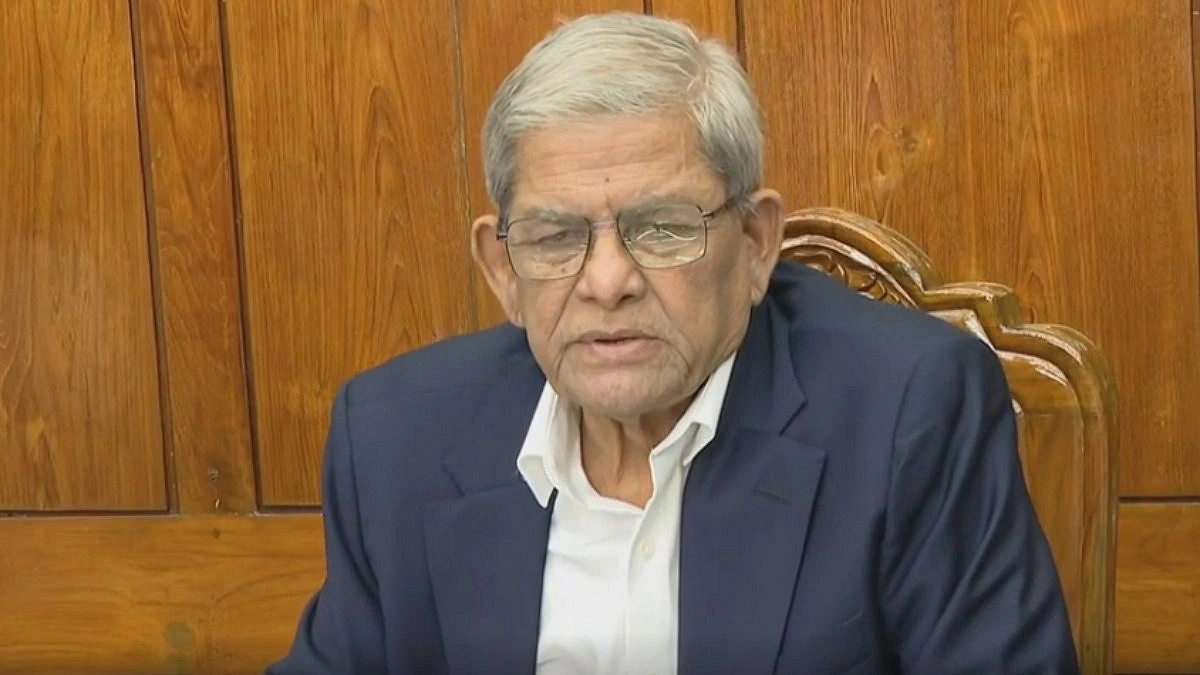
BNP Secretary General Mirza Fakhrul Islam Alamgir. Agamir Somoy.
BNP Secretary General Mirza Fakhrul Islam Alamgir has described the proposed budget for the 2026-27 fiscal year as a 'creative budget' that is production, investment, and business-friendly.
"This budget will play an important role in increasing employment, expanding production, and reviving the momentum of the economy," the BNP Secretary General said.
He made these remarks while responding to the budget tonight, Thursday, in his chamber at the Parliament building.
Mirza Fakhrul said the budget has been formulated considering the welfare of all classes of people. Along with encouraging domestic production and investment, various tax benefits and incentives have been provided to improve the business environment.
"Against the backdrop of a long-standing economic crisis and administrative instability, the BNP government has assumed office. In that reality, Finance Minister Amir Khasru Mahmud Chowdhury has presented a budget that has a clear plan for economic recovery and restoring growth momentum," added the Minister of Local Government.
The BNP Secretary General highlighted various social safety net programs in the budget. He said that in the next fiscal year, Family Cards will be distributed to approximately 4.1 million female heads of households. An allocation of Tk 1,38,000 crore has been made for this program. At the same time, under the Farmers Card, each farmer will be given Tk 2,500 in assistance.
"Initiatives have been taken to expand irrigation systems, excavate canals, conserve water, and encourage fish farming to increase agricultural production. Additionally, arrangements have been made for regular honorariums for mosques and other places of worship," the BNP Secretary General noted.
Discussing domestic industry and investment, Mirza Fakhrul commented that necessary duties have been imposed on imports to protect local production, and extensive tax rebates and other benefits have been ensured for entrepreneurs. In his view, such incentives have rarely been seen in the past.
He also added that the budget places special emphasis on the 'Creative Economy'. He highlighted plans for monthly honorariums for national team players in sports, organizing 'Notun Kuri Sports', restarting inter-school sports competitions, and providing scholarships to sports students aged 12 to 14. He also mentioned the initiative to establish 64 sports villages in the country's 64 districts.
The BNP Secretary General also highlighted plans to expand economic activities based on culture and heritage. He said, "Under the 'One Village, One Product' initiative, work will be done to expand the market for various creative products including pottery, weaving, shital pati (cool mats), and satranji (handwoven rugs). At the same time, initiatives will be taken to create international markets for folk culture and handicrafts. There is also a plan to establish a world-class 'Creative Hub' on 160 acres of land in the eastern part of the capital."
He also positively highlighted the initiatives for the development of the micro, small, and medium enterprise sector, the introduction of the Probashi (Expatriate) Card, employment based on high-tech parks, and increasing women's participation in rural road maintenance.
Mirza Fakhrul also mentioned initiatives to simplify laws and administrative processes to improve the investment environment. In his view, this will further encourage domestic and foreign investors.
Highlighting the increased allocations for the education and health sectors, he expressed hope that significant positive changes will occur in these two sectors.
Regarding tax system reforms, he stated that tax policy and tax administration have been separated, initiatives have been taken to increase the number of taxpayers, and customs will be fully automated. Additionally, measures will be taken to reduce source tax verification time, build a taxpayer-friendly tax administration, and provide duty-free access to imported raw materials for export-oriented sectors.
In his view, if these initiatives are implemented, a revolutionary change could occur in Bangladesh's economy.
Regarding inflation control, Mirza Fakhrul commented that if production increases, inflation will naturally decrease.
