


What are the differences between this election and that one?

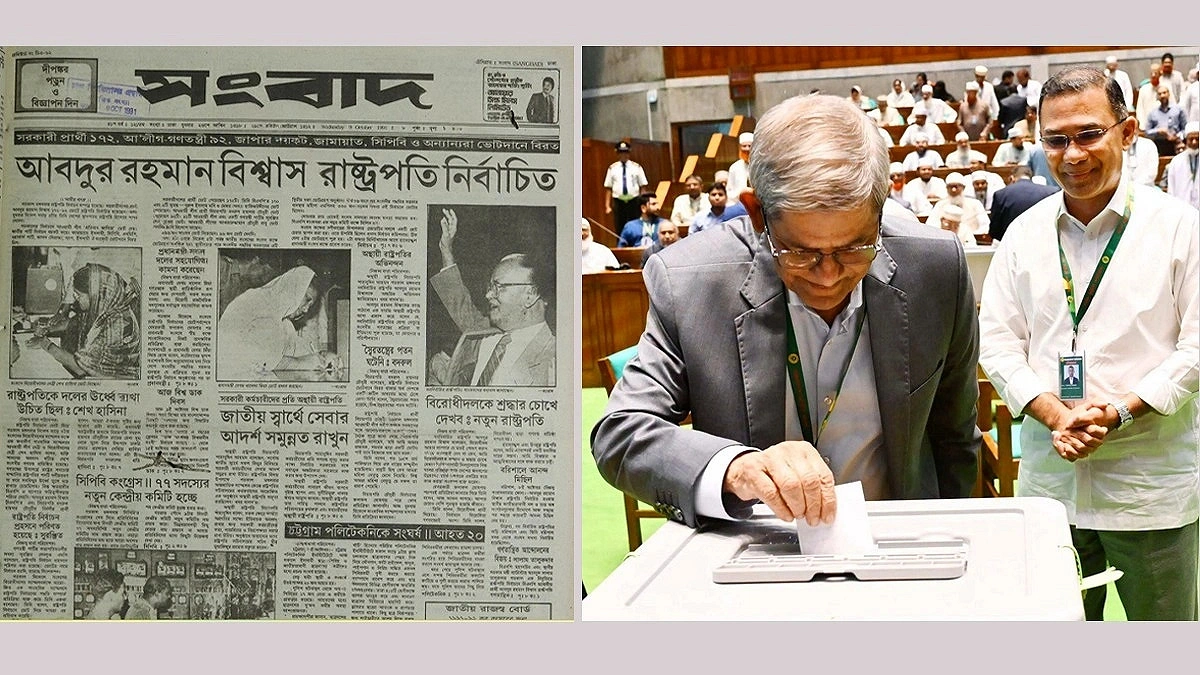
This is the first presidential election since 1991. Collage: Agamir Somoy.
After 35 years, voting took place again in a presidential election. Since 1991, this is the first time there have been multiple candidates, so the result was determined through a direct vote by members of parliament.
In the election held today (Thursday) during a special session of the National Parliament, the candidate nominated by the ruling BNP, Mirza Fakhrul Islam Alamgir, emerged winner.
Mirza Fakhrul Islam Alamgir got 255 votes in the election. His rival, Colonel (retd.) Oli Ahmad, who was backed by the Jamaat-e-Islami-led 11-party alliance, received 88 votes.
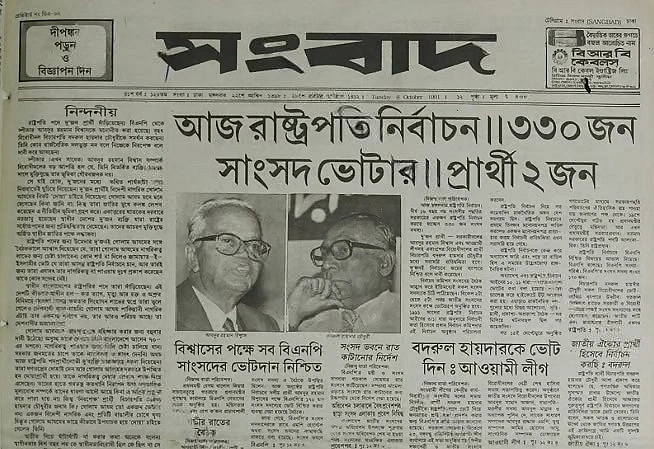
News reports published in the media in 1991.
There were a total of 349 MPs as voters in this election. Among them, 343 cast their votes. Six MPs abstained from voting. The voting took place from 2 PM to 5 PM.
What was the result in 1991?
The last presidential vote was held in 1991. In that election, the ruling BNP's candidate, Abdur Rahman Biswas, was contested by Awami League's candidate, Justice Badrul Haider Chowdhury.
According to media reports at the time, Abdur Rahman Biswas bagged 172 votes and was elected president, while Badrul Haider Chowdhury got 92 votes.
In that election, including reserved-seat female MPs, the total number of voters was 330. A total of 264 votes were cast—meaning 66 MPs abstained. Several parties, including the Jatiya Party, Jamaat-e-Islami, and the Communist Party of Bangladesh (CPB), boycotted that election.
On the other hand, in the 2026 election, there were 349 voters and 343 cast their votes. As a result, the participation rate in this election was significantly higher.
Why was there no voting for 35 years?
After the 1991 election, presidential elections were held eight times over the past 35 years. However, each time there was only a single candidate, so MPs did not need to vote. Consequently, although the formal process for the presidential election existed, a competitive vote was never required.
This time, because Colonel (retd.) Oli Ahmad ran as a candidate backed by the Jamaat-led alliance against BNP candidate Mirza Fakhrul Islam Alamgir, a vote became necessary after such a long gap.
A significant change in margin as well
In 1991, the vote margin between Abdur Rahman Biswas and Badrul Haider Chowdhury was 80. This time, the margin between Mirza Fakhrul Islam Alamgir and Oli Ahmad is 167.
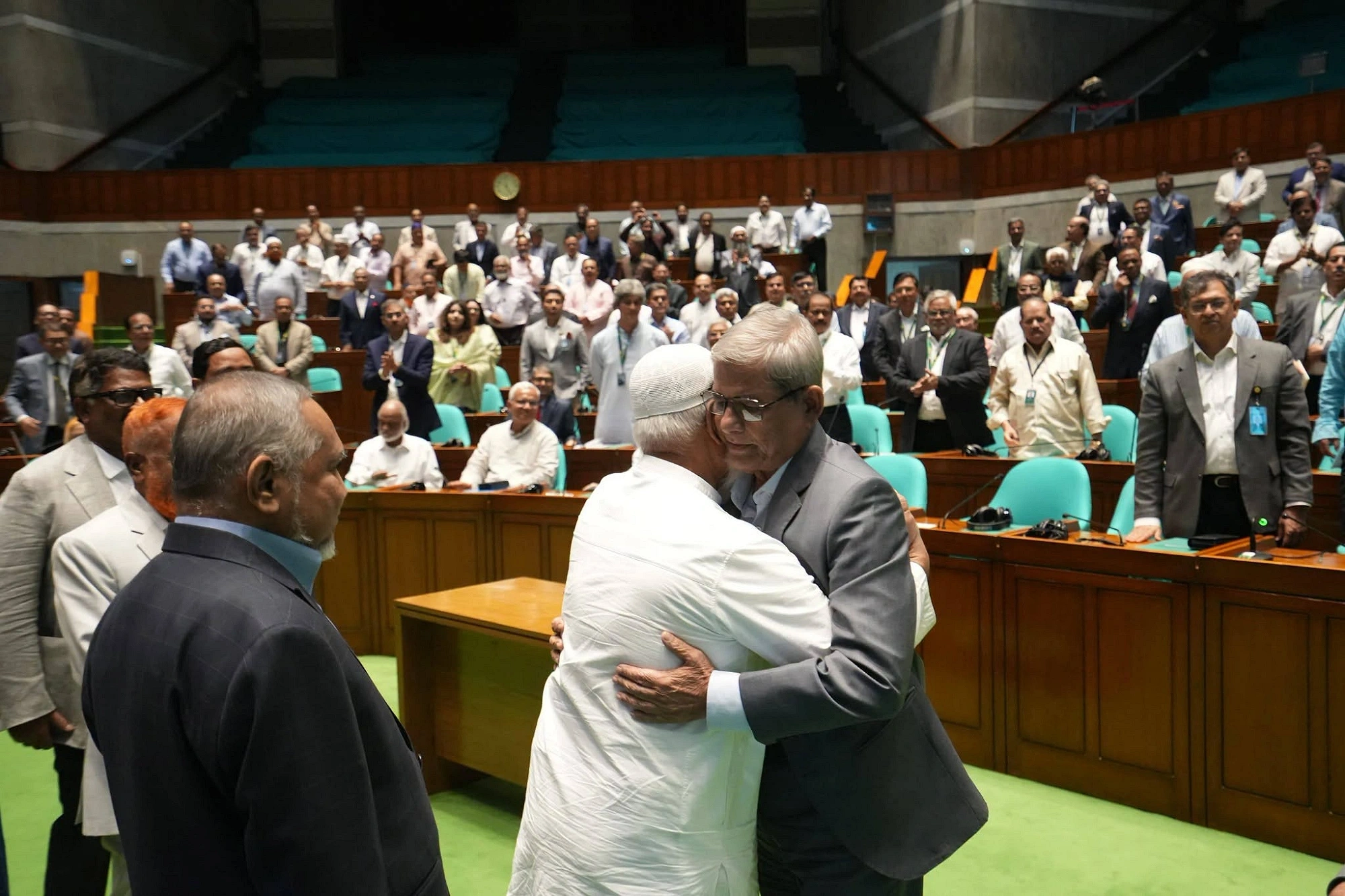
Newly elected President Mirza Fakhrul Islam Alamgir exchanged greetings (embraced) with Jamaat-e-Islami Ameer and Leader of the Opposition, Dr. Shafiqur Rahman.
In other words, compared to 1991, the vote margin in this election is more than double. At the same time, the voter turnout in this election was also notably higher.
Regarding the presidential election, in 1991 there was extensive discussion about the constitutional role of the president, party allegiance, and neutrality. This time too, these questions have come to the fore again. Particularly, in the context of the parliamentary system, the president's position, and the relationship between the government and the opposition, this election carries significant political implications.
What is the difference in reactions?
In 1991, after BNP-nominated candidate Abdur Rahman Biswas was elected president, the then opposition leader and Awami League President Sheikh Hasina had said that the president should have been kept above the party.
Awami League President Sheikh Hasina had said, "We know what the result would have been if secret voting had taken place in the presidential election." Although he (Biswas) lost in the open vote of the MPs, he won in the eyes of the people.
In her reaction, Sheikh Hasina further said that through this presidential election, the BNP government had suffered a moral defeat.
On the other hand, after being elected president, BNP candidate Mirza Fakhrul Islam Alamgir exchanged greetings (embraced) with Jamaat-e-Islami Ameer and Leader of the Opposition Dr. Shafiqur Rahman inside the parliament. Later, the Leader of the Opposition Dr. Shafiqur Rahman congratulated Mirza Fakhrul on his verified Facebook page.
In the post, the Leader of the Opposition expressed hope that in the days ahead, as the guardian of the state, Mirza Fakhrul Islam Alamgir would utilize his utmost competence and wisdom to establish justice, uphold democracy, and protect the country's independence and sovereignty.
Independent MP from Brahmanbaria-2 constituency, Barrister Rumeen Farhana, did not vote in the presidential election. Reacting to this election, she said, "A massive mass uprising took place, involving our sacrifices as a nation and many dreams. So why couldn't we all jointly nominate a non-political and acceptable person for the presidency?"

