

Ships Keep Crossing Strait of Hormuz Amid Attacks

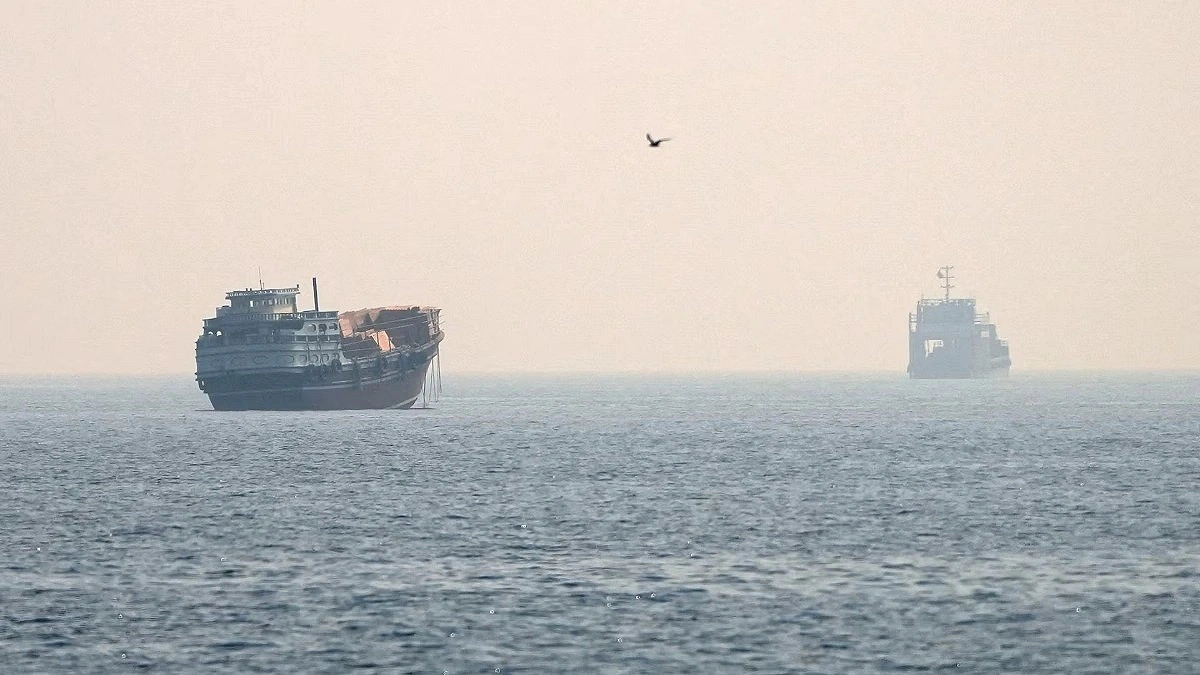
Overall daily vessel traffic has declined
Several liquefied natural gas (LNG) carriers have crossed the Strait of Hormuz in recent days despite rising tensions in the Middle East. However, vessel-tracking data show that overall daily maritime traffic has declined.
According to data from vessel-tracking firms, at least 22 Japan-linked ships have left the Gulf region since Tuesday.
Shipping companies and governments are closely monitoring the situation in the Strait of Hormuz following attacks on Iranian commercial vessels and retaliatory strikes by the United States.
Data from Kpler and LSEG show that at least five empty LNG tankers have entered the Strait of Hormuz in recent days.
The vessels include GasLog Shanghai, controlled by Greek shipping company GasLog, and Al Samriya, Al Dafna, Al Ghattara, and Al Rayyan, all linked to QatarEnergy.
According to the data, GasLog Shanghai and Al Rayyan entered the strait on the night of July 9. Earlier that day, they had been seen outside the strait.
The other three QatarEnergy-linked vessels were last seen outside the Strait of Hormuz near India’s western coast several weeks ago. Al Samriya and Al Ghattara were last identified there between June 18 and 19, while Al Dafna was spotted there on June 29.
QatarEnergy and GasLog did not immediately comment on the matter.
An ultra-large crude carrier named Nissos Kea entered the Strait of Hormuz on Thursday. At the same time, another very large crude carrier, Lila Vadinar, departed the strait.
Xavier Tang, a senior analyst at vessel market analytics firm Vortexa, said that the difference from the early days of the conflict is that Iran is no longer targeting all ships and is instead attacking vessels using routes close to the coast of Oman. As a result, more ships may choose routes closer to Iran or transit the strait with their tracking systems switched off.
Source: Reuters ( Adapted)

