
Why the Strait of Hormuz is Now a Top Priority Over Iran's Nuclear Program

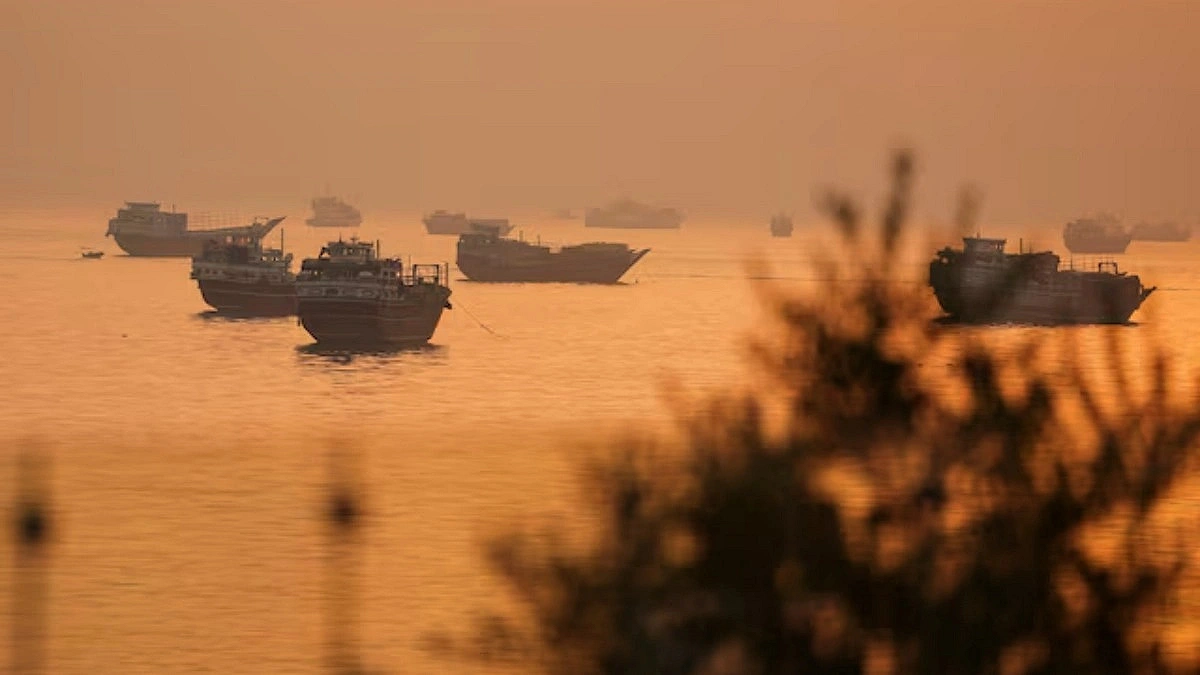
Vessels in the Strait of Hormuz are visible from Oman’s Musandam. Photo: Reuters
Iran now views control over the Strait of Hormuz as its "golden weapon" or a highly valuable asset. For this, Tehran is prepared to escalate tensions anew with the United States. In fact, control over this strait has become a greater priority for the country than the nuclear program for which Iran has endured international sanctions for decades.
This issue is so central to Iran that earlier this week, ships attempting to transit Hormuz without Tehran's permission were fired upon. This led to a round of retaliatory strikes with the United States, severely threatening the interim peace agreement signed last month.
By controlling this route—which has long handled one-fifth of the world’s energy supply—Iranian leaders now see it as their strongest card against the West and a primary lever to force Washington to avoid war.
Ebrahim Azizi, a member of the Iranian Parliament's National Security and Foreign Policy Committee, directly addressed the United States on social media, writing: "Recognize the new Iranian order in the Strait of Hormuz: this is the only way."
Although maintaining an uncompromising stance on controlling this waterway risks long-term conflict with the rest of the world, two senior Iranian sources told Reuters that there is no disagreement on this matter within Tehran's top policymaking circles.
One source stated that while there were discussions about whether Iran was taking too high a risk, the ultimate view among the top leadership is that no rational nation would give up such a vital strategic tool. The source added that the Hormuz issue is like Iran's golden weapon, which others now want to strip away from them, and that is absolutely impossible.
When U.S. President Donald Trump signed a memorandum of understanding last month to end the hostilities, the strait was temporarily reopened for transit. However, the final resolution regarding its status remains ambiguous in the memorandum.
It states that Iran will use its best efforts to implement necessary measures for the safe passage of commercial vessels without any tariffs for a period of only 60 days.
Iranian negotiators have pointed to this phrasing as a form of recognition from Washington. Their interpretation is that the Islamic Republic holds full rights to manage the waterway, even though they will temporarily refrain from charging any fees or tolls for two months.
However, the United States and Gulf nations have rejected this interpretation. According to them, the text of the memorandum means Iran will merely facilitate the safe passage of ships and cannot impose any restrictions by force.
Why This Uncompromising Stance?
One of the primary reasons for Iran's rigid stance is a deep distrust of the United States. This mistrust has been further exacerbated, particularly by Trump tearing up the nuclear deal in 2018, and the sudden resumption of war this year following last year's ceasefire.
According to Iranian sources, backing down over Hormuz would mean surrendering to Donald Trump, which is impossible. Doing so would only embolden Trump to make even harsher demands regarding their nuclear program and missile issues.
In the past, although Iran claimed that closing the Strait of Hormuz was "as easy as drinking a glass of water," in reality, they viewed it only as a last resort. This was due to the fear of harming their own economy by alienating global energy consumers and neighboring countries.
However, after the United States and Israel launched attacks on February 28 that killed Iran’s Supreme Leader and top officials, Iranian officials feel they have nothing left to lose. They immediately shut down the strait to all traffic except their own ships, causing the largest disruption to the global energy supply in history.
Ali Ansari, a professor of modern history at the University of St Andrews in Scotland, believes that both sides were concerned about their immediate economic problems. At the same time, both sides believe they have won. Consequently, there is a perception that they only need to push a little harder to get what they want.
Iranian sources confirmed to Reuters that Tehran is now more focused on the Hormuz issue than on the nuclear matter. The country's top leadership believes that Washington has already accepted Iran's right to enrich uranium and stockpile it domestically.
According to the source, Iran will not even initiate negotiations on the nuclear issue until the United States recognizes Iran's full management of the Strait of Hormuz.
Based on a report by Reuters.
