
Pakistan delivers Saudi warning to Iran over Houthi attacks

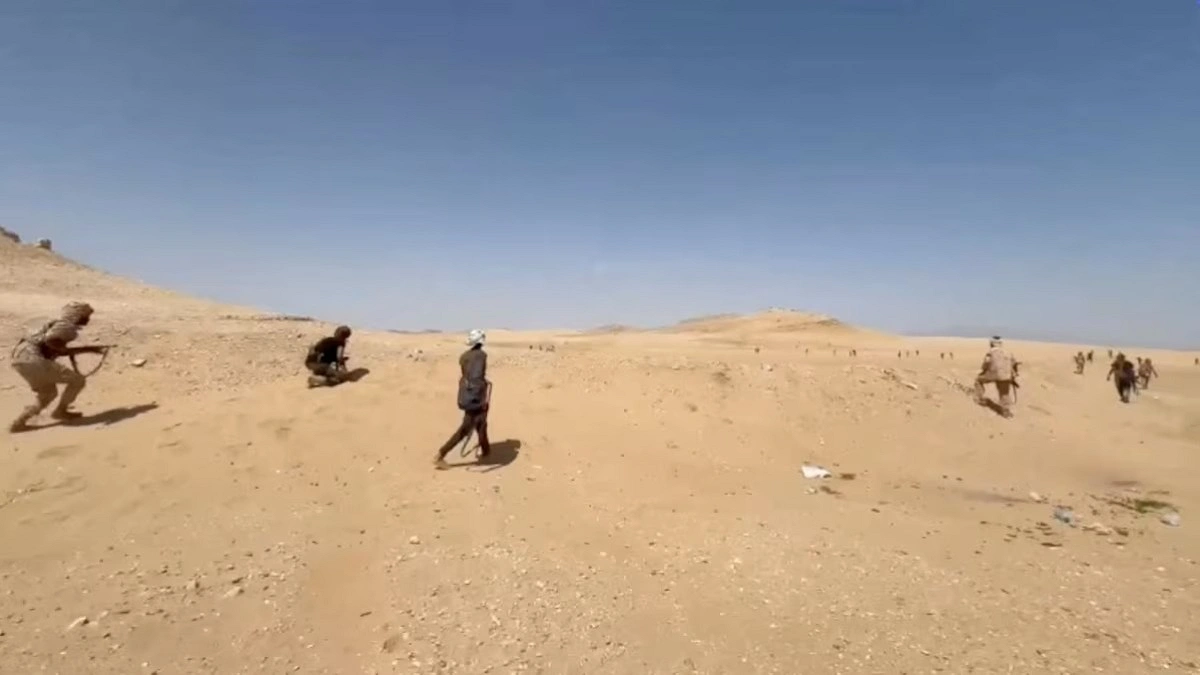
Photo: REUTERS
Pakistan delivered a Saudi warning to Iran, urging to restrain its Yemeni Houthi allies after an escalation in attacks against Saudi Arabia.
On Tuesday, Houthi forces struck an airbase in Khamis Mushait alongside oil infrastructure in neighboring cities, wounding 73 people in one of the largest attacks on Saudi Arabia since the US-Israeli war on Iran began in February.
Houthi military spokesman Yahya Saree said on Wednesday Saudi warplanes launched 54 airstrikes across various Yemeni provinces over the preceding 12 hours, asserting that the actions would “not go unanswered and unpunished”.
As Iran and US wage their largest declared series of tit-for-tat attacks on shipping in the Gulf region, this intensifying conflict threatens global energy supplies. Pakistan’s warning carries substantial weight because of defense pact with Saudi Arabia and Turkey.
Joint security commitments and diplomatic warnings
A senior regional diplomat revealed that Islamabad conveyed the message over the past 24 hours, urging Tehran to use its influence to halt Houthi attacks before Riyadh presses Pakistan for a direct military role.
Pakistan’s message clearly cautioned that failing to rein in the Houthis risks converting a proxy conflict into a broader regional security crisis.
While Pakistani officials stressed that any military deployment would strictly defend Saudi territory, Pakistani Defense Minister Khawaja Asif cautioned that spillover attacks into the kingdom could activate a joint security arrangement linking Riyadh, Ankara, and Islamabad.
Speaking on Pakistani TV, Asif added, “An aggression on one country will be considered an aggression on all three countries. There is no ambiguity or doubt... Unprovoked aggression or spillover... into Saudi Arabia will definitely make this agreement operational.”
Pakistani defense ministry, foreign ministry, and military did not respond to a request for comment.
A senior Iranian official confirmed that Pakistan delivered the message on Tuesday, noting Tehran’s response was that “Iran does not control the Houthis”.
However, two Iranian sources indicated that Tehran instructed the Houthis last week to strike Saudi Arabia, promising additional funding and weapons while sending several Islamic Revolutionary Guard Corps commanders to Yemen to coordinate the operations.
Meanwhile, Saudi officials conferred with senior Pakistani and Turkish military representatives in Riyadh, agreeing that their troops will not enter Yemen and that any response will launch from Saudi territory.
A regional diplomat told Reuters, “Pakistan has an agreement with Saudi Arabia, but I am hopeful the situation will not reach the point where Pakistan has to practically step in,” adding that Islamabad will focus on a diplomatic solution for now.
A second Pakistani source affirmed that no decision exists to join retaliatory strikes, explaining that Pakistani forces may offer military, technical, ground, or air support inside Saudi Arabia, but will not engage in combat operations on foreign soil.
Strategic pressure and the ongoing US blockade
Diplomats note that Tehran’s attempt to target Gulf security to pressure Washington over its blockade of Iranian ports risks uniting Saudi Arabia, Pakistan, Turkey, and other US-aligned nations into tighter security coordination.
Regional officials see no signs that Washington will relent. President Donald Trump remains committed to sustaining the US blockade until Iran signs an agreement with Washington, while Qatar quietly explores new proposals to restart negotiations.
Saudi Arabia intends to keep its military response focused on the Houthis rather than Iran directly, as Riyadh does not expect Houthi strikes to end the American blockade or plan to request that Washington lift it.
A regional source observed, “The question is how much pain Iran can absorb, and for how long. Trump does not want a military solution. He wants to squeeze them through the blockade.”
Source: Reuters (adapted)


