
Who are the Houthis and why are they in conflict with Saudi Arabia?

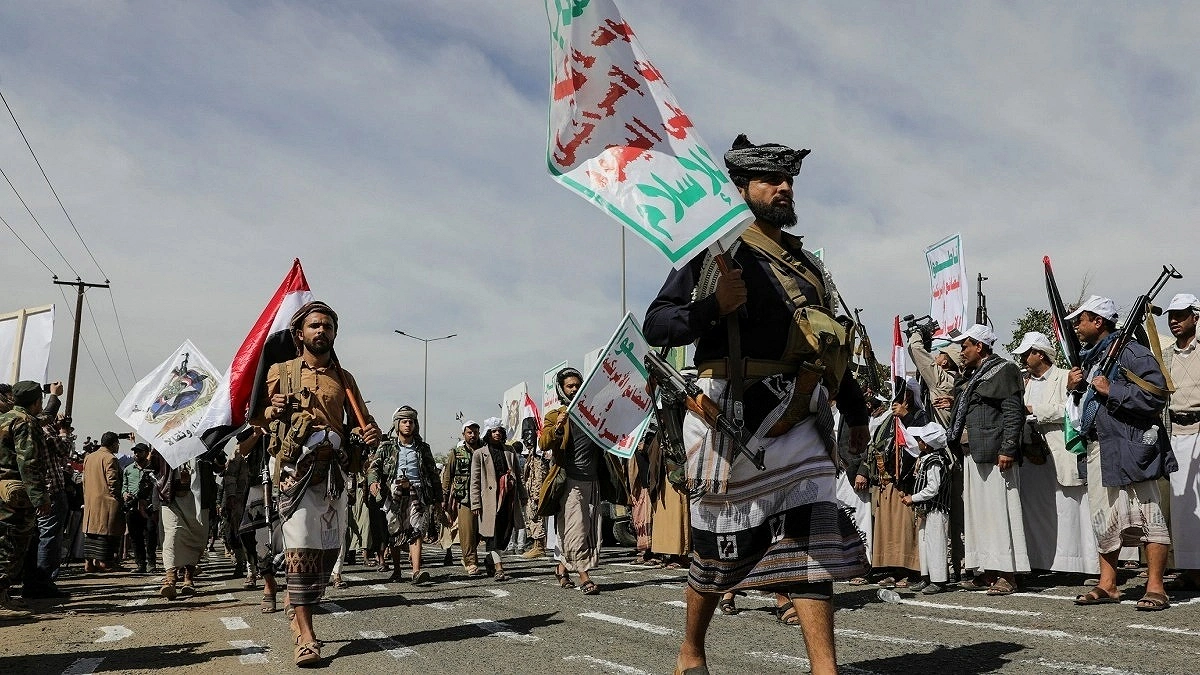
Houthi supporters take part in a parade in Sanaa, Yemen, organized as part of a campaign to build a “People’s Army” of the Houthis. File photo: Reuters
Attacks and counterattacks have resumed in Yemen. On one side, the Houthis are carrying out drone and missile attacks on various cities and energy facilities in Saudi Arabia. On the other side, Saudi Arabia is conducting airstrikes on Houthi positions in Yemen.
The Houthis launched major attacks on several cities and energy facilities in southern Saudi Arabia on Tuesday. Saudi authorities said 73 people were injured in the attacks. The attacks took place in Jizan, Abha, Najran and Khamis Mushait. An oil facility belonging to Saudi Aramco in Jizan was also damaged.
In response, Saudi Arabia warned that it would take strong retaliatory action. Saudi forces also carried out attacks on Houthi positions in Yemen. As a result, Saudi Arabia and Yemen are facing their largest conflict since the 2022 ceasefire.
However, this fight is not only between Saudi Arabia and the Houthis. Behind it are Yemen’s long running political crisis, a struggle among regional powers and the rivalry between Iran and Saudi Arabia.
To understand who the Houthis are, it is necessary to go back several decades.
Who Are the Houthis
The Houthis are a major group from northwestern Yemen. Their main stronghold is in Saada province. Religiously, they follow the Zaidi branch of Shia Islam.
About 35 percent of Yemen’s total population is Zaidi. However, not all Zaidis support the Houthis.
There are some differences between Zaidi beliefs and Iran’s majority Shia tradition. Most Shia Muslims in Iran follow the “Twelver” or 12 Imam tradition. Zaidis do not follow this tradition.
Over time, however, the Houthis have developed close ties with Iran. Various studies have found that Houthi leaders have close communications with Iran’s Islamic Revolutionary Guard Corps (IRGC) and Lebanon’s Hezbollah.
However, the Houthis do not view themselves simply as a religious group. They also identify themselves as “Ansarullah,” meaning “Followers of Allah.”
Their movement began in the 1980s. At the time, they began organizing to protect Zaidi traditions and culture in northern Yemen.
There was another reason behind the movement. The activities of Sunni Salafi preachers linked to Saudi funding and influence were increasing in northern Yemen. Houthi leaders viewed this as a threat to their religious and political identity.
The Houthis began an armed struggle against the Yemeni government in 2004. They gradually became more powerful.
How Did the Houthis Capture Sanaa
In 2011, anti-government movements began in several countries across the Arab world. Protests also erupted in Yemen against longtime President Ali Abdullah Saleh.
Saleh stepped down. In 2012, Abd Rabbu Mansour Hadi became president.
However, the new government failed to stabilize the country. The economic crisis, political divisions and regional disputes continued to grow.
The Houthis took advantage of this situation and became more powerful.
In September 2014, they captured the capital Sanaa. They subsequently took control of large parts of northern Yemen.
This was a major turning point in the conflict.
At that point, the Houthis were no longer simply a rebel group from northern Yemen. They began controlling a major share of the country’s power.
In early 2015, President Hadi was forced to flee the country. Saudi Arabia then directly entered the war.
Why Did Saudi Arabia Go to War Against the Houthis
The rise of the Houthis was a major security concern for Saudi Arabia. Yemen shares a southern border with Saudi Arabia. Riyadh had long been concerned about the Houthis’ close ties with Iran.
Riyadh feared that an armed group close to Iran was becoming powerful right next to its border.
In March 2015, a Saudi led military coalition launched an operation in Yemen. The United Arab Emirates was also an important part of the coalition. The goal was to strengthen Yemen’s internationally recognized government and stop the Houthi advance.
But the war did not end quickly. Instead, Yemen became the scene of a long and devastating conflict.
How Severe Was the Saudi Houthi Conflict
The war was not confined to Yemen.
The Houthis began launching missiles and drones at Saudi Arabia. Saudi airports, military bases, oil facilities and other important installations were also targeted.
There was also a clash between the Houthis and Saudi forces in 2009. At the time, the Houthis launched attacks across the Saudi border. The Saudi military carried out an operation in Yemen for the first time to directly suppress the rebellion.
However, the conflict grew much larger after 2015.
In 2017, a ballistic missile was fired at Riyadh’s King Khalid International Airport. The Houthis claimed responsibility for the attack. Saudi Arabia said it had intercepted the missile.
Saudi Arabia and the United States accused Iran of being behind the attack. Iran denied the allegation.
Houthi missile attacks on Saudi Arabia increased further in 2018.
In September 2019, the Houthis also claimed responsibility for drone attacks on two major oil facilities in Saudi Arabia. The attacks temporarily dealt a major blow to Saudi oil production. The United States blamed Iran for the attacks. Tehran denied the allegation.
In other words, the Houthis gradually became a force capable of carrying out major attacks inside Saudi Arabia.
What Was the Houthis’ Relationship with Saleh
This was an important chapter in Yemen’s politics.
Former President Ali Abdullah Saleh once formed an alliance with the Houthis. He reached an understanding with them in 2015.
This alliance enabled the Houthis to establish an even stronger position in northern Yemen.
However, the relationship did not last long.
In December 2017, Saleh broke ties with the Houthis. He tried to establish a new relationship with the Saudi led coalition.
Two days later, Houthi fighters killed him.
The incident raised new questions about the Houthis’ power and political character.
Does Iran Control the Houthis
This is where the issue becomes somewhat complicated.
There have long been allegations that Iran provides political and military support to the Houthis. Saudi Arabia, the Yemeni government and the United States have made these allegations.
Iran and Hezbollah have denied or downplayed allegations that they provide the Houthis with weapons, training and financial support.
However, the United States and Saudi Arabia have said at various times that Iranian made weapons were found in the hands of the Houthis.
Therefore, viewing the Houthis simply as “Iranian puppets” does not provide the full picture.
The Houthis also have their own political and local interests.
They want a place for themselves in Yemen’s political system. Their grievances against the central government are longstanding. At the same time, ties with Iran have helped them increase their military strength and regional influence.
Why Did the War Stop in 2022
After years of war, a ceasefire brokered by the United Nations took effect in 2022.
Major fighting largely stopped under the ceasefire. Attacks along the Saudi Houthi border also decreased.
Although the ceasefire formally ended after six months, major fighting did not return to its previous level. Saudi Arabia also continued seeking a path to negotiations with the Houthis.
This period was seen as a relatively peaceful time for Yemen.
But the war did not end completely.
Yemen remained effectively divided. The Houthis controlled Sanaa and large parts of the northwest. Meanwhile, the internationally recognized government and its allies controlled various parts of the country.
In other words, the fighting had stopped but the underlying political dispute had not been resolved.
Why Did the Houthis Become a Global Focus After the Gaza War
The Houthis came back into the spotlight after Israel’s war in Gaza began in October 2023.
Along with launching missiles and drones toward Israel, they began attacking commercial ships in the Red Sea.
The Houthis said they would target ships linked to Israel until Israeli attacks in Gaza stopped.
This created major disruptions to shipping in the Red Sea. Many international ships had to take longer routes around the southern tip of Africa.
It also became clear during this period that the Houthis’ military capabilities had increased significantly compared with the past. According to The Associated Press, they attacked more than 100 commercial ships in 2023 and 2024. Two ships sank and four sailors were killed.
In other words, a local rebel group in Yemen is now capable of affecting international trade and shipping routes.
Why Are the Houthis Clashing With Saudi Arabia Again
This is now the most important question. The situation began deteriorating rapidly in July this year.
Yemeni government forces attacked Sanaa airport. The attack was reportedly aimed at preventing an aircraft from Iran from landing there. Counterattacks then intensified.
The Houthis subsequently launched new attacks against Saudi Arabia.
On July 20, they announced a naval blockade against Saudi shipping in the Red Sea. In response, the Saudi led coalition attacked Houthi positions in the Hodeidah area.
Last week, the Houthis launched a larger operation. They attempted to advance toward Bab al Mandab through western Taiz and southern Hodeidah.
Bab al Mandab is extremely important because the strait connects the Red Sea with the Gulf of Aden. It is a key route for commercial shipping between Europe, Asia and the Middle East.
Yemeni government forces then also launched counterattacks. Fighting intensified in Taiz, Al Bayda and Al Jawf. Government forces are now openly stating their goal of retaking Sanaa.
Why Are Al Jawf and Al Bayda Important to the Houthis
Because many of the routes toward Sanaa pass through these areas.
Al Jawf is close to the Saudi border. It is also connected to Saada, the Houthis’ main stronghold.
Al Bayda is located in central Yemen. It is connected to several provinces in the north and south of the country.
This means that if government forces can advance in these areas, they could put pressure on Houthi controlled territory.
At the same time, if the Houthis can advance south and west, they could increase their pressure on important maritime routes such as Bab al Mandab.
That is why this fighting is not simply about control of a few local cities. The question now is whether a full-scale war like the one in 2015 is returning.
Is a Full Scale War Returning
This is the biggest concern. The United Nations has already warned that Yemen is at its greatest risk of returning to a major war since the 2022 ceasefire.
However, the situation has not yet reached the level seen in 2015.
So far, both sides have avoided large scale ground operations. Drones, missiles and airstrikes are being used more heavily. But if ground fighting begins, the situation could change rapidly.
Saudi Arabia is also facing a difficult decision. On one hand, reaching an agreement with the Houthis could reduce attacks on Saudi oil facilities and ships.
On the other hand, making too many concessions could make Riyadh appear weak.
At the same time, launching a major direct military operation could return Saudi Arabia to a prolonged war that it had been trying to move away from following the 2022 ceasefire.
The People of Yemen Face the Greatest Risk
Ultimately, the biggest question is not military. It is humanitarian.
Yemen has been facing one of the world’s largest humanitarian crises for years.
Millions of people have been displaced by the war. Food, medical care and safe drinking water remain in severe shortage.
According to the United Nations, more than half of Yemen’s population is facing acute food insecurity. Nearly 6 million people are close to famine conditions.
If war breaks out again under these circumstances, ordinary people will pay the highest price.
What Could Happen Next
The new conflict between the Houthis and Saudi Arabia is no longer just an internal Yemeni issue.
Iran is involved. Saudi Arabia’s security is involved. Important maritime routes such as the Red Sea and Bab al Mandab are involved. It is also becoming connected to the broader war in the Middle East.
In particular, if instability returns to Bab al Mandab after tensions rise in the Strait of Hormuz, pressure on global energy markets could increase further. Hormuz and Bab al Mandab are both important routes for oil and commercial transportation in the Middle East.
Therefore, viewing the conflict in Yemen simply as “the Houthis versus Saudi Arabia” does not provide the full picture.
It is now a conflict intertwined with Yemen’s long running civil war, the Saudi Iranian rivalry, the Israel Palestine conflict and the broader struggle among major powers in the Middle East.
The biggest concern is that if the war that temporarily stopped in 2022 resumes in full, Yemen could once again be drawn into a long and devastating conflict.
Sources: Al Jazeera, Reuters
