
UK bans all goods from Israeli West Bank settlements

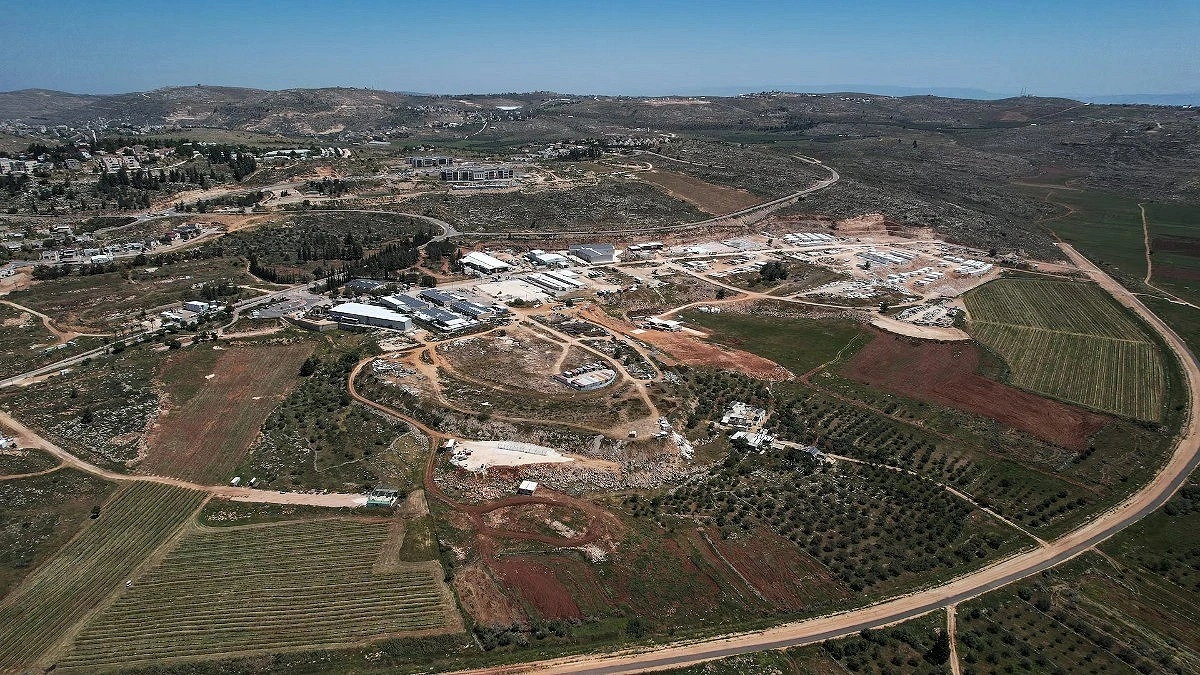
Photo: REUTERS
United Kingdom announced a total ban on importing all goods produced within illegal Israeli settlements in the occupied West Bank, marking the nation’s most significant foreign policy decision since London historically recognized Palestinian statehood.
Delivering an official speech to Parliament, UK Foreign Secretary Ed Miliband accused Israel of executing “ethnic cleansing” in Palestine while affirming official UK policy that rapidly expanding Israeli settlements across the occupied West Bank remain “unlawful”.
Addressing lawmakers, Miliband said he did not believe “the British people want us supporting the occupation by accepting products from settlements in our shops.”
In addition to the trade ban, Miliband announced strict new restrictions on arms sales to Israel. In response, Israel swiftly unveiled four retaliatory “counter measures,” including barring 12 British MPs from entering Israel and shutting down the British consulate in Jerusalem.
The historic trade ban comes directly amid an intensifying surge of Israeli settler pogroms against Palestinian communities throughout the occupied West Bank, alongside controversial settlement expansions that have ignited a UK-led debate regarding Europe-wide trade restrictions.
Following Miliband’s Parliamentary address, 12 nations issued a joint statement backing a two-state solution and declaring their intentions to enforce similar restrictions on trade with illegal Israeli settlements. Joining the UK, leaders from France, Canada, Denmark, Spain, Finland, Ireland, Iceland, Norway, Poland, Portugal, and Sweden called upon the Israeli government to halt all settlement expansion immediately.
Before Tuesday’s formal announcement, Miliband emphasized that these new trading bans and sanctions represent a “comprehensive reset” of British policy on Israel, describing an active strategy that “not only calls out the injustice [in Palestine], but acts.”
Clarifying the specific scope of the policy, Miliband added, “The sanctions regime will target illegal settlements and settlement expansion, not Israel.”
Moreover, UK government extended its existing global human rights regime to enable faster action against settlement expansion, specifically aiming to block the development of E1. Miliband warned that E1, a proposed West Bank settlement, would split the Palestinian territory in two and permanently destroy prospects for a two-state solution.
Expanding security actions, Miliband announced targeted sanctions against Al-Qard al-Hasan, the financial branch of the Lebanese group Hezbollah, while confirming that Britain will reimpose sanctions on Iran in alignment with the European Union and the United States.
Scope of the sanctions and economic impact
UK government formally agreed that settler violence across West Bank regions constitutes ethnic cleansing, explicitly labeling the perpetrators as “settler terrorists”. Miliband accused the Israeli government of willfully ignoring the ongoing intimidation and violence inflicted upon Palestinians.
While reaffirming Britain’s unwavering commitment to a two-state solution, Miliband sharply denounced extreme rhetoric from Israeli officials, including Finance Minister Bezalel Smotrich, who publicly advocated ending all prospects of a Palestinian state.
Miliband, who is himself Jewish, declared that the UK government will aggressively confront rising anti-Semitism domestically. He stressed that these diplomatic actions target the government of Israel rather than the Israeli people, warning that targeting Jewish people in the UK over the Israeli government’s actions constitutes “anti-Semitism, pure and simple”.
He emphasized that Britain remains a nation “that upholds its values at home and around the world, a Britain that fights against oppression and suffering wherever it occurs, a Britain that stands up for what is right.”
The new UK trade ban and regulatory framework target specific economic activities in the occupied West Bank:
- A complete prohibition on importing all goods manufactured or produced within illegal Israeli settlements.
- Direct financial sanctions against all organizations, corporate entities, and individuals supplying construction, infrastructure, financing, or real estate for settlement expansion.
- An absolute ban on advertising property sales within illegal West Bank settlements across the UK.
- Targeted sanctions against extremist settlers who actively incited or participated in violence against Palestinians.
- The immediate refusal of all new export licenses for weapons and equipment that “materially contribute to the occupation,” maintaining a ban that already suspended over 30 arms licenses used in Gaza.
UK government explicitly exempted all products and services originating from Israel proper. Britain serves as a major commercial partner for Israel, with total bilateral trade reaching 6 billion pounds ($8.1bn) in 2025, according to House of Commons records.
While exact proportions remain difficult to isolate, Parliamentary records show that settlement goods imported into the UK from the occupied territory totaled approximately 38 million pounds ($51.4m) in 2025.
Israel’s primary exports to the UK include precious stones and metals, technical and medical equipment, plastics, machinery, and fresh produce, whereas Britain exports defense material including drones, helicopters, and aircraft components.
Although London suspended around 30 arms export licenses in 2024 over actions in Gaza, it exempted F-35 combat aircraft components supplied through US partnerships.
To enforce tariff differentiation, UK customs requires importers to provide explicit documentation demonstrating that goods originate from Israel rather than a “location within the territories brought under Israeli administration since June 1967.”
Despite existing labeling guidelines, observers have raised ongoing concerns regarding settlement products fraudulently entering under “produced in Israel” labels. In May 2025, the UK suspended negotiations to modernize its bilateral trade agreement covering digital trade.
Miliband reiterated that Britain maintains “unshakable bonds” with the Israeli people, emphasizing, “I wholeheartedly oppose the boycott divestment sanctions, or BDS, campaign.” Directly addressing those who challenge Israel’s sovereignty, Miliband said, “You are wrong, and we will call you out.”
He added that Hamas must decommission its weapons and dismantle its “terrorist infrastructure” in Gaza, asserting that “Hamas can play no role in the future governance of Gaza.”
Miliband affirmed his personal pride in his Jewish identity, stating that supporting Israel does not create a “contradiction” with supporting Palestine.
Global reactions and fierce diplomatic backlash
In immediate retaliation against London, Israeli Foreign Minister Gideon Saar announced aggressive diplomatic counter-measures. Israel is officially closing the British Consulate in Jerusalem, evicting UK representatives from the International Gaza Support Center in Kiryat Gat, terminating British training of Palestinian Authority forces in the West Bank, and banning 12 British MPs from entering the country.
Saar accused the UK government of meddling in Israel’s upcoming October election, asserting that the Israeli public overwhelmingly rejects establishing a Palestinian state “in the heart of our land”.
National Security Minister Itamar Ben-Gvir urged Prime Minister Benjamin Netanyahu to recognize Argentine sovereignty over the Falkland Islands, while Finance Minister Bezalel Smotrich demanded the expulsion of the British Ambassador.
In the US, political leaders expressed sharp division. While UK Prime Minister Andy Burnham discussed the two-state solution with President Donald Trump in a phone call, Trump himself offered no immediate public comment.
However, US Ambassador to Israel Mike Huckabee fiercely condemned the UK policy, accusing the British government of “Jew hate” and “discrimination against the Jewish people”.
Speaking to BBC Radio 4, Huckabee remarked, “I don’t know if [the British government is] really aware of the implications and how it’s going to affect Brits,” warning that British businesses in the US could face severe retaliatory damage.
Similarly, Florida Republican Congressman Randy Fine labeled the measure a “vanity project in support of Muslim terror,” threatening to ban UK companies from Florida.
US Secretary of State Marco Rubio said, “We think it has implications on our ability to make progress with regards to Gaza, on the 20-point plan and the Board of Peace that we’re very committed to. Obviously we’re not going to do what the UK did.”
On the other hand, Palestinian officials and international human rights organizations welcomed the shift. Palestine’s Ambassador to the UK Husam Zomlot called the sanctions “long overdue” and a “turning point in UK-Palestine relations,” posting on X, “Today, Britain begins to move from condemnation to consequences, from words to action.”
Human Rights Watch praised the ban as a “long-awaited and positive change in Britain’s policy,” while Amnesty International UK hailed it as “the sea change that is needed”.
Jewish Leadership Council condemned the government’s move as “deeply irresponsible” and warned it placed an “increased target on British Jews”.
UK Chief Rabbi Ephraim Mirvis called it “truly a dark day for British Jews,” writing on X, “Today our government has chosen to ignore the deep concerns expressed by so many of us,” and warning that “These measures will succeed only in bolstering the very extremism they seek to target.”
Advocates noted that under former Prime Minister Keir Starmer, the Labour Party faced harsh criticism over its response to Gaza, a failure new Prime Minister Andy Burnham promised to correct.
Although the settlement trade ban impacts less than 1 percent of total UK-Israel trade, Zena Agha of the British Palestinian Committee described it as a “bare minimum” step required under international law.
Chris Doyle of the Council for Arab-British Understanding emphasized that Britain is finally taking concrete action against illegal settlements, urging European allies to follow suit to exert collective pressure.
Source: Al Jazeera (adapted)


