

Where are ASEAN-Myanmar relations heading to?

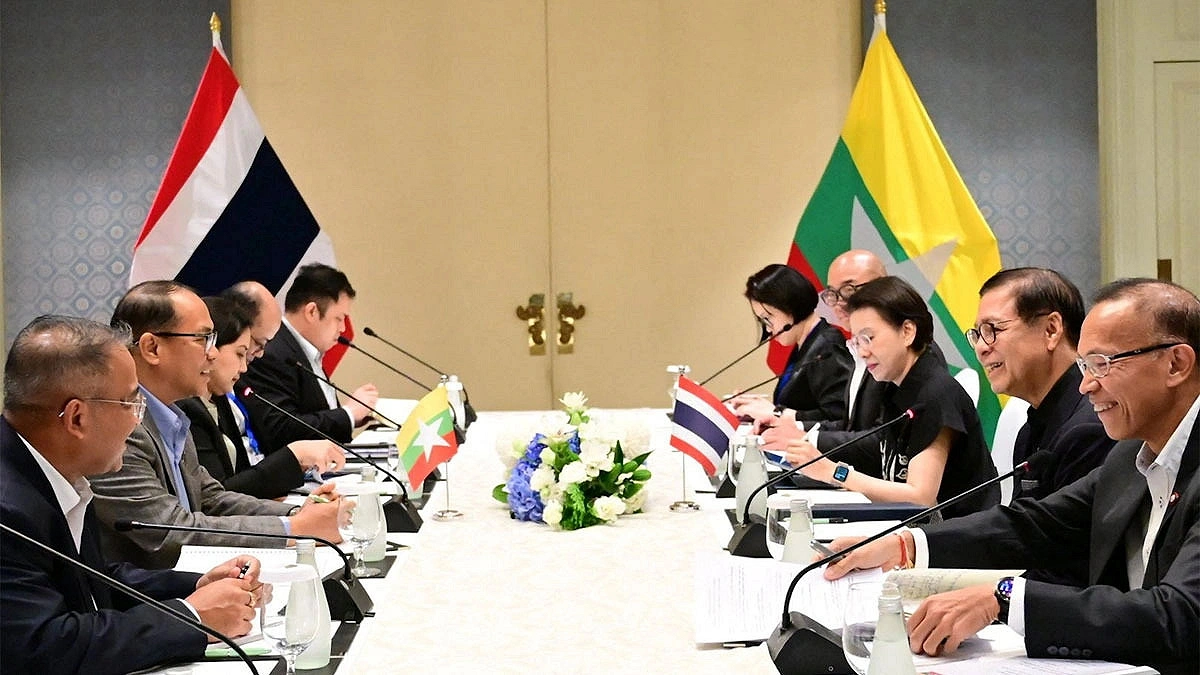
Meeting between Myanmar's Foreign Minister and ASEAN Foreign Ministers in Thailand – Reuters
In neighboring Myanmar, the last military coup took place in 2021. Democratically elected leader Aung San Suu Kyi lost power. Since then, the country was excluded from the summits of ASEAN, the Association of Southeast Asian Nations. Foreign ministers from the junta government had also been unable to hold face-to-face meetings with their ASEAN counterparts until now. After nearly five years, yesterday (Sunday) the junta-appointed foreign minister sat down for a face-to-face meeting with the bloc's foreign ministers for the first time.
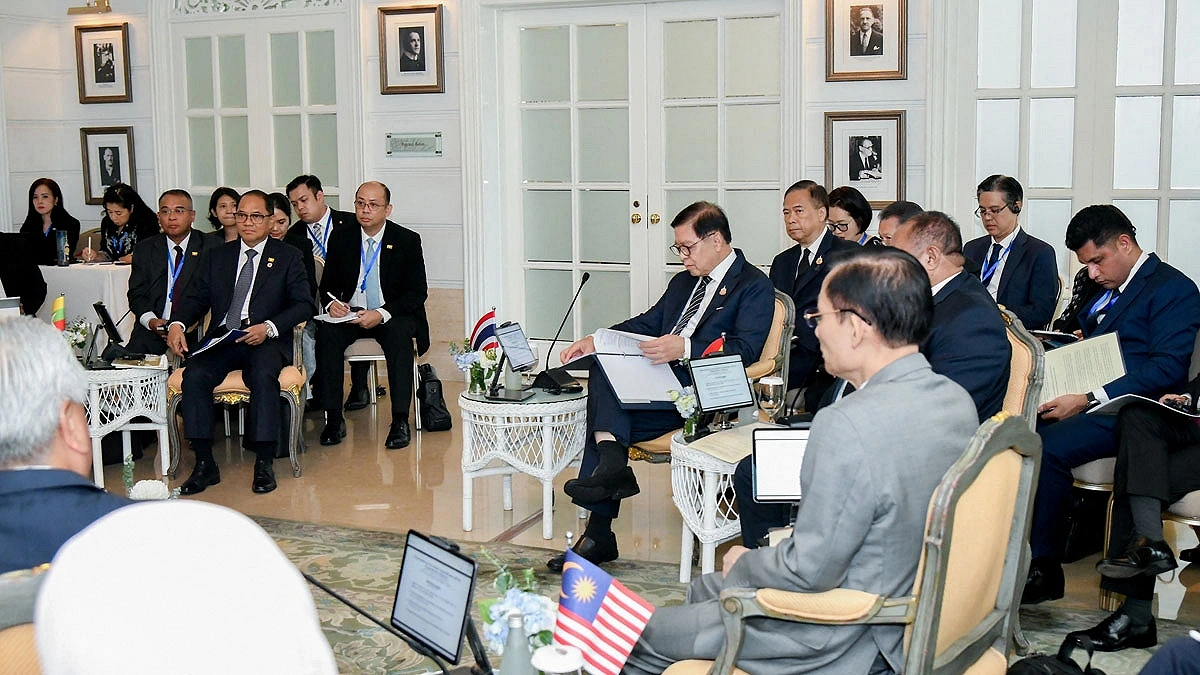
Informal meeting between Thai and Myanmar foreign ministers – Reuters
The organizers have claimed that the meeting held in Bangkok, Thailand, is a small but significant step forward. However, journalists present were not reassured by this claim. After the meeting ended, the uncertainty regarding Myanmar-ASEAN relations seemed to persist.
The two main mediators of the meeting were ASEAN Special Envoy and Philippine Foreign Minister Maria Theresa Lazaro and Thai Foreign Minister Sihasak Phuangketkeow. They faced sharp questions from the media at the press conference.
Journalists asked why ASEAN is still clinging to a 'Five-Point Peace Plan' that Myanmar's own parliament has openly rejected as 'irrelevant'. They also asked whether ASEAN is setting a dangerous precedent by bringing the junta's foreign minister back to the table, and whether there is a timeframe to verify the 'visible progress' ASEAN speaks of. However, no clear answers were given to any of the questions. It is unclear how long this ASEAN optimism and Myanmar's progress will take to be assessed. A significant doubt remains. This gap will determine the future of the new diplomatic initiative.
Diplomatically, Sunday's meeting was quite complex and multidimensional. The first of the two-part meetings was an informal meeting between ASEAN foreign ministers and Myanmar's Foreign Minister U Than Swe. The second was an informal consultation among the remaining ASEAN members on the Myanmar crisis. Ten of the 11 ASEAN member states participated in this meeting.
Thailand, the Philippines, Indonesia, Singapore, and Vietnam sent foreign minister-level representatives, while Malaysia sent its Senior Official Secretary-General. Cambodia completely boycotted the meeting and sent no representative.
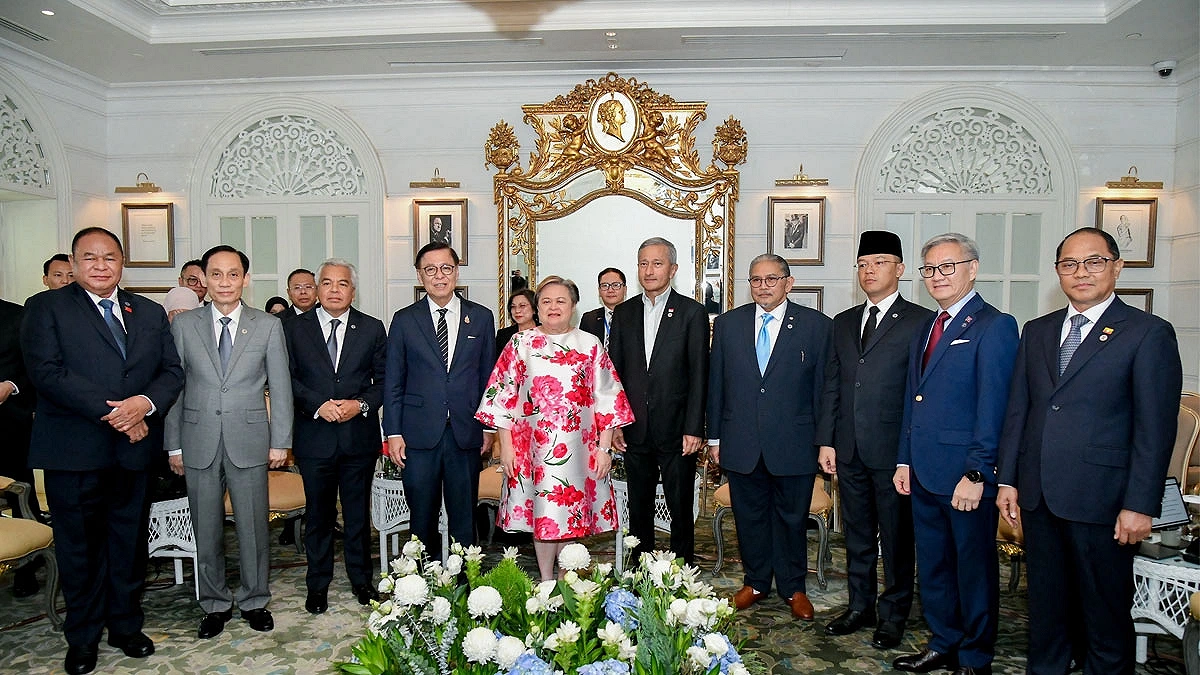
Ten of ASEAN's 11 members have sent representatives to the meeting – Reuters.
Special Envoy Maria Theresa Lazaro said, "This is the first time since the 2021 incident that we are sitting face-to-face with Myanmar's foreign ministers." She said that Naypyidaw provided extensive briefings on the peace process, the transfer of Aung San Suu Kyi from prison to a specific government residence, and cooperation in preventing cross-border cyber scams, human trafficking, and drug trafficking.
Thai Foreign Minister Sihasak made it clear that the meeting does not represent a change in ASEAN's position, but rather an evolution of strategy. "Thailand adheres to the policy of maintaining controlled and gradual engagement. We have all emphasized our commitment to the Five-Point Consensus. However, the core issue is what the strategy for implementing the 5 points will be," Sihasak said.
At the same time, he warned both Naypyidaw and the rest of ASEAN, saying, "This policy of engagement is not a one-way street. Myanmar must also step forward to address the concerns of ASEAN and the international community."
If any tangible outcome has emerged from this long meeting, it is an announcement from Lazaro. She said that in the second half of this year, she plans to go on a humanitarian mission to Myanmar, accompanied by ASEAN's relief agency, the AHA Centre, humanitarian aid workers, and ASEAN development partners. She aims to reach more affected communities with greater assistance.
Both Lazaro and Sihasak have claimed this as evidence of progress. Earlier, access for humanitarian aid was restricted in some areas, but now permission has been granted to go there as well. Referring to this, Lazaro said, "This is already a form of progress. You can't change everything just by saying it."
Beyond this humanitarian mission, ASEAN has reiterated its previous four conditions—expanding the scope of humanitarian assistance, reducing violence against civilians, facilitating inclusive political dialogue among all parties, and creating a conducive environment including the release of political prisoners. Sihasak also said that Thailand is working to create pathways for dialogue between the Myanmar military and ethnic armed groups in areas along their border. However, he did not provide any details.
Old doubts buried under diplomacy
The doubts raised by journalists at the press conference were essentially based on three main issues. The representatives could not provide satisfactory explanations for any of them. First, questions were asked about the rejection of the Five-Point Peace Plan. In response, Lazaro said, "Whether they reject it or not, I and ASEAN stand firmly behind this Five-Point Consensus."
On the other hand, Sihasak emphasized strategy over policy, saying that Thailand is not repeatedly mentioning the consensus but is looking for ways to implement it.
The second doubt concerned the precedent being set. The junta government had not allowed the ASEAN special envoy to meet directly with Aung San Suu Kyi. Yet, by inviting the junta's foreign minister to the meeting, had ASEAN rewarded that non-compliant behavior? Lazaro flatly rejected this accusation. She said that this is the first time they have been able to sit down with them since the crisis began in 2021. This is not a concession but rather the beginning of a process.
The third and biggest question was about accountability. Since there is no specific deadline for the conditions set by ASEAN, how will it be determined whether Myanmar is actually implementing them? On this question, both officials indirectly acknowledged their limitations. Lazaro said, "The situation is fluid; we cannot set a date. Many times, the process becomes more important than the final outcome."
Sihasak added, "We will review whether any real progress has actually been made in the country." However, he could not mention any specific institutional mechanism for this review.
According to data from the monitoring group ACLED, over 100,000 people have already lost their lives in Myanmar's civil war. In the midst of this dire situation, whether Sunday's meeting is truly the beginning of thawing the ice, or merely a resetting of five years of stagnant relations, will be proven before the end of the year. In the coming days, Myanmar's foreign ministers are expected to participate in ASEAN foreign ministers' meetings and subsequent summits. ASEAN leaders see this year's summit as the ultimate moment to judge whether Naypyidaw is just paying lip service or is actually moving toward tangible progress. (Multiple sources used.)

