

Funeral of Ayatollah Ruhollah Khomeini came to a standstill under the surge of millions

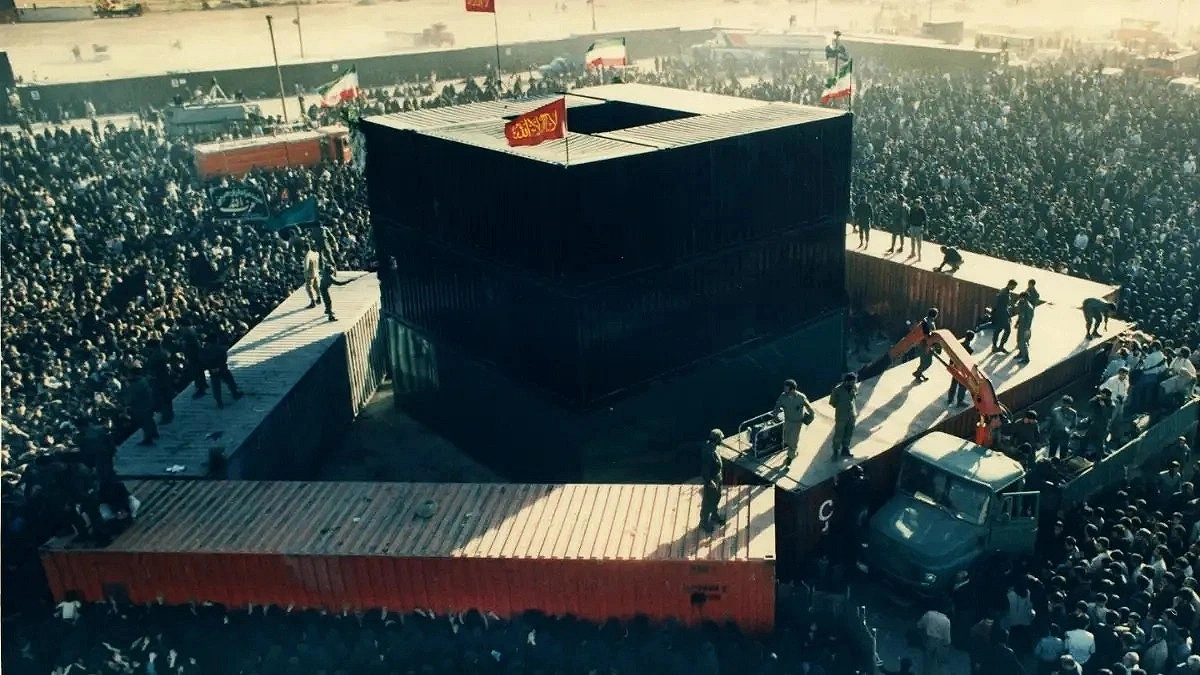
Khomeini's burial was brought to a standstill by a surging crowd of ten million—recalling that memory from 1989. Photo: Collected.
It was June 6, 1989. Not hundreds of thousands but millions of people poured onto the streets of Tehran to bid farewell to Ayatollah Ruhollah Khomeini, the leader of Iran’s Islamic Revolution. The sheer scale of the mourning crowds completely overwhelmed security arrangements. At least eight people were killed in stampedes, and around 11,000 were injured.
The funeral procession was later recognised by Guinness World Records as the largest funeral gathering in history. At the time, an estimated 10.2 million people—nearly one-sixth of Iran’s total population—took part in Khomeini’s funeral prayers and burial.
Following the death of Iran’s Supreme Leader Ayatollah Ali Khamenei, the country is once again preparing for a state funeral. Against this backdrop, the news agency Associated Press has republished accounts and photographs of the historic events surrounding Khomeini’s final journey.
Khomeini’s body was placed at Tehran’s Mosalla Mosque for public homage. After the funeral prayers that morning, as the body was taken toward the burial site, hundreds of thousands of mourners surrounded the coffin. In the intense heat, they beat their chests, chanted slogans and became desperate to touch the coffin.
At one point, the pressure of the crowd caused complete loss of control over the coffin. Khomeini’s body, wrapped in a white shroud, was thrown out of the coffin and into the crowd. To regain control, security forces fired blank shots into the air, and members of the Revolutionary Guards used batons to force mourners to release their grip on the coffin. Even then, the pressure from the crowd did not subside.
Amid the chaos, Khomeini’s only son, Ahmad Khomeini, aged 43, was injured. He was knocked to the ground by the crowd and later lifted shoulder to shoulder by people and passed along until he was placed in an ambulance. His turban fell off, and although he appeared pale and weak, he remained conscious.
The vehicle carrying the body also became effectively trapped in the mass of mourners. Tehran television reported that it would not be possible to bury Khomeini before sunset. However, Islamic rules do not permit burial after sunset. As a result, the authorities were forced to suspend the burial process.
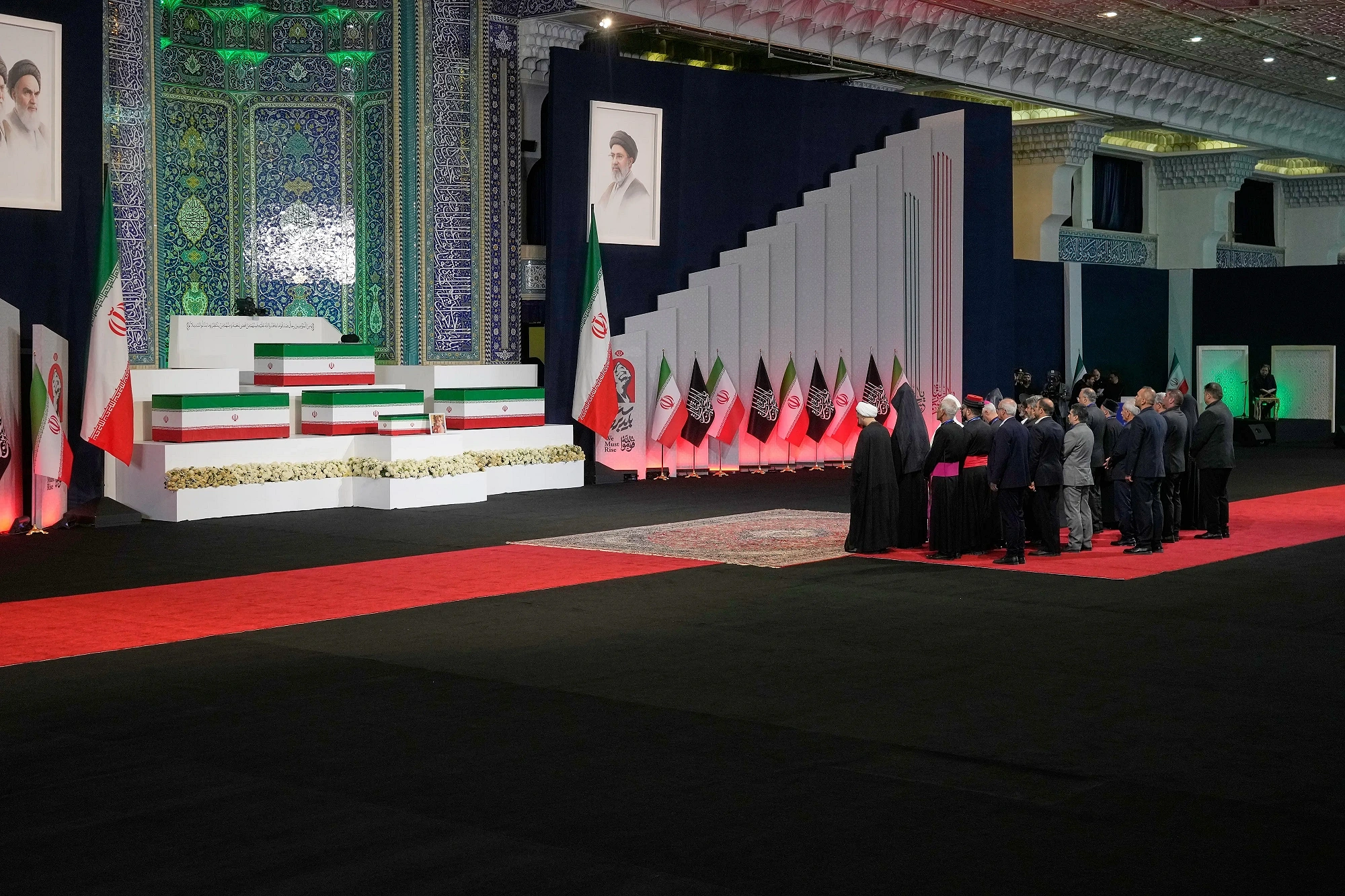
At a final tribute ceremony held ahead of the start of a multi-day state funeral at Tehran’s Imam Khomeini Mosalla Grand Mosque, religious leaders and grieving citizens pay their respects to the coffin of Iran’s late Supreme Leader Ayatollah Ali Khamenei, in the presence of his family members.
The plan was to bury Khomeini at Behesht-e Zahra Cemetery, about 35 kilometres south of Tehran, where those killed in the Islamic Revolution and the Iran–Iraq war are also buried. He was later laid to rest after a new time was set.
Throughout that day, chants of “Allahu Akbar” repeatedly echoed across Tehran. Mourners cried out, “Farewell, dear Imam,” and “Khomeini, why have you left us?” In keeping with Shia religious rituals, many beat their chests and heads. Some scratched their faces until they bled, while others smeared ash on their clothes. Firefighters sprayed water to ease people’s suffering in the intense heat.
According to Associated Press, Khomeini died of a heart attack on June 3, 1989, at the age of 86. Eleven days earlier, he had undergone intestinal surgery. Before his death, he left behind a 29-page political will, but it did not contain clear instructions about his successor or the future system of governance.
Following Khomeini’s death, amid political uncertainty, then president Ali Khamenei was appointed interim Supreme Leader. He later formally assumed the role of Iran’s Supreme Leader.
The presence of around 10.2 million people at Khomeini’s funeral was recognised by Guinness World Records as the largest funeral gathering in world history. The chaos of that day is still remembered as one of the biggest state funerals ever held.
Source: Republic

