
How does Gujarat’s hilsa compare in terms of taste to Bangladesh’s?

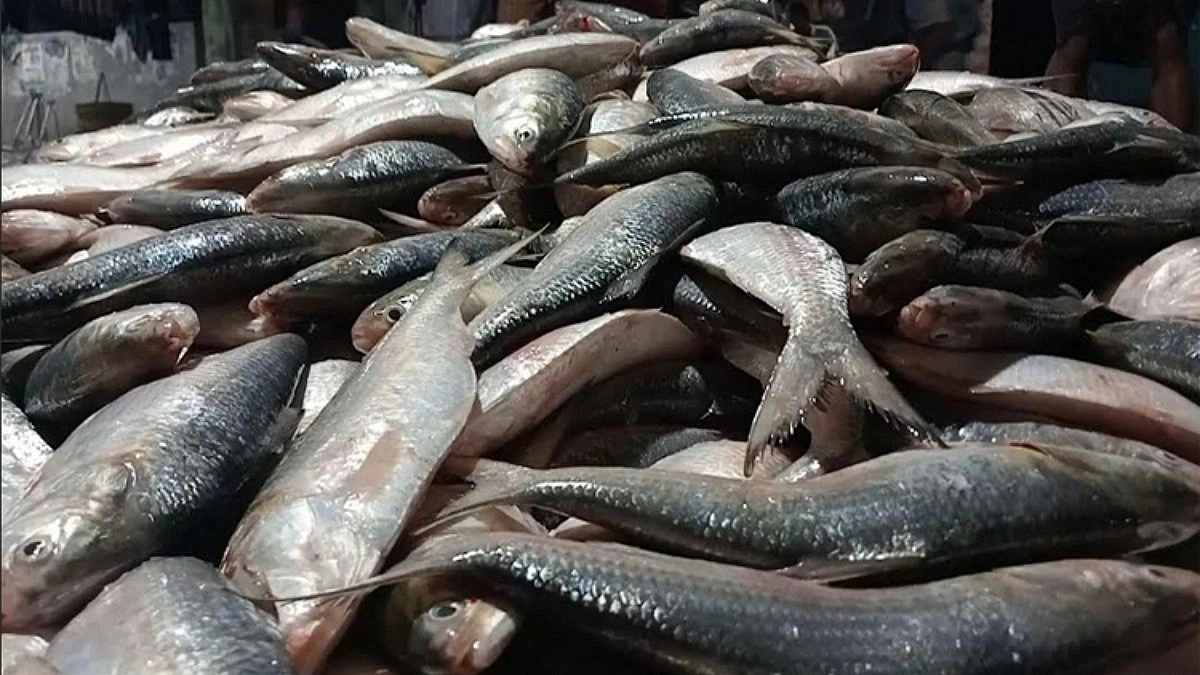
Collected Photo
When Hilsa is mentioned, the first places that come to mind are Bangladesh's Padma, Meghna, Jamuna rivers, or Chandpur. This silver-scaled fish is not just a favorite on the Bengali platter; it is deeply intertwined with Bengali culture and emotion. However, besides Bangladesh, Hilsa is also available in Gujarat, India—a fact that might surprise many.
Hilsa is caught along Gujarat's sea coast and river estuaries, moving beyond local markets into eastern India. The story of Gujarat's Hilsa revolves around the Arabian Sea and river estuaries. Although primarily a marine species, Hilsa migrates from salty oceans into less saline river waters to spawn.
During the monsoon season, as river flow increases and water salinity changes, Hilsa enters rivers and estuaries. This is how Hilsa school move to the mouth of the Narmada River, the Gulf of Khambhat, and various coastal areas of Gujarat. In particular, the mouth of the Narmada River in the Bharuch area is well-known for Gujarat's Hilsa. Local fishermen cast their nets in the river and estuaries during the season to net silver Hilsa. Hilsa catches are also reported along the coasts of Veraval, Porbandar, Valsad, and Navsari. In other words, although Gujarat lacks a vast river system like Bangladesh, its sea, river, and estuarine geography is suitable for Hilsa school movement.
Locally, there are different names based on the type of Hilsa, with the name "Chaksi" being particularly well-known. Good quality Chaksi Hilsa is in demand among local traders and fishermen. Other types of Hilsa caught from the sea are also called "Palwa." Differences in quality and price depend on the size, type, location, and time of catch.
When supply is high during the peak Hilsa season, prices drop. Conversely, when supply is low, the price of large and high-quality fish rises significantly. Recent reports indicate that the price of good quality Chaksi Hilsa in Gujarat has reached up to around 1,200 Indian Rupees per kilogram. Relatively lower quality or smaller fish can be bought for a few hundred rupees per kilogram. During periods of heavy supply, the average price can drop even further. As a result, there is no single fixed price for Hilsa in Gujarat; prices depend on the season, size, quality, presence of roe, and freshness.
To Bengalis, Hilsa is not just a fish; it carries a distinct identity of taste. Whether prepared as mustard Hilsa, steamed Hilsa, fried Hilsa, or Hilsa broth, the fish's own natural oil and aroma make the dish unique. Gujarat's Hilsa also possesses that familiar oily flavor and classic Hilsa characteristics. However, there is a difference in taste compared to the Hilsa of Bangladesh's Padma-Meghna basin.
What is the reason? The reason lies in their habitat. Many Hilsa in Gujarat are caught directly from the sea or estuaries. Consequently, differences in environment, diet, and water salinity impact the taste. While high-quality Chaksi is considered delicious by locals, Bengalis with long-standing culinary experience do not equate it with the taste and aroma of Padma-Meghna Hilsa.
Although the people of West Bengal have a special preference for Bangladeshi Hilsa, Gujarat's Hilsa has become an important alternative in their markets in recent years. When the supply of Bangladeshi Hilsa is low or prices rise, the demand for Gujarat's Hilsa increases in various Indian markets. Fish caught from Gujarat's sea and river estuaries is transported to markets across India, including West Bengal.
However, Bangladesh's Padma-Meghna Hilsa is generally richer in oil, softer, and more fragrant, making it the most praised in terms of taste. To this day, Bangladesh's Hilsa remains the undisputed best in taste. Myanmar's Hilsa also tastes good, but differences in oil and flavor are observed depending on the source and season. Meanwhile, Gujarat's Hilsa is also tasty, but it can sometimes feel slightly lower in oil and aroma compared to Bangladesh's river Hilsa.
