BRICS Delhi Declaration condemns aggression

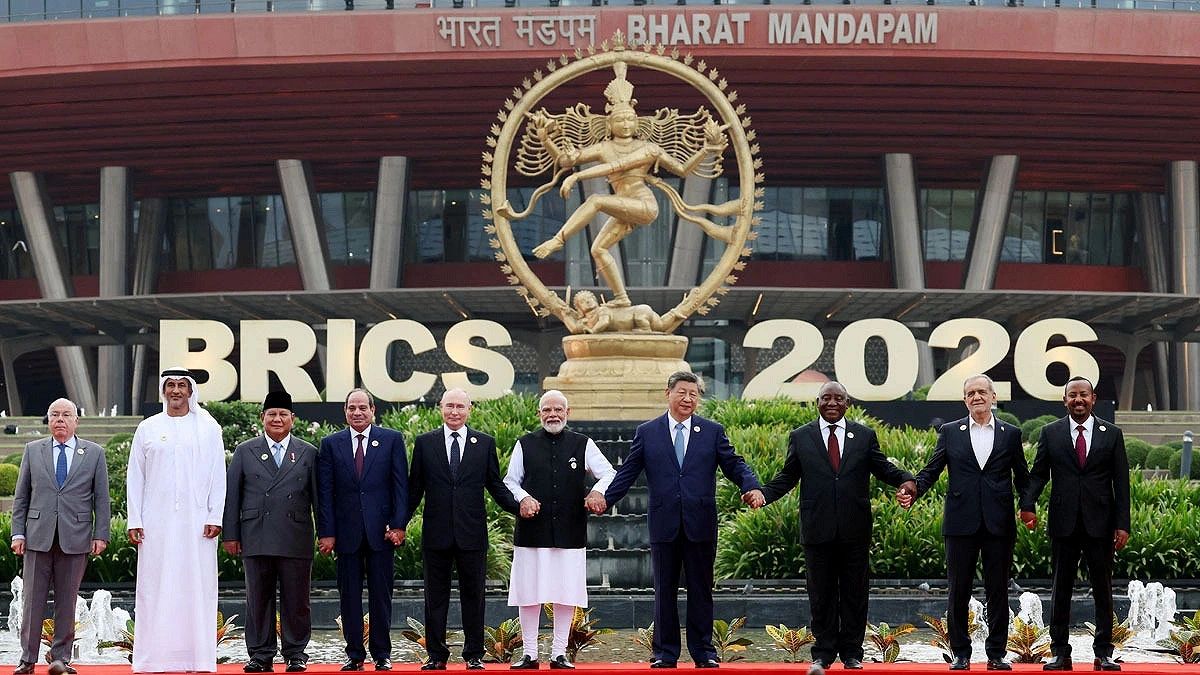
Leaders of member nations at the BRICS summit in Delhi. Photo: Reuters.
Amid ongoing tensions in the Middle East, the BRICS bloc of emerging economies adopted a joint declaration at its summit in New Delhi. The declaration condemned aggression and called for maintaining peace in the Middle East. However, it did not name any country as the aggressor. It also emphasised the need for continued joint efforts to ensure the free flow of global trade, supply chains and energy.
Analysts consider the agreement on a joint declaration among countries that have taken different sides in the Middle East crisis a significant diplomatic achievement.
The two-day BRICS summit began in the Indian capital New Delhi on Saturday. Leaders of the 11-member bloc, including Chinese President Xi Jinping, Russian President Vladimir Putin and Iranian President Masoud Pezeshkian, attended the summit.
At the opening session, Indian Prime Minister Narendra Modi said the BRICS grouping had now reached its full strength. He said it was time to turn the bloc’s unity and consensus-based decisions on the global stage into concrete results.
It was expected that the Middle East crisis would cast a shadow over this year’s BRICS summit. The conflicts in the Middle East and Ukraine have disrupted energy and maritime transport systems around the world, increasing pressure from import tariffs.
There were differences within the bloc over how the crises should be addressed. One of the major challenges for India, the current BRICS chair, was to bridge differences between the two Gulf members, Iran and the United Arab Emirates.
US-Iran exchanges of attacks in the Middle East have continued, resuming after a ceasefire. Meanwhile, Iran-backed Houthi forces in Yemen have further strengthened their control in the Red Sea region. They are at odds with Saudi Arabia, another BRICS member.
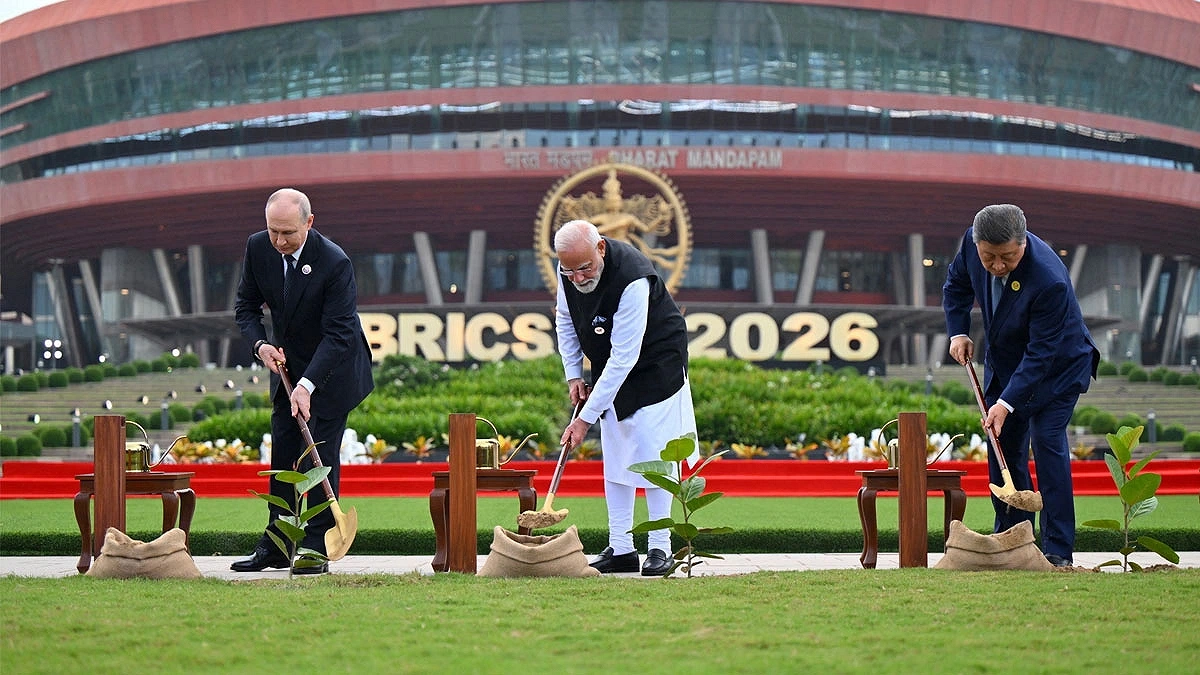
Putin, Narendra Modi, and Xi during a joint tree-planting ceremony. Photo: Reuters.
The joint declaration adopted on Saturday expressed “deep concern” over the “continued escalation of tensions” across the Middle East.
It called on all sides to exercise maximum restraint and warned against deliberate attacks on civilian infrastructure, particularly nuclear facilities.
Meanwhile, differences emerged during the drafting of the declaration. Reuters, citing an Indian source directly involved in the negotiations, reported that disagreements arose over several contentious issues during the drafting process. However, India conducted sustained mediation efforts to bridge the opposing positions of member states and build consensus.
According to the source, achieving consensus among all sides against the backdrop of ongoing conflict and heightened tensions in the Gulf region was an extremely complex diplomatic challenge.
The summit strongly opposed the forced displacement of Palestinians and attempts to bring about geographic or demographic changes in the occupied territories. It also called for an end to Israeli violence in Gaza. In addition, the declaration mentioned support for granting Palestine full membership in the United Nations and for the UN relief agency.
In the wide-ranging joint declaration, the bloc made clear its support for expanding alternative cross-border transaction systems outside Western frameworks, cooperation in artificial intelligence (AI) technology, and opposition to unilateral sanctions and tariffs.
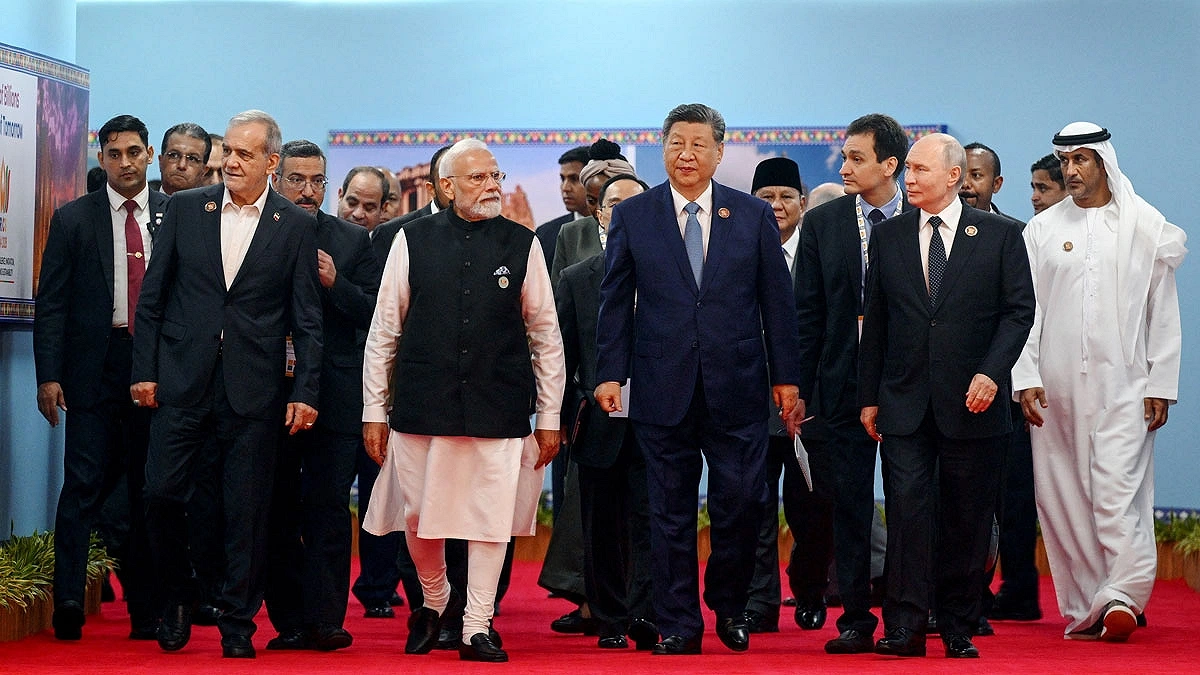
Narendra Modi with his allies.
Besides Vladimir Putin, Xi Jinping and Masoud Pezeshkian, other leaders attending the summit included South African President Cyril Ramaphosa; Abu Dhabi Crown Prince Sheikh Khaled bin Mohamed bin Zayed Al Nahyan; Egyptian President Abdel Fattah el-Sisi; Ethiopian Prime Minister Abiy Ahmed; and Indonesian President Prabowo Subianto.
Brazilian Foreign Minister Mauro Vieira attended the summit as the representative of founding member Brazil’s President Luiz Inácio Lula da Silva. UN Secretary-General António Guterres also attended the summit.
Xi Jinping arrived in Delhi on Saturday morning. It was his first visit to India in seven years, as part of efforts to normalise diplomatic relations between the two Asian powers.
He said the world had no interest in the ongoing conflict in the Middle East. He said the war had caused severe suffering to people across the region as the situation in the Middle East and the Gulf continued to change. This, he said, was contrary to the common interests of the international community.
The Chinese president said BRICS countries should take a firm stand on the right side of history in order to establish greater equality and justice in the international system.
New Delhi is maintaining a delicate diplomatic balance at the summit by seeking equally balanced relations with the United States, Russia, Israel, Iran and the Gulf Arab states. Narendra Modi is emphasising greater trade cooperation among BRICS members, reducing trade barriers and expanding new business opportunities.
Narendra Modi said, “Along with strengthening BRICS, we must also determine the direction of global reform. During global crises, the Global South is at the forefront, but when it comes to decision-making, it is pushed to the back row. We must change this discriminatory system and privilege-driven structure and create a platform for partnership where every country has its own voice. Every member should have the right to participate in decision-making.”
Modi highlighted the need to reform the UN Security Council and reiterated the long-standing demand for permanent membership for India and other emerging powers.
He said, “There is no room for further delay in reforming the Security Council. The message from this BRICS summit in India should be very clear. If our future is shared, then the right to shape that future must also be shared by all.”