
Chinese satellite helped Iran strike US base in Jordan

Collected Photo
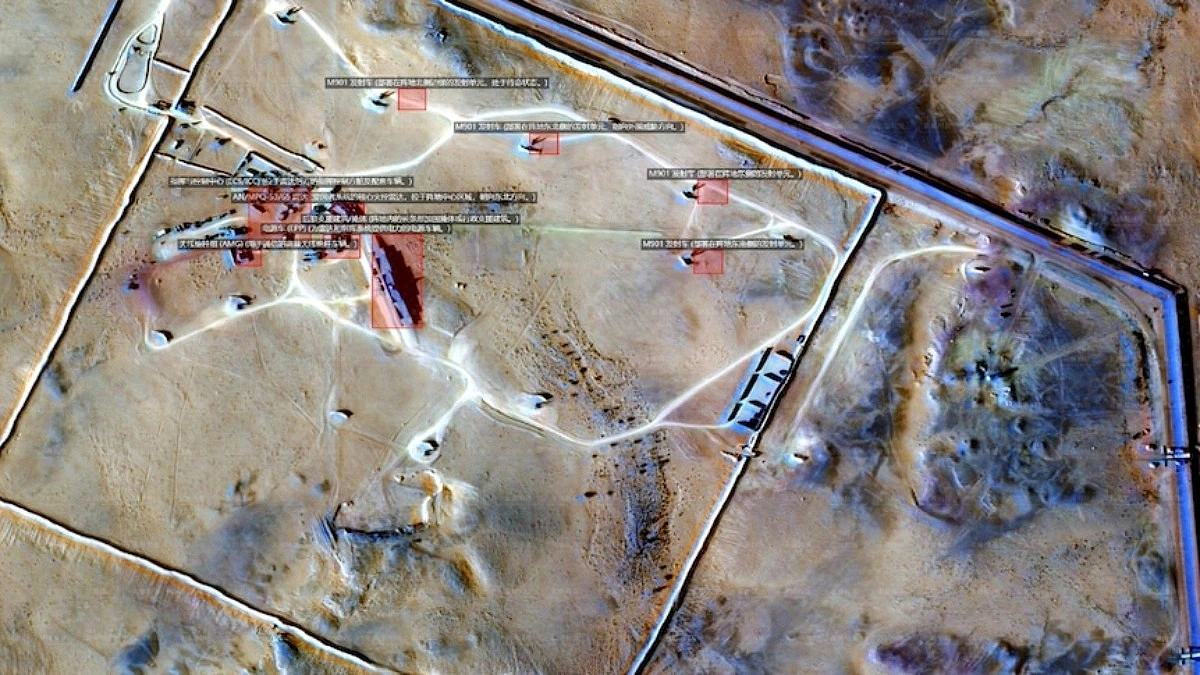
Iran used high resolution satellite imagery obtained from Chinese sources before carrying out a missile strike on a US military base in Jordan. Three US service members were killed in the attack in July. The Wall Street Journal reported the information citing US officials.
According to the report, Washington has found a link between Chinese sourced satellite imagery and the July 17 attack on Muwaffaq Salti Air Base in northeastern Jordan. However, the United States has not accused the Chinese government of being directly involved in the incident.
US officials told The Wall Street Journal that Iran obtained the satellite imagery both before and after the attack. They did not identify which Chinese companies provided the imagery.
Iranian ballistic missiles struck a residential area for troops at the base during the attack. US service members were sleeping at the time. Three service members were killed and four others were injured. The injured were evacuated for treatment. The attack was one of three missile strikes on the base within 24 hours. It also marked the first US military deaths following the April ceasefire.
The Wall Street Journal reported that within days of the attack Iran released high resolution images showing damage to three parts of the base. Commercial satellite imagery reviewed by the newspaper showed damage to more than 20 facilities at the base. However, the images released by Iran provided more detailed information about the damage.
The information emerged ahead of a possible meeting between US President Donald Trump and Chinese President Xi Jinping on September 24. US officials said they had shared information about the satellite imagery with Chinese officials. Beijing rejected the allegations and demanded evidence.
A spokesperson for the Chinese Embassy in Washington described the allegations as an “attempt to maliciously involve and discredit another country,” according to The Wall Street Journal.
A White House official told the newspaper that no outside assistance had increased Iran’s ability to attack US targets. However, the official did not directly comment on the satellite imagery allegations.
Soon after the attack, US Secretary of State Marco Rubio was asked whether China was providing Iran with information needed to identify targets. He directly answered “no” and said China’s actions had not changed the course of the conflict.
According to analysts and former officials who spoke to The Wall Street Journal, satellite imagery was likely one of several intelligence sources that helped improve Iran’s ability to identify targets. These sources may have included Iran’s own satellites, human intelligence and assistance from Russia.
At the beginning of the conflict, US strikes on Iran’s radar and satellite systems weakened the country’s battlefield surveillance capabilities. Iran’s missiles were then frequently failing to hit important military targets. However, US officials said Iran’s accuracy in targeting strikes appeared to improve during the summer.
Earlier in May, the Trump administration-imposed sanctions on three Chinese companies named Mizarvision, EarthEye and Chang Guang. The measures were imposed over allegations that the companies supplied or distributed satellite imagery that Iran could use against US forces.
The US State Department also accused Chang Guang of providing satellite imagery that supported attacks by the Iran backed Houthi rebels in Yemen. In addition, the Trump administration has briefed congressional intelligence committees in recent weeks about alleged Chinese and Russian assistance to Iran.
