
Houthis told me over phone they do not want to fight: Trump

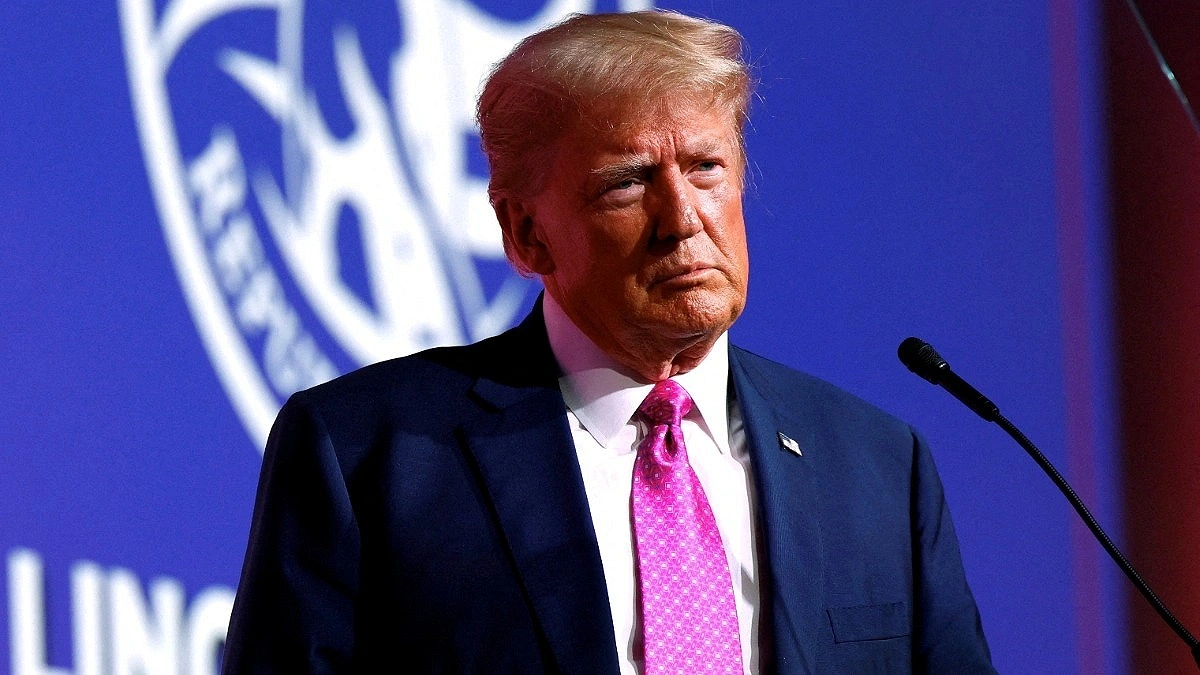
US President Donald Trump. File photo: Reuters
US President Donald Trump has said Iran backed Houthi forces in Yemen do not want to fight the United States. He said the Houthis asked the US not to take any action against them.
Speaking to reporters in Dublin, Ireland, on Saturday local time, Trump said, “The Houthis called us. They do not want to fight us. They do not want us to go after them.”
He also said the situation in the Middle East would eventually be handled well.
Meanwhile, Trump blamed Iran for an attack on a key oil pipeline in Saudi Arabia. He told reporters that Iran was probably responsible for the attack.
The attack shut down Saudi Arabia’s East West oil pipeline. The pipeline is one of the main routes for Saudi Arabia to export crude oil while avoiding the Strait of Hormuz.
Asked whether Iran was responsible for the attack, Trump said, “I think probably they are.”
Trump said he had spoken to Saudi Crown Prince and Prime Minister Mohammed bin Salman about the issue. He also described him as a “good friend.”
However, the Saudi Foreign Ministry said the attack was carried out by several drones launched from Iraq rather than Iran. Riyadh said people were injured and damage was caused in the attacks.
Saudi Arabia said it would not take retaliatory action immediately. This would give the Iraqi government an opportunity to take necessary measures.
At the same time, the Saudi Foreign Ministry said it has the right to take all necessary measures to protect the country’s sovereignty, security, facilities and people.
The Iraqi government also condemned the attack. After an investigation confirmed that the attack originated from Iraq, the Iraqi Prime Minister’s Office said a military commander had been dismissed.
Two Iraqi sources told Reuters that Iraq had closed the Shalamcheh border crossing with Iran as a precaution. A major operation is also underway to arrest those responsible for the attacks.
Meanwhile, after a week of continuous operations, the Houthis took control of Yemen’s Red Sea coast on Friday. Earlier, they quickly captured three strategic islands. This further strengthened their control over the important Bab al Mandeb Strait.
Bab al Mandeb is now very important for Saudi Arabia’s oil exports. Iran’s closure of the Strait of Hormuz has disrupted the transportation of Saudi oil through the Gulf route.
Saudi Arabia is the world’s largest oil exporter. After the Strait of Hormuz blockade, the country is relying more on the Red Sea as an alternative route.
Trump said the Houthis are allowing most ships to pass. However, he said they are unhappy with ships from one particular country. He said he would seek a solution to the issue.
US news outlet Axios reported that Saudi Crown Prince Mohammed bin Salman called Trump twice on Thursday. He requested US airstrikes against the Houthis. However, Trump rejected the request.
Meanwhile, the Houthis launched major drone and missile attacks on Saudi oil facilities this week.
On the other hand, Saudi backed Yemeni government forces attacked the strategic port city of Mokha under Houthi control on Saturday.
Yemen’s state news agency Saba reported that several Houthi vehicles and weapons were destroyed near Mokha port. Government forces also claimed that several Houthis were killed.
Government forces spokesman Majed Abdullah Al Najili said Houthi vehicles and fighters were also targeted on the Mokha Dhubab road. The area is 11 kilometers from Mokha city.
Government forces also said on Friday that they had begun shelling Mokha. At the same time, local residents were warned not to use the Taiz Mokha and Mokha Dhubab roads.
The Houthis captured Mokha on Thursday. Many people left the city for Aden after the Houthi attack. Aden is the main base of Yemen’s internationally recognized government.
Houthi affiliated media reported on Friday that Saudi forces carried out two attacks on Mokha airport. A local official said six missiles from an unidentified source hit the city’s seaport.
More than 500 people have been killed in the Houthi offensive that began last week, according to sources from both sides. The United Nations migration agency said around 46,000 people have been displaced.
Yemen’s civil war began after the Houthis seized the capital Sanaa in 2014. The current conflict is a renewed escalation of that war.
The Houthi military said on Friday that it had advanced further along the Red Sea coast. It also threatened to escalate tensions with Saudi Arabia by responding to “attacks with attacks.”
The Houthis also said the sea route was safe for all companies except Saudi ships.
However, the situation has raised concerns in global markets. Experts consider the actions of the Houthis highly unpredictable. Crude oil prices rose above $100 a barrel again this week. This could further increase Tehran’s influence in talks with Iran.
The Houthis have been attacking Saudi ships in the Red Sea since July when they announced a blockade. Oil facilities inside Saudi Arabia have also been attacked.
The Houthis claim that the attacks are a response to Saudi Arabia’s long-standing blockade of areas under their control in Yemen.
A senior military official from Yemen’s internationally recognized government said they were surprised that the Saudi Air Force did not launch any major attacks to prevent the capture of Mokha. According to him, Saudi Arabia had not received US permission to conduct a major air campaign.
Speaking on condition of anonymity, the official also said there was a lack of coordination among the Yemeni army and various allied forces. The Houthis took advantage of this situation.
Since the Houthis began attacking ships in the Red Sea in late 2023, shipping through Bab al Mandeb has fallen by nearly 60 percent. The Houthis began attacking various ships at the time in support of Palestinians in Gaza.
This year, Saudi Arabia had increased its use of Bab al Mandeb as an alternative to the Strait of Hormuz. However, shipping through the route has declined again due to renewed Houthi threats, according to Lloyd’s List Intelligence.
Saudi Arabia now has to look for another alternative route. It is trying to transport oil to the Mediterranean through the northern Red Sea. This requires using the Suez Canal or a pipeline in Egypt. As a result, oil has to travel a longer route to reach buyers in Asia.
This route is also not beyond the reach of Houthi threats. The Houthis attacked a Saudi ship in the northern part of the Red Sea in late August.
Source: Times of Israel (Adapted)
