

12 killed as Spain battles deadly wildfire in Andalusia

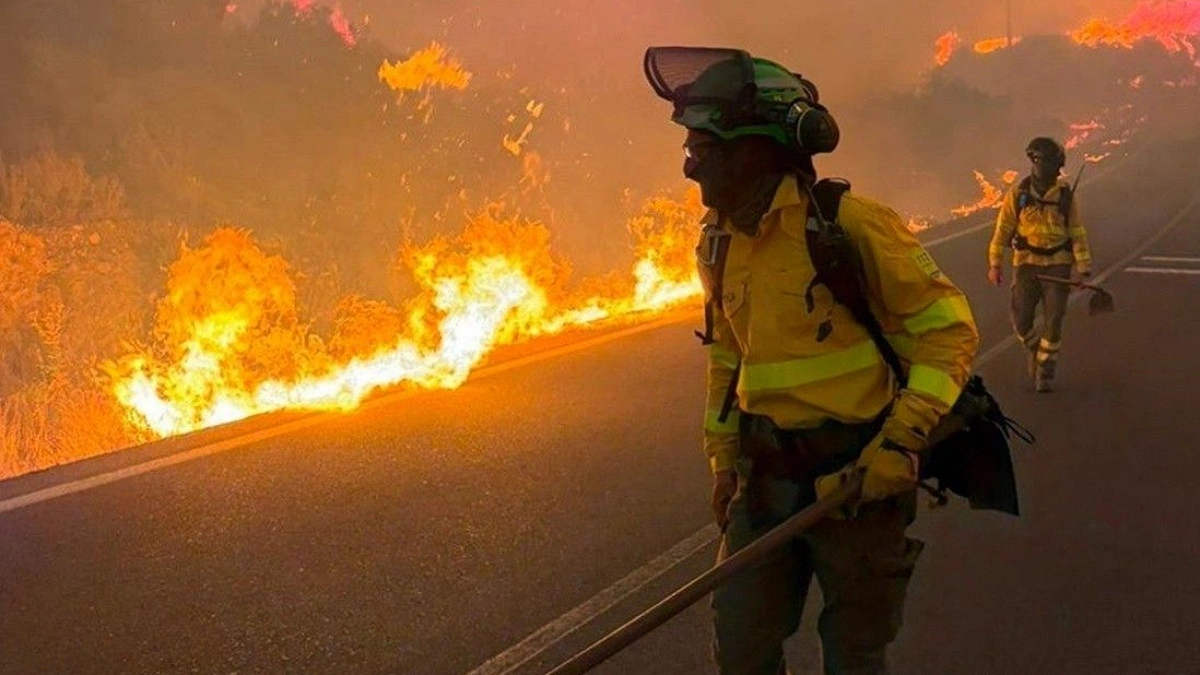
Photo courtesy: DW
Hundreds of firefighters in southeastern Spain are working to contain the remaining pockets of one of the country's deadliest wildfires on record. Emergency services remain heavily deployed around the village of Bedar in the Almería province, where at least 12 people have been killed and 23 others remain missing.
Local officials in the hard-hit Los Gallardos area warn that the death toll could rise. While Spanish authorities and the British Foreign Office have not officially released the identities of the deceased, regional health and emergencies minister Antonio Sanz stated that the majority, if not all, of the victims may be foreign nationals. Among the dead are four individuals found inside a burnt-out right-hand-drive car, who are believed to be British.
The crisis is part of a broader summer wave of intense wildfires across Southern Europe—including France and Portugal—fueled by a sustained heatwave with temperatures hovering around 40°C (104°F). A combination of soaring temperatures, bone-dry terrain, and powerful winds caused the Los Gallardos blaze to spread explosively on Thursday afternoon. While the initial cause was attributed to a fallen power line, local electricity companies have denied responsibility.
The speed of the fire caught residents and tourists off guard. Lucinda Curtois, a British tourist who fled Bedar with her family, described the scene as looking like a "mushroom cloud" from a bomb. She expressed fears that two other UK nationals, who reportedly fled their countryside home on foot, were also among the victims. Officials noted that some of the deceased had failed to follow recommended evacuation routes, though it remains unclear how effectively that guidance was communicated. Meanwhile, other European nations are responding to the crisis; Belgian Foreign Minister Maxime Prévot confirmed that consular services are actively trying to reach citizens who own second homes in the region.
Historically, this disaster ranks among Spain’s worst, trailing the 1984 La Gomera fire that killed 20 people and a 1979 blaze near Lloret de Mar that claimed 21 lives. Experts point to climate change as the driving force behind the catastrophe, with the Copernicus climate service noting that Europe is warming twice as fast as the global average, leading to more frequent heatwaves and increasingly intense wildfires.
Fortunately, the national weather agency AEMET expects conditions to become more favorable, with cooler air and moderate winds forecast to aid containment efforts. (Source: BBC)

