At the call of Drogba

Collected Photo
That football can be a tool to stop a bloody civil war in a country—this was demonstrated by the national football team of Ivory Coast, a country in West Africa.
Sport is not just entertainment or a battle on the field; it can also be a tool to end a bloody civil war in an entire nation. A unique and historic example of this was set by the national football team of Ivory Coast, West Africa. Through the relentless efforts and courage of the team's then-captain Didier Drogba and his teammates, the country's long-standing military and ethnic conflict came to an end.
The genesis of this historic event was October 8, 2005. On that day, at the Omdurman Stadium in Sudan, Ivory Coast defeated the hosts Sudan 3-1. With this victory, they secured qualification for the 2006 World Cup in Germany as an African nation, earning their first-ever World Cup appearance. However, despite this unprecedented achievement, there was no celebration in the dressing room; instead, the atmosphere was somber. The players knew that their beloved homeland was going through a terrible internal crisis.
In September 2002, after a failed military coup attempt against the then-Ivorian President Laurent Gbagbo, the country descended into a devastating civil war. The entire nation was split into two halves. The northern part was controlled by the powerful Muslim-majority rebel group "New Forces," while the south was under the control of the Christian-majority government forces. Thousands of people lost their lives, and millions were displaced in this bloody conflict. When no international mediation or political agreement could halt the conflict, the national football team—nicknamed "The Elephants"—emerged as a beacon of hope.
What made this team special was that it brought together players from both warring regions. The team's main star, Didier Drogba, was a son of the south, while defenders Kolo Touré and midfielder Yaya Touré came from Muslim families in the north. Outside the pitch, their communities were enemies; but on the pitch, they were comrades.
After winning the match against Sudan, Chelsea legend Didier Drogba stood before a live TV camera in the dressing room. At his signal, stars like Yaya Touré, Kolo Touré, Didier Zokora, and Emmanuel Eboué gathered in a semicircle in front of the camera. Then, surprising everyone, Drogba knelt down on the floor, and his teammates joined him, holding hands and kneeling beside him.
Looking directly into the camera with an intensely emotional voice, Drogba addressed the nation: "Brothers and sisters of Ivory Coast—from the north, south, east, and west—today we have proven that all Ivorians can come together and fight for a common goal. We promised to give you the joy of going to the World Cup. Today, we have kept that promise."
After that, he folded his hands and said, "Such a beautiful country in Africa cannot be destroyed by war like this. We are begging you on our knees—please lay down your weapons and let the country hold a fair election. Let all gun battles come to an end." Behind him, his teammates began to sing in unison, asking for forgiveness and peace from their fellow countrymen.
This unconditional and politically disinterested appeal from a national hero deeply moved the hearts of Ivorians. Remarkably, after this broadcast, the situation in the country began to calm down, and both sides agreed to a formal ceasefire and sat down at the negotiating table. The civil war, which had been raging for years, temporarily ground to a halt.
Although Ivory Coast did not advance past the group stage in the 2006 World Cup, their heroic fight against Argentina filled the nation with pride and a sense of unity.
In pursuit of lasting peace, Drogba took another groundbreaking and risky decision in early 2007. The home match against Madagascar in the African Cup of Nations qualifiers was originally scheduled to be held in the safe city of Abidjan. However, at Drogba's special request, it was moved to the rebel stronghold of Bouaké. Hosting the match in the heart of rebel territory, with government officials present, was extremely risky, but Drogba remained firm in his decision.
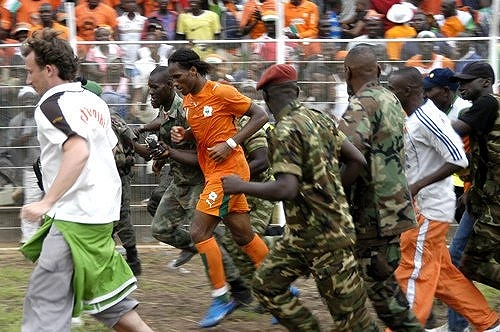
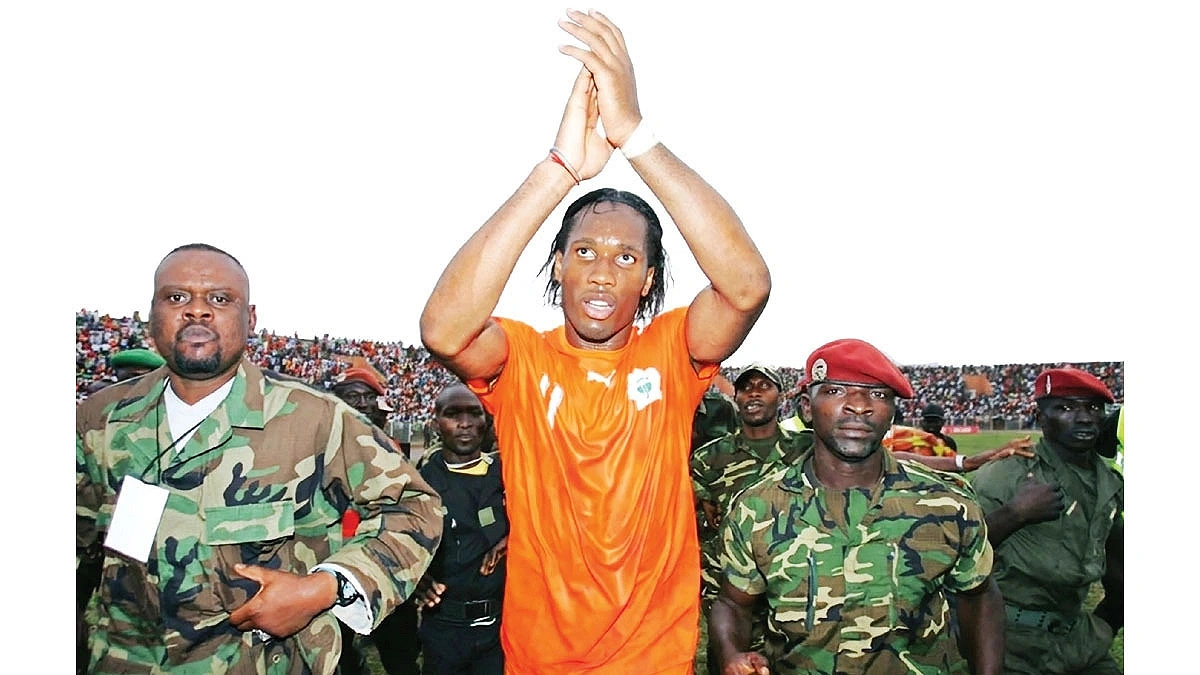
On June 3, 2007, the match took place at the stadium in Bouaké. That day, members of both the government forces and the rebel army jointly provided security for the stadium. In the VIP gallery, the country's president and the leader of the rebel group sat side by side, enjoying the match together.
Ivory Coast defeated Madagascar by a huge margin of 5-0, with Drogba himself scoring the final goal. After the match, the emotional rebel soldiers lifted the players onto their shoulders and paraded them around the entire stadium. Following this historic match, the two sides signed a comprehensive peace agreement, and lasting peace was restored to Ivory Coast. Didier Drogba and his teammates proved to the world, in golden letters, that football is indeed mightier than the bullet.