


Electricity and energy woes

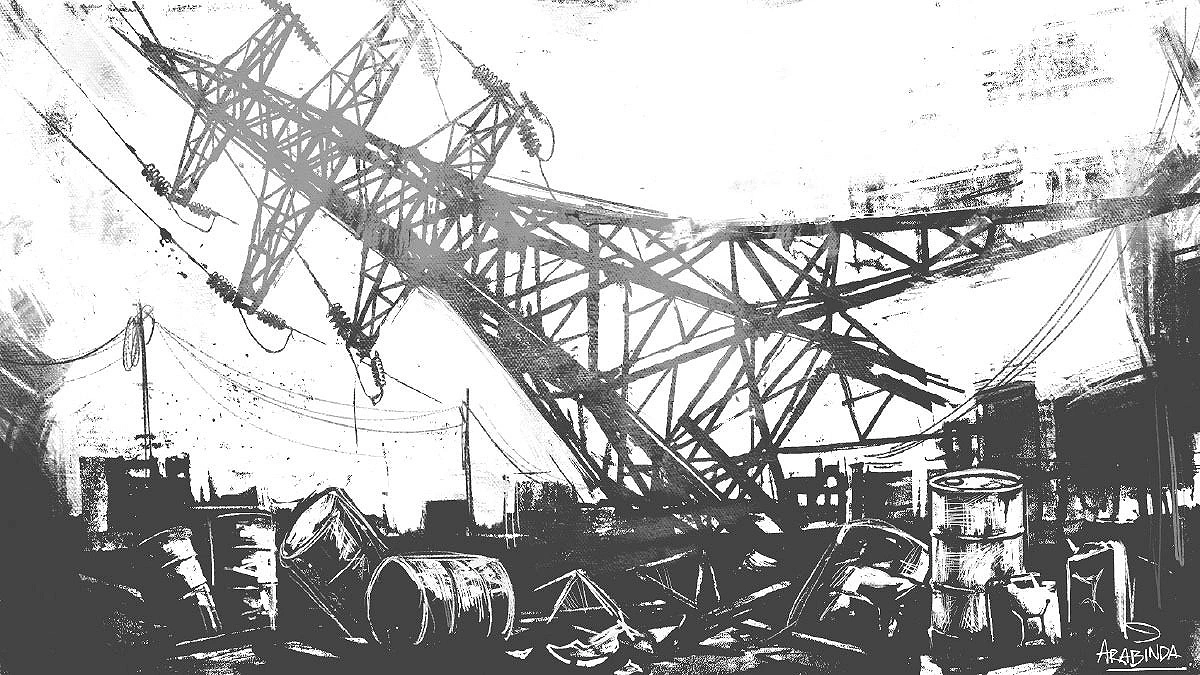
Graphics: Agamir Somoy
It is impossible to imagine life these days without electricity. Where is electricity not needed, whether in cities or villages, industry or agriculture or fishing and fish preservation at sea? But Bangladesh has been facing an endless crisis over electricity and energy. Electricity and energy shortages resurface every few days. After a temporary solution lasts for a short period, the crisis becomes visible again.
Although load shedding has decreased somewhat in Dhaka, it has reached an extreme level in rural areas. Demanding a solution to the problem, angry people in different parts of the country are sometimes seen blocking roads. When the situation becomes tense, very important discussions are held to find a solution. But no solution is reached. On top of that, citing global market conditions, the price of oil is increased first, followed by gas and finally electricity. This has been going on for a long time. Both businesses and the government win, while people bear the burden of higher prices without even receiving electricity. This has continued year after year.
What is the country’s electricity situation like? The national grid has a generation capacity of 29,000 megawatts, while current demand is 17,000 to 19,000 megawatts depending on the time. Generation stands at 13,855 megawatts. The shortfall is around 4,000 megawatts. This is resulting in load shedding. However, load shedding is not equal across the country. Of the country’s 52 million electricity customers, around 40 million are Rural Electrification Board customers. Their electricity demand is 8,000 to 9,000 megawatts, while they are allocated 5,000 to 6,000 megawatts. In some areas, electricity is unavailable for 10 to 12 hours and even 16 hours. As a result, fearing that angry people may launch attacks, 80 rural electricity cooperatives recently wrote to the Inspector General of Police seeking security measures to protect their offices, grids and substations.
When the situation becomes tense, very important discussions are held to find a solution. But no solution is reached. On top of that, citing global market conditions, the price of oil is increased first, followed by gas and finally electricity.
The main fuels used to generate electricity are gas, coal and oil. The country’s gas demand is 3.8 billion cubic feet. Under normal circumstances, 2.7 billion cubic feet is supplied. Of this, 1.05 billion cubic feet comes from LNG. At present, 2.05 billion cubic feet is being supplied through domestic production and imports. Gas is used for electricity generation, transportation, fertilizer factories and household cooking. Power plants alone require 2.2 billion cubic feet, while they are receiving 750 million cubic feet. Gas based power generation capacity is 12,472 megawatts. But because of the gas shortage, current generation has fallen to 3,000 to 4,000 megawatts. Coal fired power plants have also reduced generation because of problems with coal imports. Among them, generation at Norinco in Patuakhali has fallen by 300 megawatts, Payra has fallen by 500 to 600 megawatts and electricity imported from India’s Adani has fallen by 400 to 500 megawatts. The Adani power plant built in Jharkhand, India, has reduced generation since August 7. Around 9 percent of the country’s electricity generation capacity is also imported from India. About 40 percent of the gas used in the country is imported. All of the oil and 90 percent of the coal are imported. This means more than 65 percent of total fuel has to be imported. The current crisis clearly shows how vulnerable the electricity and energy sector is in an import dependent country.
It is well known that electricity demand rises as temperatures increase. But there are no measures to generate electricity according to demand. Instead, generation has declined. Generation has fallen because of the gas shortage. Large coal fired power plants are producing below capacity. Electricity generation from oil fired power plants is not being increased because it is expensive. The combined result is a gap between electricity demand and supply and load shedding.
Outstanding payments are a serious problem. According to the Power Division, coal imports have been disrupted because bills owed to power plants remain unpaid. Two power plants have faced coal shortages. Load shedding is not declining because electricity generation cannot be increased. Data from the Bangladesh Power Development Board (PDB) and Power Grid Bangladesh PLC (PGCB) show that the highest load shedding reached 3,757 megawatts.
There are two floating terminals in Maheshkhali, Cox’s Bazar, for supplying imported LNG. The terminal operated by US company Excelerate Energy has a capacity of 600 million cubic feet, while Summit’s terminal has a capacity of 500 million cubic feet. Excelerate’s terminal was shut down following a fire on July 21. This reduced gas supply and intensified the crisis. Fertilizer factories were shut down. From cooking stoves to industrial factories and vehicles, people faced severe hardship.
Whenever a crisis emerges, the quick solution the government considers is to increase prices. But has the crisis decreased after raising prices? In June, electricity prices were increased by an average of 19.85 percent at the wholesale level and 16.68 percent at the consumer level. Yet the Bangladesh Power Development Board (PDB) has been unable to pay the huge amounts owed to power plants. The more electricity generation from expensive fuel oil increases, the more generation costs will rise.
During the previous Awami League government, electricity prices were increased 12 times at the wholesale level and 14 times at the retail level over one and a half decades. Without considering where fuel would come from, at what price and whether electricity would remain affordable for consumers or whether producing electricity at higher prices would make exports profitable, power plants were built one after another. Even when these plants remain idle, capacity charges or plant rental payments have to be made. Power plants are still owed around Tk 500 billion by the PDB. The government provides subsidies every year from taxpayers’ money. But affordable and uninterrupted electricity supply for the people has not been ensured.
In recent years, there has been no strong focus on exploration and production of domestic gas. New gas field exploration has not progressed. Even effective steps have not yet been taken to utilize the discovered gas field in Bhola as expected. Instead, LNG imports began in 2018. It is true that there is no immediate solution to the energy crisis. Therefore, alongside imports, domestic energy sources must be expanded. Greater emphasis must be placed on domestic gas exploration. At the same time, caution must be exercised when inviting foreign companies to explore for oil and gas offshore under any terms. Initiatives must be taken to increase renewable energy generation such as solar, wind, hydropower and waste to energy.
Temporary measures will not ensure uninterrupted, quality and affordable electricity. Instead, attempts will be made to increase electricity prices by citing temporary crises. This will affect agriculture, industry and the service sector. People want to be freed from this cycle of crisis and price increases.
Author: Political organizer and writer

