
Want gas, but there is none
Theft and imports rise as production falls

Collected Photo
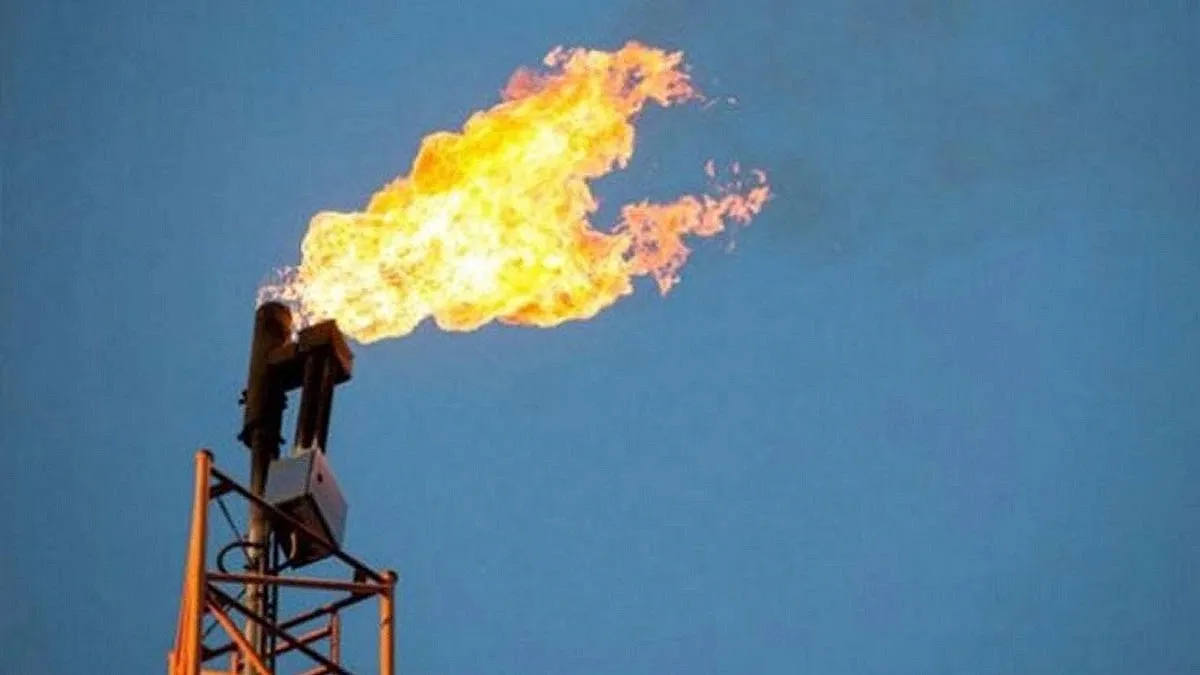
A decade ago, Bangladesh produced about 2.75 billion cubic feet of natural gas a day. That figure has now fallen to 1.65 billion cubic feet. Years of neglect in exploring new gas fields and rehabilitating existing ones have steadily reduced domestic production. At the same time, imports of costly liquefied natural gas (LNG) have increased. As a result, subsidies and gas prices have both risen. Yet the gas crisis has become even more severe. Meanwhile, gas theft and wastage continue unabated.
According to energy experts and sector insiders, the now ousted Awami League government prioritized LNG imports mainly because of commission based business interests. Instead of focusing on gas exploration, it emphasized imports, leading to massive foreign currency expenditure without ensuring energy security. Against this backdrop, they have recommended giving priority to exploration across offshore, onshore, and hilly areas of the country, along with rehabilitating old gas wells.
Power, Energy and Mineral Resources Adviser Iqbal Hasan Mahmud said the ongoing gas crisis cannot be resolved overnight. He said the Awami League government did not drill wells or increase production. “They claimed to have won maritime boundaries, but they did not take any meaningful initiative to extract energy resources there. Meanwhile, neighboring countries have already started producing gas from offshore fields.”
The energy adviser claimed that the current gas crisis is the result of the previous government’s negligence. He said production cannot be increased immediately and that it will take time.
Demand, Production and Reserves
The country’s actual daily gas demand is at least 5.5 billion cubic feet. However, demand based on existing connections is estimated at 3.8 billion to 4 billion cubic feet. In contrast, average daily supply stands at around 2.6 billion to 2.65 billion cubic feet. Of that, roughly 1 billion cubic feet comes from imported LNG.
Of the country’s 29 gas fields, 20 are producing regularly. Production has not yet begun at four newly discovered fields. The remaining five fields have long been abandoned.
Current gas reserves stand at 6 trillion cubic feet, or TCF. At an annual production rate of about 695 billion cubic feet, the reserves would last eight years. However, declining pressure in aging fields and other technical factors often prevent full recovery of reserves.
The five abandoned fields at Feni, Sangu, Chatak, Kamta and Rupganj contain an estimated 661 billion cubic feet of gas. Two fields in Bhola hold nearly 2 TCF of gas, but the absence of pipelines has prevented the gas from being transported to the mainland. Meanwhile, although new fields have been discovered in Kutubdia and Zakiganj, production has not started because of the lack of pipelines and supporting infrastructure.
How the Crisis Began
After signs of an impending gas shortage emerged, the government suspended new residential gas connections in 2010. That decision remains in effect. Gas supply and new connections for industries have also been restricted.
At the same time, the lack of effective exploration caused production to decline steadily from 2016 onward. Total production stood at 972 billion cubic feet in fiscal year 2016 and 17. Since then, output has continued to fall and is now below 700 billion cubic feet.
Although the previous Awami League government announced various ambitious plans and master plans for gas exploration over the years, very few were implemented. Instead, it chose to rely on imports.
At the time, experts and sector insiders warned that dependence on imports would bring disaster to the energy sector. Ignoring those warnings, the government expanded LNG imports.
There are allegations that former State Minister for Power, Energy and Mineral Resources Nasrul Hamid Bipu and his associates focused more on importing expensive LNG than on gas exploration because of commission based business interests.
Bangladesh began importing LNG in fiscal year 2018 and 19. At that time, domestic gas production stood at 965 billion cubic feet, while LNG imports totaled 116 billion cubic feet.
By fiscal year 2024 and 25, domestic production had declined to 696 billion cubic feet, while LNG imports had increased to 282 billion cubic feet. In fiscal year 2025 and 26, production declined further, while LNG imports continued to increase.
Experts say the current gas crisis might not have become so severe had exploration received greater attention. In particular, no exploration activities have begun in the Bay of Bengal even though more than a decade has passed since Bangladesh secured its maritime boundaries with India and Myanmar. Meanwhile, both Myanmar and India have already started extracting significant amounts of oil and gas from their respective offshore areas.
Between fiscal years 2018 and 19 and 2025 and 26, Bangladesh imported LNG worth at least Tk 277,000 crore. During the same period, the government provided nearly Tk 52,000 crore in subsidies for LNG imports.
In 2025, Bangladesh spent nearly Tk 47,000 crore importing 109 LNG cargoes. This year, the country plans to import 115 cargoes.
Because of the conflict in the Middle East, LNG imports from Qatar and Oman under long term agreements have been disrupted, forcing Bangladesh to purchase LNG on the spot market at much higher prices.
As a result, although Tk 6,000 crore was allocated for LNG subsidies in fiscal year 2025 and 26, the subsidy requirement has risen to nearly Tk 15,000 crore.
The government’s inability to provide the required subsidy because of the enormous financial burden has negatively affected the power, energy and other sectors.
The ousted Awami League government has also been accused of failing to procure modern equipment for gas exploration and weakening the state owned Bangladesh Petroleum Exploration and Production Company Limited, or BAPEX.
Theft and Wastage Continue
Even as the gas crisis worsens, system loss in gas distribution continues to rise. Sector insiders say much of this loss is actually due to theft and wastage.
The current system loss stands at 9.38 percent.
The Bangladesh Energy Regulatory Commission, or BERC, approves a maximum system loss of 2 percent. This is considered technical loss and is globally recognized. In many developed countries, however, system loss is even lower.
Subtracting the approved 2 percent from the total system loss leaves 7.38 percent, which sector insiders describe entirely as gas theft.
The amount of gas stolen every day is estimated at about 200 million cubic feet.
Based on the government’s average selling price of about Tk 700 per 1,000 cubic feet, the stolen gas is worth around Tk 14 crore a day. That translates into annual losses of about Tk 5,110 crore.
At a meeting of the Energy Division on April 30, officials said the Gas Transmission Company Limited, or GTCL, was the only gas transmission company to achieve its system loss target.
Titas Gas, the country’s largest gas distribution company, not only failed to meet its target but recorded an even higher system loss. Its system loss stands at 9.47 percent, the highest among the country’s six gas distribution companies.
Sector insiders say that stopping gas theft disguised as system loss would reduce the gas shortage and significantly cut the government’s subsidy burden for LNG imports.
Government Steps
The Energy and Mineral Resources Division said it has planned to complete drilling and workover operations on 150 wells by 2031.
Currently, work is underway on 50 wells covering exploration, development and rehabilitation, with priority given to rehabilitating 31 old wells.
The government has also invited international bids for offshore gas exploration.
At the same time, plans are underway to build another LNG terminal to increase imports.
However, once construction begins, the terminal will take at least two years to complete. It will also require substantial investment.
In addition, questions remain over how the government will finance the large amount of money and subsidies needed for additional LNG imports.
What Experts Say
Former Bangladesh Energy Regulatory Commission member for gas Makbul E Elahi Chowdhury, who also served in key positions at Petrobangla and BAPEX, told Agamir Somoy, “Whatever Bangabandhu and Ziaur Rahman did for the development of the energy sector, there has been no real progress since then. The National Energy Policy formulated in 1996 aimed to achieve self reliance by increasing domestic gas production. Later, it never saw the light of day.”
The energy expert alleged that many of the people who advised the previous government are still serving as advisers. He said their wrong advice is also largely responsible for the current situation. He also blamed LNG import business interests and prolonged delays in implementing domestic projects for obstructing gas exploration.
Makbul E Elahi believes Bangladesh should not rely solely on BAPEX and should instead seek cooperation from foreign companies. He noted that countries including the United States and Russia also work with foreign companies. At the same time, he said BAPEX must be strengthened further.
He said offshore gas exploration and production take about 10 years, whereas gas can be discovered onshore within six months to one and a half years. He recommended placing much greater emphasis on onshore exploration.
Former Bangladesh University of Engineering and Technology professor Dr. Ejaz Hossain said the gas crisis has become severe mainly because of years of neglect in domestic exploration.
He told Agamir Somoy, “This crisis cannot be solved overnight. Alongside significantly increasing domestic gas exploration, another LNG terminal can be built to import LNG as an emergency measure. At the same time, we need to develop the capacity to store at least two weeks’ worth of LNG for emergency situations. All of this will depend on our economic capacity and the availability of dollars.”
However, he warned that simply increasing LNG imports cannot provide a permanent solution to the gas crisis because dependence on imports places enormous pressure on the economy due to fluctuations in international prices.
He said the long term solution lies in exploring new gas fields, increasing production from existing fields, expediting offshore exploration, and diversifying energy sources.
