


Govt to expand eye care to all upazilas: Muhit

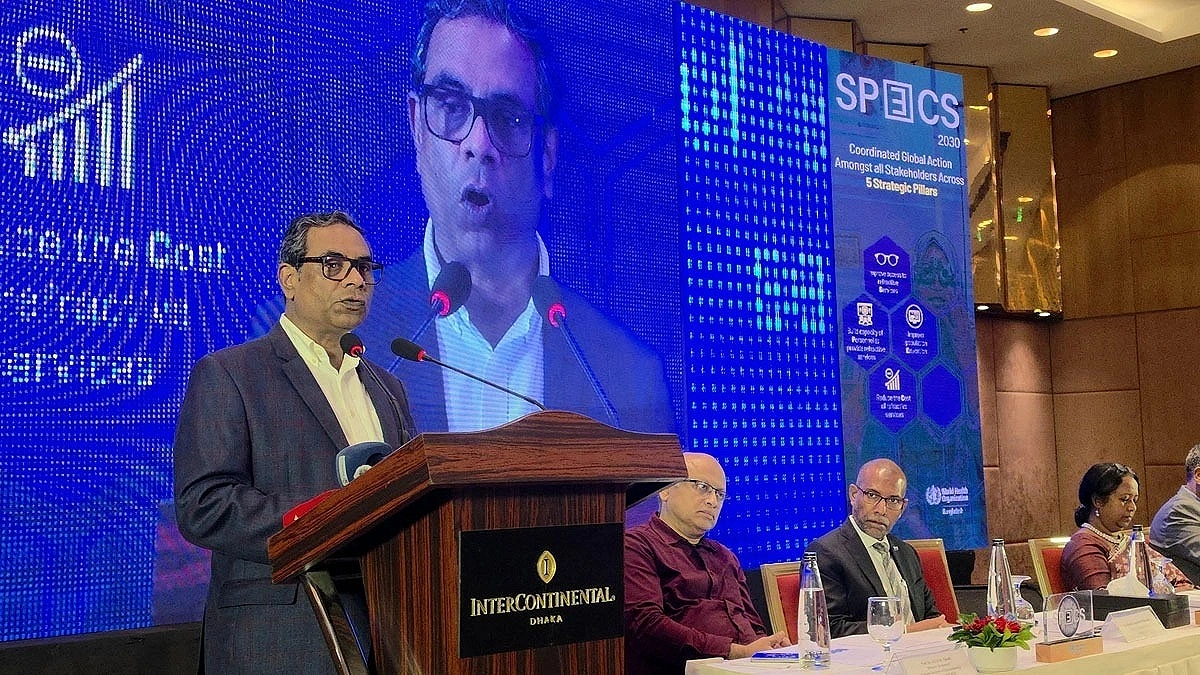
Photo: Agamir Somoy
State Minister of Health MA Muhit said separate outdoor, indoor, and operation theater facilities for eye care will be introduced in the 151-bed full-fledged hospitals under construction in every upazila of the country.
He made these remarks as the chief guest in the official inauguration of the World Health Organization’s “WHO SPECS 2030 Initiative” held on Tuesday in Dhaka.
At the same time, an integrated “National Eye Care Plan” is nearing finalization, aiming to perform around 1 million cataract surgeries, distribute millions of eyeglasses, and provide treatment for diabetic retinopathy.
With this launch, the WHO SPECS 2030 Initiative has begun its journey in Bangladesh. International public health and eye specialist Muhit added that the government is prioritizing the health sector and is determined to extend modern eye care services to the upazila level.
He noted that the transformation of upazila health complexes into 151-bed full-fledged hospitals is underway, ensuring advanced eye treatment in nearly 500 upazilas so that grassroots people no longer need to rush to district towns or the capital for care.
Outlining the plan for the grassroots primary healthcare system, Muhit said “Primary Eye Care” will be included as a mandatory part of the training for the one lakh health workers in the government’s recruitment process.
Moreover, by coordinating the infrastructure of district hospitals, regular cataract surgeries and refraction services will be strengthened in at least half of the districts very soon.
Regarding the National Institute of Ophthalmology and Hospital (NIOH), Muhit mentioned that a major project for its modernization and expansion has been undertaken and will be implemented shortly.
The government also plans to highlight Bangladesh’s success in eye care on a global stage by utilizing the experience of both public and private sector NGOs.
Muhit said over the past six months, the Ministry of Health has maintained regular coordination with international and local organizations to develop and expand eye care. Due to high-level government efforts, Bangladesh has secured a significant commitment to host a global summit.
The government aims to ensure a revolutionary positive change in the country’s eye treatment sector within the next 3-4 years.
Other speakers at the event included the NIOH Acting Director ASMM Kadir, WHO Regional Adviser Tashi Tobgay, and the WHO Representative in Bangladesh Ahmed Jamsheed Mohamed, along with other local and foreign delegates.

