Teesta Master Plan 'Unrealistic', expert Aynun Nishat favours agreement with India

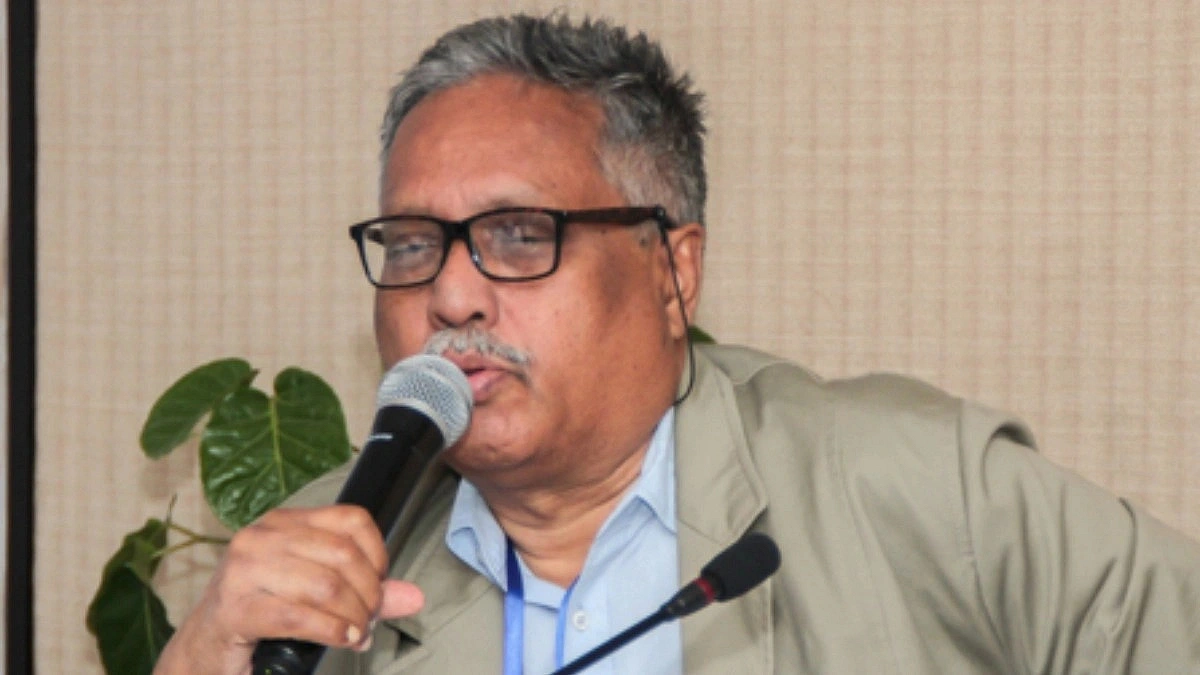
Environmental and water resources expert Dr. Aynun Nishat. Collected photo.
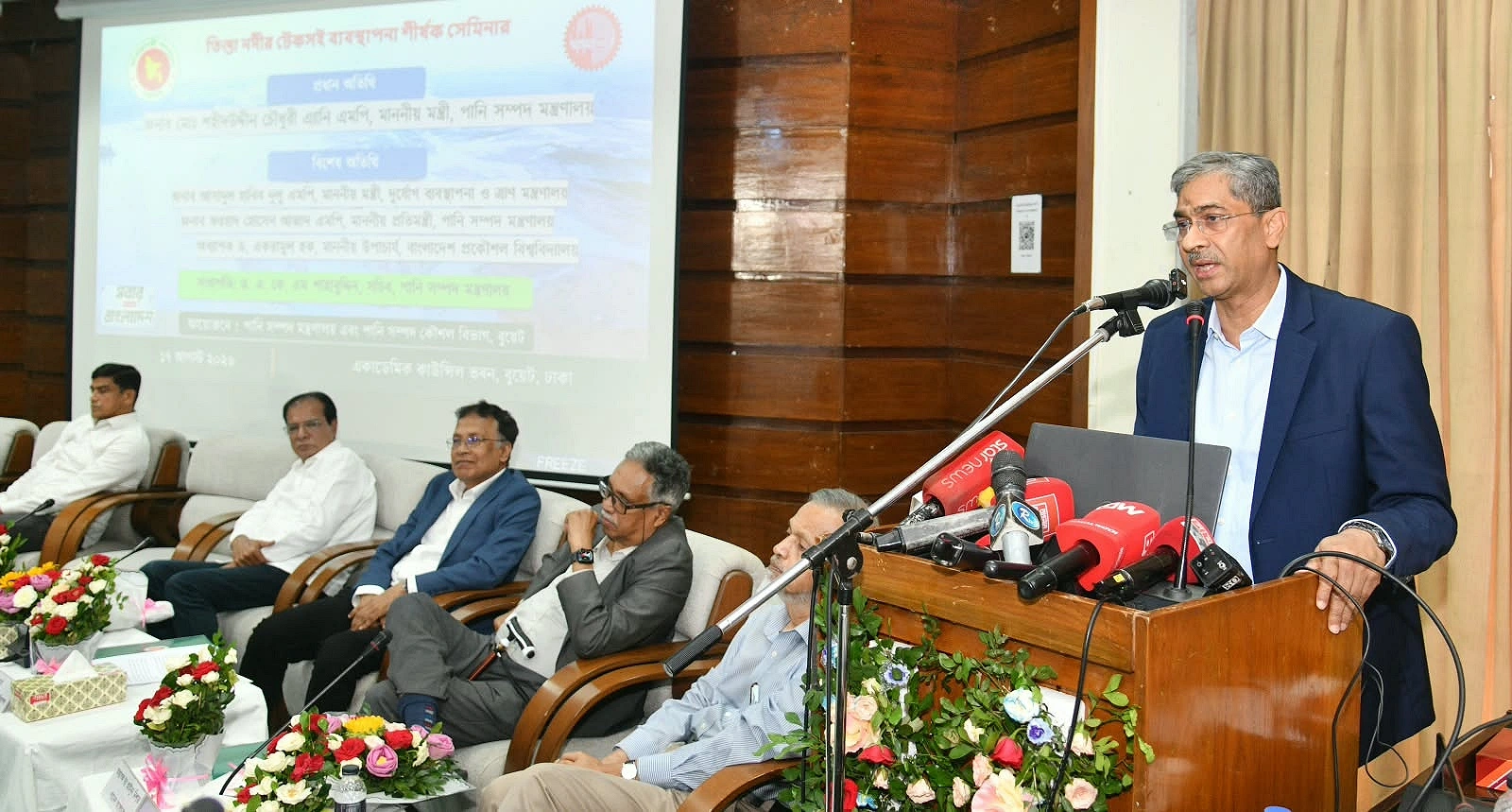
Environmental and water resources expert Dr. Aynun Nishat has claimed that China's proposed Teesta Mega Project, or the Teesta Master Plan, is an 'unrealistic project'. He made this statement today, Monday, at a seminar titled 'Sustainable Management of the Teesta River' held at Bangladesh University of Engineering and Technology (BUET).
The former BUET professor said, "You see that there are many protests on the banks of the Teesta. The Prime Minister has pledged that a master plan will be made. I still do not understand this master plan. I found a 12-15 page document on the internet that was presented. It has a drawing on an A4-sized page. The river will be narrowed. This is an unrealistic project."
Dr. Nishat highlighted the necessity of signing an agreement with India over the Teesta. He said, "If we summarise the problems, we see—first is floods, second is river erosion, and third is drying up. The idea of retaining water in dry areas cannot be implemented soon. Because where is the water? Whatever water comes after Hatibandha's Daliya in Lalmonirhat—there is no benefit in storing that water. So what is the solution? The solution is to sign an agreement with India over the Teesta. That is the top priority."
He expressed hope that the issue of water-sharing agreements for the Ganges and Teesta would be on the priority list during the Prime Minister's possible visit to India. He commented that once a Teesta agreement is in place, we would know how much water we can receive. Planning is only possible once resource availability is confirmed. Although he noted that work on flood control and preventing river erosion could be started at this moment.
The Ministry of Water Resources and BUET's Department of Water Resources Strategy organised the seminar. The seminar, held at BUET's Academic Council Building, was attended by Water Resources Minister Shahid Uddin Chowdhury Annie as the chief guest. Special guests included Disaster Management and Relief Minister Asadul Habib Dulu, State Minister for Water Resources Farhad Hossain Azad, and BUET Vice-Chancellor Dr. Eqramul Haque.
In his speech, Shahid Uddin Chowdhury Annie described the Teesta project as 'very challenging'. He said, "We find this project very challenging in our work. Given the high expectations—especially among the people of five districts in the northern region—if we fail to implement it, the people of that area will suffer even more losses. The problems may also grow day by day. So we must overcome this challenge."
Referring to the Prime Minister's sincerity regarding the Teesta project, the minister said, "The Prime Minister discusses with us frequently. We hold inter-ministerial meetings. He tries to know at what stage the project is and how it is progressing. He gives us guidance on making it visible."
Shahid Uddin Chowdhury Annie remarked that a comprehensive solution is needed for the Teesta, upon which its design, planning, and implementation will be based.
At the event, Disaster Management and Relief Minister Asadul Habib Dulu highlighted the suffering. He said, "I am a person from across the Teesta bank. Rangpur was once full of vibrancy. It was the granary of the country. It had grain-filled granaries. That Rangpur is now barren land. I see wailing on the banks of the Teesta. As a people's representative, I want to know how soon we can free them from their anguish."
At the seminar, Professor Masfiqus Salehin from BUET's Institute of Water and Flood Management, Professor Dr. Ataur Rahman from the Department of Water Resources Strategy, and Additional Chief Engineer Dr. Sarfaraz Banda from the Water Development Board presented papers on the problems and solutions of the Teesta River.