
Measles Crisis Deepens as Cases Top 1,00,000

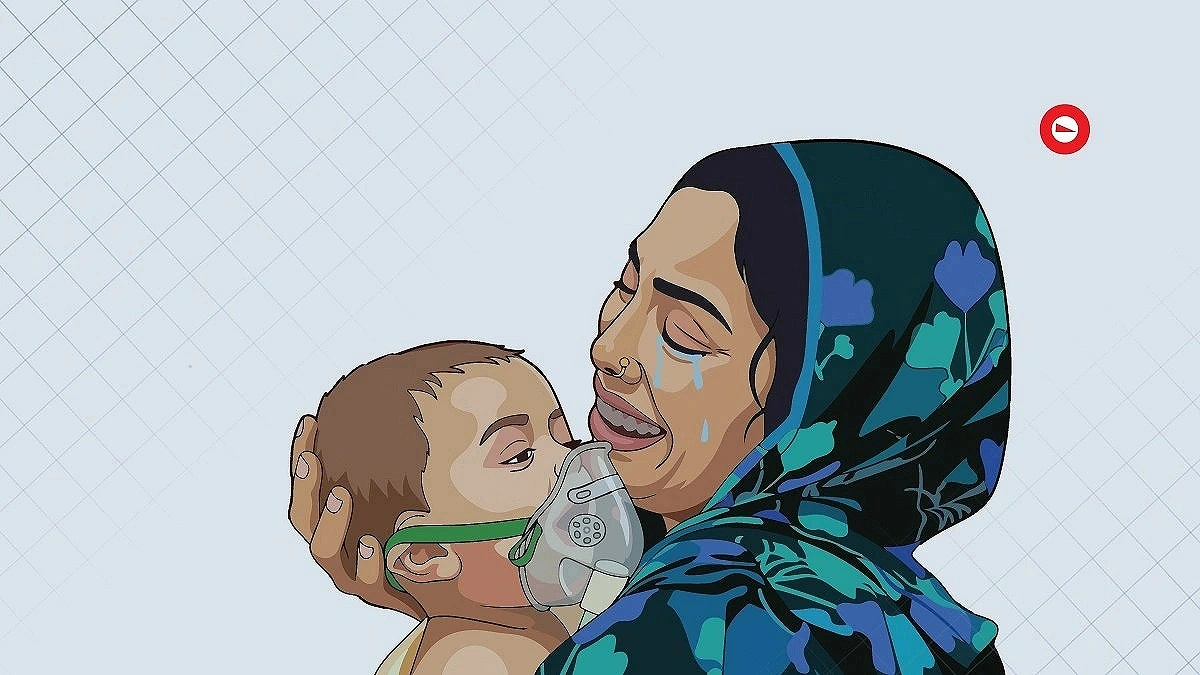
Graphics: Agamir Somoy
Bangladesh faces a staggering health crisis as measles cases surpass 1,00,000, despite government claims of exceeding vaccination targets by over 4,00,000 children.
Within the last 24 hours, the country reported more than 1,000 new infections and five deaths.
Since 15 March, the total number of infected individuals has climbed to 1,00,677, marking a 20-year high. The death toll stands at 666.
Data from the Directorate General of Health Services (DGHS) reveals that while 10,773 cases are confirmed, another 89,904 individuals are exhibiting symptoms.
Institute of Epidemiology, Disease Control and Research (IEDCR) former Chief Scientific Officer Mohammad Mushtuq Husain attributes this surge to a failure in reaching critical immunization thresholds.
He said, “Herd immunity is created only when the vaccination target reaches 95 percent in an area. The current situation remains an emergency. If the vaccination target had been achieved, more than a thousand people would not be infected with measles in a day. This situation is not normal.
“Although daily deaths have declined, even one death daily from a preventable disease is an abnormal event.”
The outbreak, which began early this year and spread nationwide by late February, has maintained a high intensity since March.
In the most recent 24-hour reporting period, officials recorded 1,148 cases, including 139 confirmed patients. Five symptomatic deaths occurred during this timeframe, two of which were in Sylhet, though confirmed deaths have remained at zero for several days.
Health and Family Welfare Minister Sardar Md Sakhawat Husain praised the government’s efforts, asserting that the health department achieved 100 percent success in the vaccination campaign.
He said, “In the last week, the number of confirmed deaths from measles has dropped to zero. The number of suspected patients (deaths) has also fallen below five in the last five days. Had we not been successful in the vaccination program, the situation would have been much worse.”
However, Mushtuq challenged this narrative, calling the focus on zero confirmed deaths “unscientific”.
He argued that when a disease reaches pandemic proportions, testing every single patient is neither necessary nor vital. Hussain suggested that instead of expressing satisfaction with “100 percent” success, the government should use micro-planning to identify and vaccinate children in missed areas.
Following the initial outbreak, the government initiated a vaccination drive in 18 high-risk districts on 5 April, followed by a nationwide campaign from 20 April to 20 May.
While the target was 1,80,15,064 children, records show that 1,82,23,445 children actually received the vaccine. To stem the spread, authorities adjusted the vaccination age, lowering the starting dose from nine months to six months and including children up to six years old.
