
Dhaka in no hurry over Tarique Rahman’s India visit

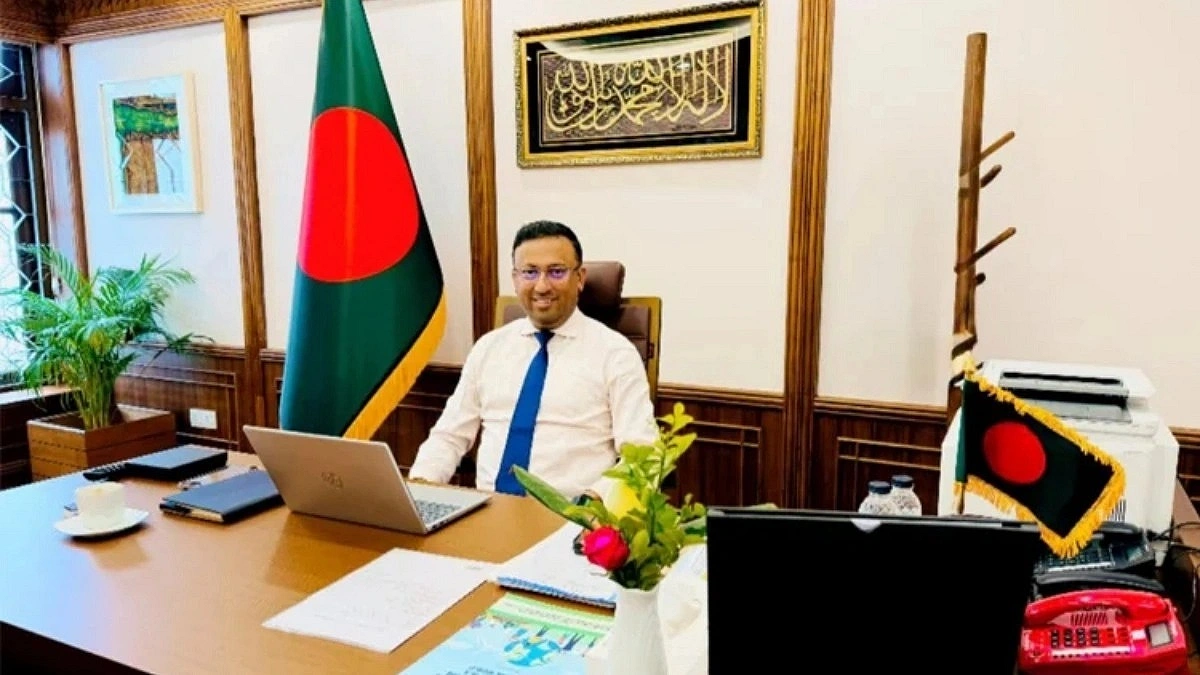
Prime Minister’s Foreign Affairs Adviser Humayun Kabir. File Photo
Is Prime Minister Tarique Rahman going to visit India? Although discussions are underway, neither side has made any clear statement on the matter. Meanwhile, Prime Minister’s Foreign Affairs Adviser Humayun Kabir said Tarique Rahman will visit New Delhi only after trust is restored between the two countries.
In an interview with Bangladesh Sangbad Sangstha (BSS), Humayun Kabir said the prime minister’s visit to India could take place only when an appropriate environment is created based on mutual trust and confidence between the two countries, respect for each other’s sovereignty, diplomatic dialogue and a respectful invitation, rather than through any rush.
The adviser dismissed as baseless reports published in Indian media that Tarique Rahman is going to visit India. He made it clear that the possibility of the prime minister visiting India before the BRICS summit is slim.
The interview with Humayun Kabir, who also serves as the ruling Bangladesh Nationalist Party’s joint secretary general for international affairs, was conducted on August 17 and published Thursday.
Relations between Dhaka and New Delhi hit rock bottom after the Awami League was ousted from power following the July uprising in Bangladesh two years ago. Although signs of improved relations emerged after the BNP came to power in February, the situation became complicated again after Sheikh Hasina, who was ousted from power and took shelter in India, held a press conference from New Delhi.
India has invited Prime Minister Tarique Rahman for a bilateral visit. He has also been invited to attend the BRICS summit scheduled to be held in New Delhi on September 12 and 13.
Humayun Kabir said, “Although there has been speculation in the Indian media about the prime minister’s visit before the BRICS summit to be held in New Delhi, the capital of India, on September 12 and 13, Bangladesh has adopted a policy of not rushing at this moment while maintaining specific national interests.”
“However, if an appropriate environment is created based on mutual understanding between the two countries, Dhaka will express a positive attitude toward attending the upcoming BRICS summit,” he added.
He did not directly say how an “favorable environment” could be created. However, Dhaka has been saying that Sheikh Hasina, who has been sentenced to death for crimes against humanity, and those accused in the murder of Inquilab Mancha spokesperson Sharif Osman must be sent back.
Humayun Kabir said, “The bilateral relations between the two countries and the issue of a high-level visit by the head of the Bangladesh government depend on a change in the mindset or outlook of India’s current leadership. The neighboring country must properly understand the reality of the July uprising in Bangladesh, which took place through the sacrifice of more than 1,500 people.”
Dhaka wants to be certain about the basis on which India wants to build relations with Bangladesh’s current elected government.
The prime minister’s adviser said, “There is no reason to rush into a high-level visit by going beyond national interests. Unless an appropriate environment is created based on consensus between the two countries on specific issues and a respectful invitation, the possibility of the prime minister visiting India before the upcoming BRICS summit is quite slim.”
Sheikh Hasina issue
Foreign Affairs Adviser Humayun Kabir expressed anger over India allowing Sheikh Hasina, who has been convicted by a Bangladeshi court, to engage in political activities and use the media.
He said, “After the fall of the authoritarian regime in Bangladesh during the July uprising through the sacrifice of more than 1,500 people, India’s allowing fascist Sheikh Hasina, who fled to India and took shelter there as a criminal, to speak politically or through the media is contrary to democratic norms.”
“The use of Indian territory to carry out any destabilizing activities against Bangladesh or providing space to any convicted person, terrorist or murderer has deeply angered millions of people in Bangladesh. Under international diplomatic norms, New Delhi cannot justify this in any way. At the same time, it cannot be justified under any circumstances on the pretext of freedom of expression.”
Humayun Kabir also said the government has already lodged a protest with New Delhi, reminding it of its bilateral and international legal obligations in this regard.
In response to Dhaka’s dissatisfaction over Awami League President Sheikh Hasina’s virtual participation in various party activities while staying in India, New Delhi has maintained that the Indian government has no involvement in the matter.
‘Bangladesh First’ policy
Prime Minister’s Foreign Affairs Adviser Humayun Kabir said the current government is following a “Bangladesh First” policy.
In his words, “Keeping the Bangladesh First policy at the forefront, the current government is maintaining a balanced foreign policy in the international arena. In considering whether to join a potential economic or defense framework formed through coordination among Saudi Arabia, Pakistan and Turkey to maintain the global economy and trade, Bangladesh is taking a positive position based on its own interests.”
The adviser said Prime Minister Tarique Rahman’s visit to Riyadh is nearing finalization at the invitation of Saudi Crown Prince Mohammed bin Salman. Meanwhile, relations with Pakistan are strengthening.
He also said Bangladesh is further strengthening its trade relations with the United States and the European Union (EU) as part of its economic diplomacy.
Humayun Kabir said discussions with the US government and private sector on soybean imports and the purchase of Boeing aircraft are progressing, alongside efforts to increase trade. Meanwhile, specific discussions on a Trade and Partnership Agreement have begun with the EU.
On strengthening strategic relations with China, the adviser said relations with Beijing have now reached a new level. He said Bangladesh is being given special priority under the “two plus two” mechanism and comprehensive partnership with China while avoiding geopolitical pressure.
