

Govt Agencies at Odds Over Tobacco Farming Data

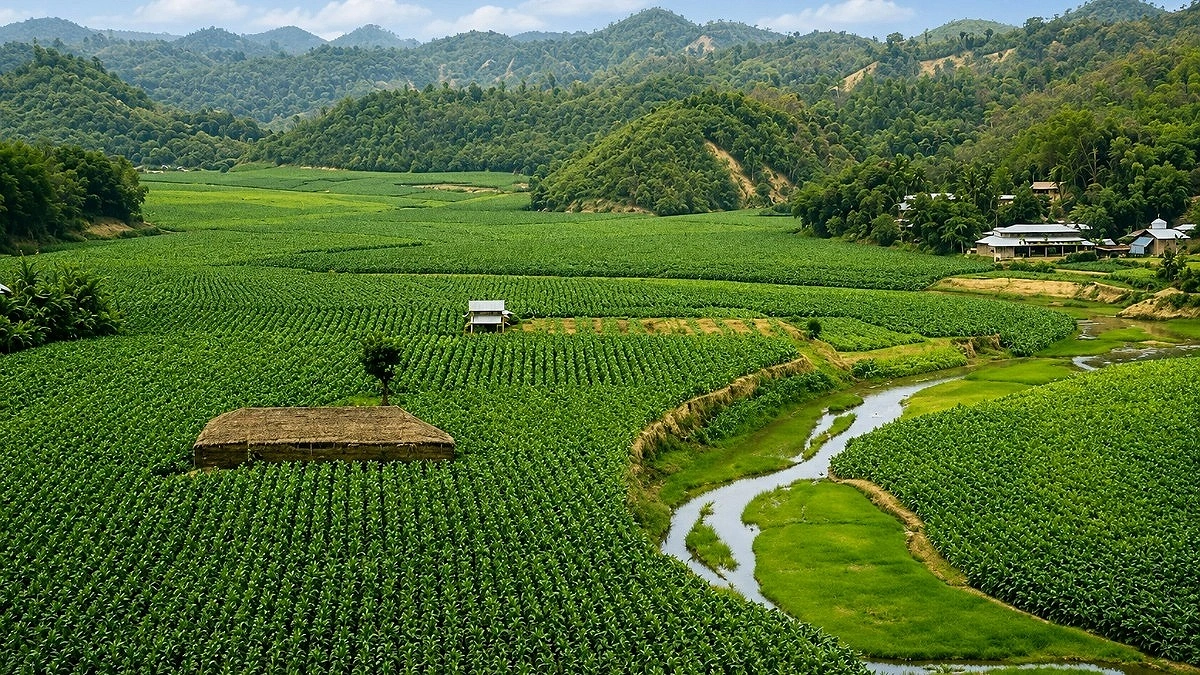
Photo: AI Generated
Tobacco farming is rising across the country but the government’s own agencies cannot agree on the numbers as Bangladesh Bureau of Statistics (BBS) and the Department of Agricultural Extension (DAE) are reporting conflicting figures.
DAE data indicates that 87,582 acres were used for tobacco cultivation in the 2024-25 fiscal year, while BBS data shows the figure reached 1,06,987 acres in the same period. Similar inconsistencies were observed in records for the 2022-23 and 2023-24 fiscal years.
Leaders of anti-tobacco coalitions allege that a draft policy to control tobacco cultivation has remained stalled since 2017. They claim tobacco companies are highly active within the government, securing various benefits and pressuring officials to allow “unregulated” tobacco farming.
These leaders said the agriculture department ignores the health and environmental damage caused by tobacco and underreports cultivation at the field level. Analysis of the Agricultural Statistics Yearbook (2025), published by the BBS on 30 June, reveals that tobacco farming has been increasing since 2022.
In the 2023-24 fiscal year, 1,01,100 acres were cultivated, producing 97,814 metric tons. This grew to 1,06,987 acres and 1,03,717 metric tons in 2024-25. On the other hand, DAE reported 65,419 acres in 2022-23, 72,044 acres in 2023-24, 87,580 acres in 2024-25, and 97,763 acres in 2025-26.
When asked about the conflicting data, BBS Agriculture Wing Director Alauddin Al Azad told Agamir Somoy that they collect information through their own surveys.
DAE Director (Crops Wing) Salma Laizu added that they report based on field-level data and told Agamir Somoy, “Agricultural officials might think that higher tobacco cultivation cannot be shown. For that reason, they decrease it. But this does not yield any benefit.”
Policy Research for Development Alternative (UBINIG) Executive Director and a former advisor to the interim government Farida Akhtar blames the agriculture department for the rise in tobacco.
She told Agamir Somoy, “Tobacco is listed as a cash crop. When we were seeing tobacco cultivation on 80,000 acres, the agriculture department was showing 45,000 acres. They have always shown less and they took no responsibility. Agriculture does not look at the damage tobacco causes to health and the environment.”
Historical data shows cultivation hit a record high of 1,27,000 acres in 2014-15. Latest figures show Kushtia leads in cultivation with 38,421 acres, followed by Lalmonirhat, Meherpur, Nilphamari, and Rangpur.
Activists believe the agriculture department’s indifference allows tobacco to spread to new areas. Farmers in Rangpur reported that tobacco companies provide seeds, fertilizer, pesticides, and advance loans, making it more profitable than other crops like rice, which have uncertain fair prices.
Al Amin, a farmer from Burirhat, said, “Farmers do not get the price for rice or potatoes. If we do ‘Tanku’ (tobacco), the company people buy it from the field. We don’t have tension.”
DAE Deputy Director Md Saikhul Arifin in Lalmonirhat, told Agamir Somoy, “Farmers are not listening; they see temporary profit. Issues regarding health, environment, or soil health are not a matter to them.”
While the Palli Karma-Sahayak Foundation (PKSF) previously provided incentives for alternative crops, its manager Md Alauddin Ahmed confirmed the project ended last year.
Farida Akhhtar noted that as a signatory of the FCTC (Framework Convention on Tobacco Control), the government is obligated to assist farmers with alternative crops.

