
Houthi strikes wound 13 in Saudi Arabia as Gulf talks stall

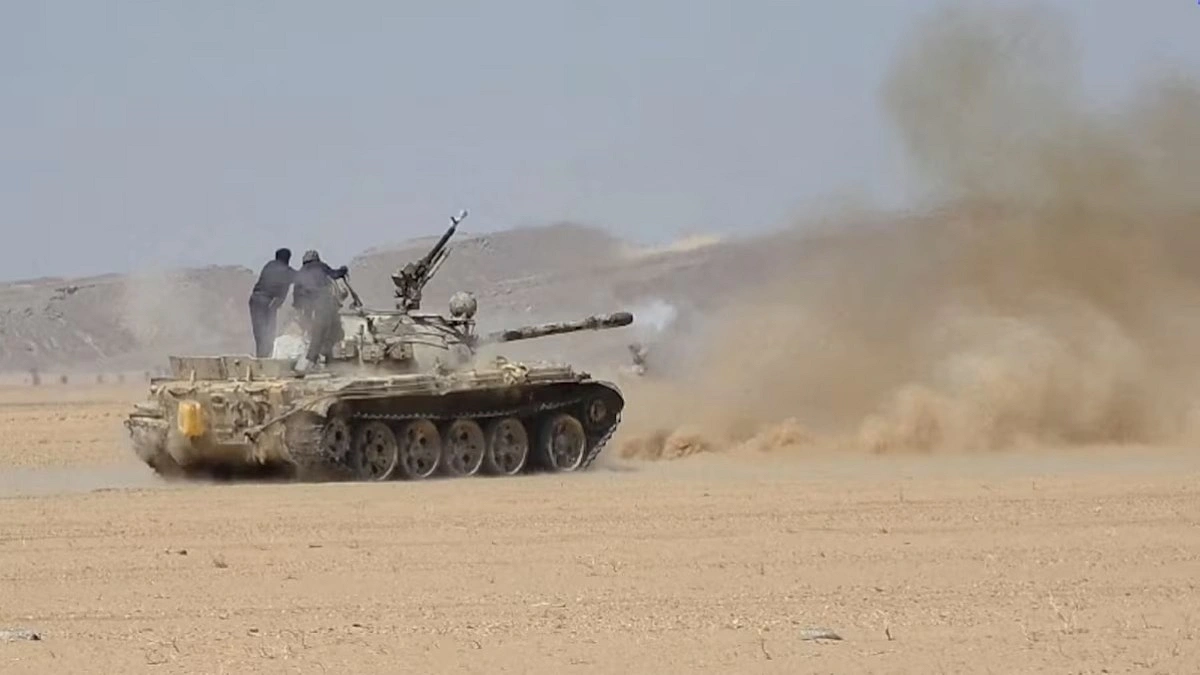
Photo: REUTERS
Yemen’s Iran-aligned Houthis launched a fresh wave of drone and missile strikes targeting southern Saudi Arabia and injured 13 civilians on Monday.
Saudi-led coalition confirmed the matter following the intense barrage, which struck as the group entrenched its positions along the Red Sea coast of western Yemen. Officials in Riyadh immediately held urgent deliberations to determine how to counter the rapid Houthi advance.
Meanwhile, Gulf Arab states postponed planned diplomatic talks with Iran, intensifying concerns that the widening Middle East conflict could spread further and jeopardize global oil supplies.
Houthis claimed that they fired dozens of drones and missiles at a military airbase in Khamis Mushait in southern Saudi Arabia. They targeted aircraft hangars, radar systems, runways, and ammunition depots in retaliation for previous Saudi airstrikes in Yemen.
In response, Saudi authorities broadcast emergency warnings in Khamis Mushait and three additional southern cities. Recent Houthi advances - including the capture of Perim Island at the mouth of the Red Sea - have piled further pressure on Saudi crude exports.
This escalation followed a Thursday aerial assault that knocked Saudi Arabia’s East-West pipeline offline, a strike Riyadh attributed to Iranian-backed militias operating in Iraq.
Saudi Arabia originally constructed the 1,200-kilometer (745-mile) pipeline across its territory from the Persian Gulf to the Red Sea during the 1980s to bypass the Strait of Hormuz during the Iran-Iraq war.
Market traders warned that an extended operational shutdown of the pipeline could remove up to 4 percent of the global oil supply while the strait remains largely blockaded. Riyadh has not indicated when operations might resume.
To counter the offensive, Saudi and Yemeni air forces stepped up aerial bombardments against Houthi targets, focusing strikes around the historic Red Sea port of Mocha. However, officials from Yemen’s internationally recognized government confirmed that the Houthis maintain effective control over nearly the entire western coastline along the Red Sea.
Highlighting the pressure on both sides, one Yemeni official said, “The Houthis are being put under heavy pressure. They in turn are putting more and more pressure on the Saudis, increasing their campaign of missile and drone attacks.”
Following the developments, crude oil prices surged more than 4 percent on Monday before settling roughly 1 percent higher. The reignited conflict in Yemen poses another complex challenge for US President Donald Trump.
Three sources informed Reuters that Washington has so far resisted Saudi requests for direct military intervention beyond providing intelligence support. Trump said over the weekend that he spoke with the Saudi crown prince, adding that Houthi officials also contacted Washington urging the US to remain out of the conflict.
Saudi state media reported that Crown Prince Mohammed bin Salman met with US regional commander Admiral Brad Cooper in Jeddah on Monday. Saudi Arabia has led a military coalition fighting the Houthis since 2015, although hostilities had largely quieted under a ceasefire in recent years.
Heavy combat reignited this month as Houthi forces pushed back troops loyal to the internationally recognized government. Oman was scheduled to host a Monday meeting with Iran and Gulf states to negotiate reopening the Strait of Hormuz, a vital waterway that handled 20 percent of global oil exports prior to the war.
However, Oman announced the postponement of the meeting, which Iran attributed to a request from Saudi Arabia.
Trump repeated his frequent assertion that Iran eagerly desired to negotiate a quick deal. However, Mohsen Rezaei, secretary of Iran’s Supreme National Security Council, rejected the statement as a distraction, writing on X, “No talks until Iran’s conditions are met.”
Underlining the volatility of regional maritime shipping, conflicting accounts emerged regarding how and when an oil tanker sustained damage. Without providing a specific date, Iran’s Revolutionary Guard Corps (IRGC) reported via Fars news agency that sea mines struck the Panamanian-flagged tanker El Gaia as it passed through a prohibited zone south of the Strait of Hormuz.
US military’s Central Command quickly refuted the Iranian report, stating that the vessel was “struck by an Iranian missile last month and rendered inoperable.” Meanwhile, the UN International Maritime Organization reported that El Gaia suffered damage on Saturday - without specifying the cause - and noted that two seafarers were missing.
Reuters could not immediately contact the vessel’s owners in Dubai to verify any of the conflicting accounts. The world’s most critical oil shipping route has remained mostly closed since the war erupted on 28 February, as Iran has threatened vessels transiting without its authorization.
Reaffirming their control over the waterway, the IRGC declared in an official statement, “The IRGC Navy firmly declares that the Strait of Hormuz is closed and still under our smart control.”
Source: Reuters (adapted)
