
Earthquake in Venezuela
Rescue efforts stalled by lack of direction and chaos

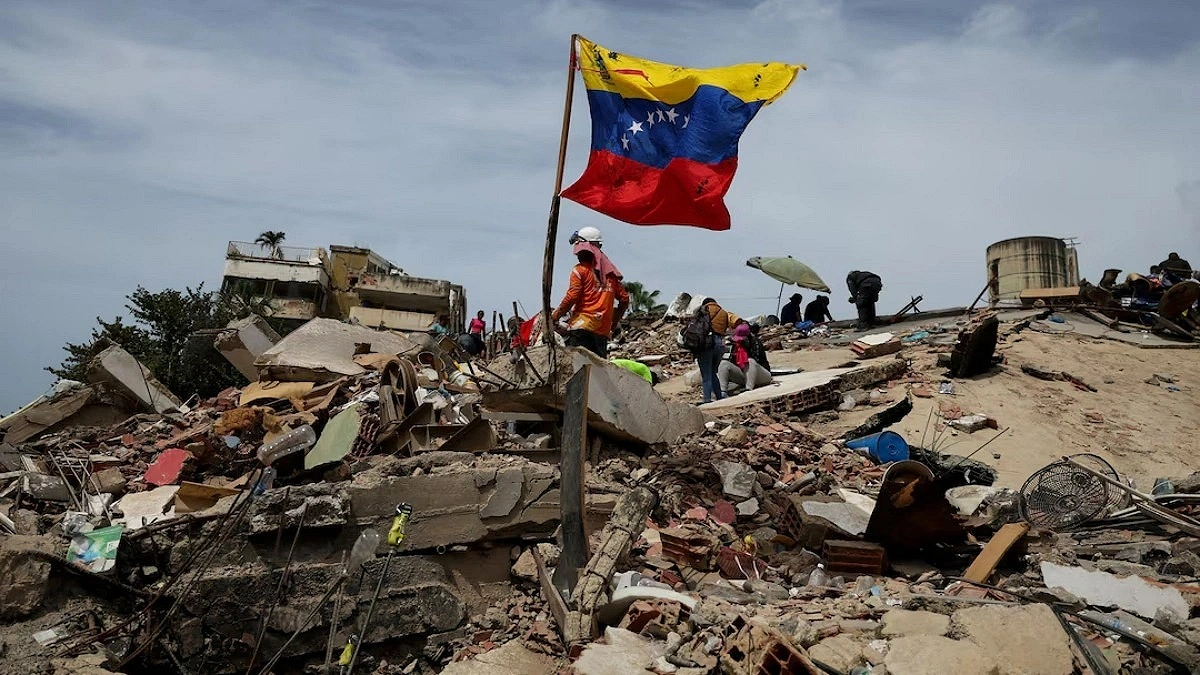
Ordinary citizens led most of the rescue efforts during the first two days. Picture: Reuters
A delayed military deployment following two powerful earthquakes that struck Venezuela’s coast last month slowed rescue operations because of late orders to senior military officers, shortages of essential equipment and a lack of coordination, according to eight sources familiar with the matter who spoke to Reuters.
According to the government, the magnitude 7.2 and 7.5 earthquakes killed about 5,000 people.
However, the United States Geological Survey and several experts believe the final death toll could be nearly twice that number.
La Guaira state suffered the worst damage. The country’s main airport, a major seaport and hundreds of high rise buildings partially or completely collapsed there.
Acting President Delcy Rodríguez, backed by US President Donald Trump, has defended the government’s response.
Critics say military personnel and government officials arrived late at the disaster sites. They also accuse them of failing to play an effective role in rescuing people trapped beneath the rubble.
Rodríguez said 4,000 officials were deployed immediately after the earthquakes. However, local residents, Reuters witnesses and several sources familiar with the situation said the presence of soldiers and police officers during the first few hours was extremely limited. For the first two days, ordinary people carried out most of the rescue work. They brought food and relief supplies and used basic tools to pull both survivors and the dead from the rubble. They were later joined by international rescue teams, firefighters, civil protection personnel and a limited number of Venezuelan soldiers.
Several soldiers told Reuters they joined the rescue efforts voluntarily because they had not received direct orders. According to serving and retired military officers, sources linked to the armed forces and several diplomatic sources, the limited military deployment resulted from delays in issuing orders, uncertainty over who was responsible for managing the crisis and shortages of essential equipment.
Speaking on condition of anonymity, one serving military officer said, “We do not make decisions on our own. We receive direct orders.”
He said, “If I am not given orders, I cannot tell my unit, ‘Let’s go help in La Guaira.’ There was no disaster response plan like the plans that exist for defending the country.”
The officer said his unit was sent to La Guaira after receiving orders the day after the June 24 earthquake. He said, “We could not leave without preparation and supplies. No one is prepared for a situation like this. At the very least, the soldiers stationed in Caracas should have been sent to ensure security and provide whatever assistance they could.”
A diplomatic source said the entire situation was marked by severe confusion.
“There was no plan. The chain of command was also weak. Many people did not know what they were supposed to do,” the source said.
According to the source, delays in issuing orders also slowed the work of international rescue teams that arrived within the first 48 hours after the earthquakes. That wasted valuable time during which more lives could have been saved.
The source added, “Everyone was waiting for orders from above. Rather than risk being reprimanded by taking the initiative, they felt it was safer to do nothing.”
The source said rescue teams were also delayed in determining their search areas.
“The loss of time was extremely frustrating,” the source said.
Another source familiar with military affairs said a Marine Infantry Brigade was ready but was never ordered to begin operations. Another military source said his unit did not have enough vehicles to send troops to the affected areas.
Three additional sources said various military units also lacked basic equipment such as hammers, pickaxes and helicopters capable of operating at night.
Another source said the deputy minister responsible for disaster management arrived in La Guaira at midnight on the day of the earthquakes. However, he did not have the communications equipment needed to report the extent of the damage.
While helping clear the rubble, 34 year old volunteer Ana Guedez said, “When we protested in the streets, they used to arrive very quickly.”
She asked, “So why were they so slow when it came to saving people’s lives?”
Since the removal of Nicolás Maduro, the United States, which has maintained significant influence in Caracas, has deployed at least 900 personnel to support relief operations. Venezuela’s defense minister, who is under US sanctions, met with senior US military officials in Caracas after arriving in the country.
Source: Reuters (Adapted)
