
Cuba again in darkness as power grid collapses
- Fuel crisis sparks distress across island
- Havana blames US sanctions

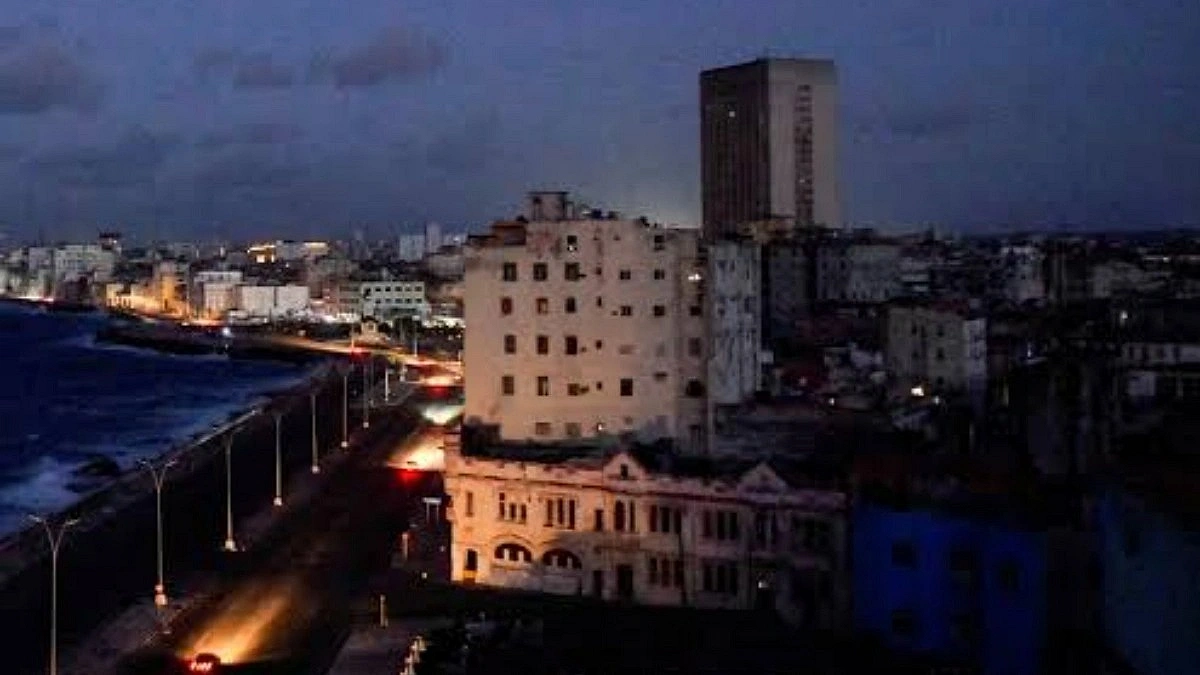
Photo: Reuters
When the lights go out, it is not just homes that become dark. The pulse of an entire country comes to a halt. On Friday (September 18), that darkness once again descended on the Caribbean Island of Cuba. Electricity supply suddenly stopped, urban life came to a standstill and the daily lives of millions of people were plunged into uncertainty. Amid a fuel crisis that has lasted for months, Cuba’s national power system collapsed again, raising fresh political and humanitarian concerns.
Cuba’s national power grid completely collapsed on Friday. The country’s electricity authorities said the disruption was caused by a fault in a high voltage transmission line. The entire national power system was later disconnected. Cuba’s Energy Ministry said it had begun taking the necessary steps to restore electricity services as quickly as possible.
Millions of people across the island including in the capital Havana were left without electricity. Limited power returned around hospitals and emergency service centers in the evening but large parts of the city remained in darkness. Cuba’s national electricity company Union Eléctrica (UNE) said power restoration would be carried out gradually.
This is not a new occurrence for Cuba. It is another major national power failure among several that have occurred since January this year. The country’s power system has been under severe pressure due to aging infrastructure, outdated thermal power plants and an acute fuel shortage.
The Cuban government has blamed US fuel sanctions for the crisis. Havana has alleged that restrictions on oil supplies imposed by the United States have made it difficult to obtain the fuel needed, directly affecting power generation. Washington has previously said that Cuba’s economic difficulties are also linked to the country’s own policies and management problems.
Mercedes Rodriguez, a 60-year-old worker in Havana, told the Associated Press, “These constant power outages are no longer bearable. There is no food, no water, no electricity. It is difficult to explain the situation we are in.” Her remarks reflected the frustration and exhaustion of ordinary people.
Another resident, Frank Lorenzo, said he had previously spent 24 hours without electricity. Although power returned for a short time, the entire system collapsed again. His comments made clear that the crisis has now become a daily reality for many Cuban families.
Experts said Cuba’s power crisis is not merely a technical problem. It is also linked to economic pressure, international sanctions and restrictions on fuel imports. Prolonged power outages are affecting hospitals, water supply systems, communication services and the working lives of ordinary people.
United Nations human rights experts have also expressed concern over the situation in Cuba and highlighted the humanitarian impact of disruptions to fuel supplies. Meanwhile, Cuba’s long standing political dispute with the United States has made the power crisis even more complicated.
For now, Cubans are waiting for the lights to return. But questions remain over how long an island nation can continue to struggle with such darkness. The repeated collapse of the power supply is now not merely a technical failure but has become a symbol of Cuba’s deep economic crisis.
