


Why were so many tourists in Nepal's flood-hit region?

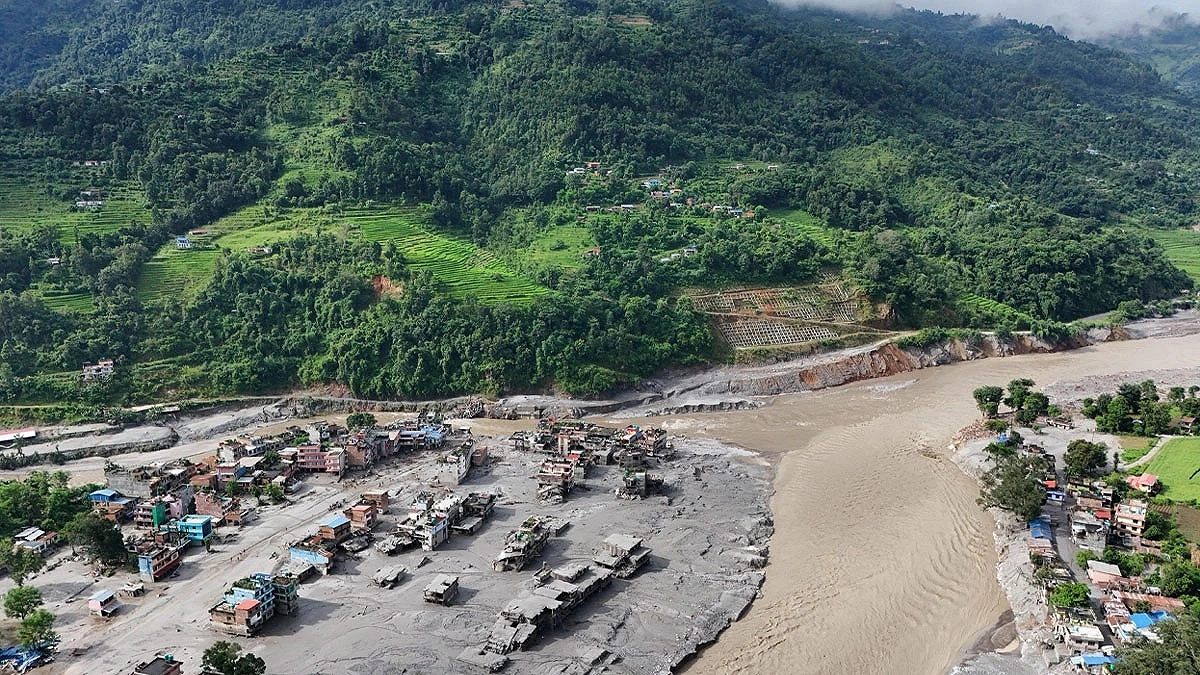
Reuters photo.
The flash flood in Nepal's Tibet-border region has claimed at least 165 lives, with many hundreds missing (Reuters say some 1,500) people still missing. According to local authorities and media reports, the majority of the victims are foreign nationals.
Indian authorities have confirmed that 341 of their citizens remain unaccounted for. Australian Prime Minister Anthony Albanese has stated that 34 Australian nationals are among the missing. New Zealand's Ministry of Foreign Affairs and Trade has also reported that a "small number" of its citizens are on the list.
Ukraine's Foreign Ministry has said that 53 Ukrainian nationals are missing, based on information received from Nepali authorities.
Kumar Adhikari, a manager at a local tour company, told the Press Association (PA) that a dozen British citizens from one of their tour groups are missing near the Nepal-Tibet border, along with four of their tour guides.
A Sacred Destination
The flood-hit area holds deep religious significance for Hindus, Buddhists, and Jains due to two high-altitude sacred lakes. One is Lake Manasarovar, located near Mount Kailash in Tibet, and the other is Gosaikunda Lake in Nepal's Rasuwa district. Every year, thousands of pilgrims and tourists travel through Nepal to visit Manasarovar.
At this time of year—especially during the full moon period (Shrabana Purnima), which is considered highly auspicious—large numbers of Indian pilgrims come to Manasarovar and also to bathe in the sacred waters of Gosaikunda.
What Caused the Flood?
The flash flood struck on Wednesday morning along the Nepal-Tibet border. While an earthquake was initially suspected as the trigger, authorities now say it originated from a massive landslide.
The US Geological Survey (USGS) has reported that further analysis of prolonged seismic waves revealed that the tremor was actually caused by the landslide itself.
Officials from Nepal's Department of Hydrology and Meteorology have said that a massive amount of ice may have collapsed from the mountain, bringing down rocks and other debris. However, the exact cause has not yet been confirmed, and authorities are continuing their investigation.
Source: BBC

