


China recalls 4 million EVs over hidden door handle dangers

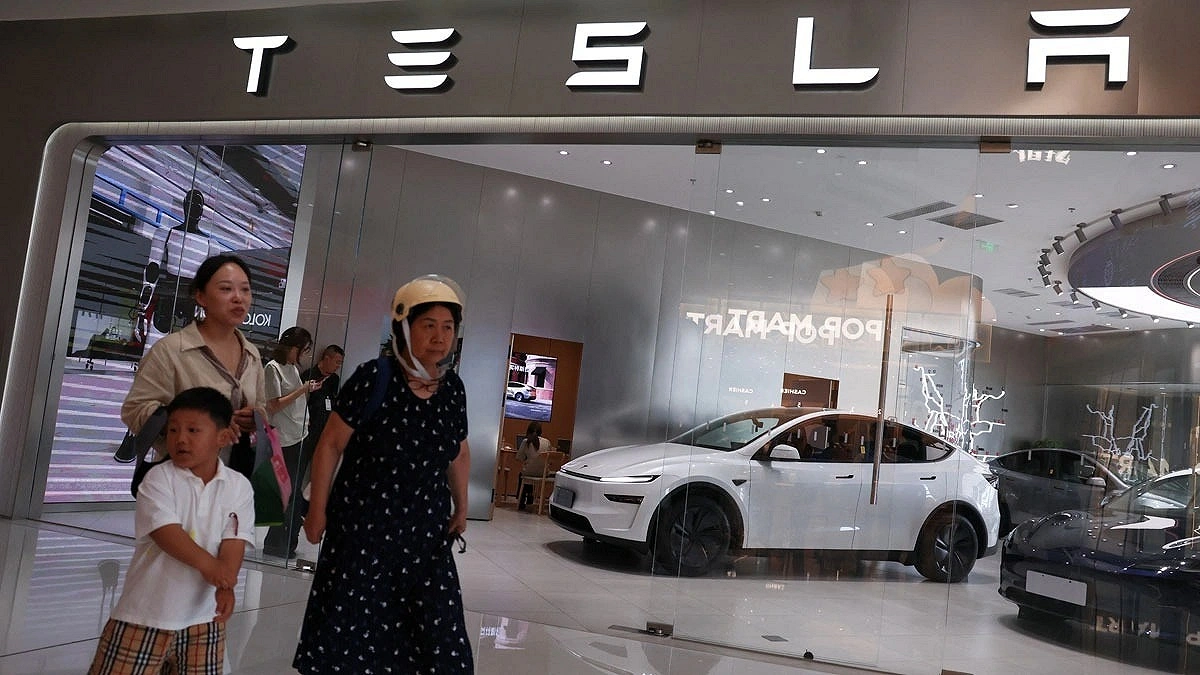
Photo: REUTERS
The visually appealing, concealed car door handles that adorn modern electric vehicles (EVs) have recently sparked a fierce global debate.
This design trend, widely popularized by Elon Musk’s Tesla, faces scrutiny following China’s announcement of its most massive vehicle recall in history, affecting over four million cars - mostly manufactured by Tesla.
This sweeping regulatory action precedes China’s upcoming mandate, which will legally require all passenger vehicles to feature manual door overrides on both the exterior and interior.
Hidden designs and hidden dangers
While auto manufacturers utilize concealed handles to provide a “sleek look and reduces wind drag,” these systems frequently confuse occupants. In fact, automakers integrate these handles into nearly 60 percent of the top 100 best-selling new energy models, including EVs and hybrids, across China.
Explaining the usability issue, Shanghai-based car industry analyst Stephen Dyer from the consultancy AlixPartners remarked, “Even I often find it difficult to locate the switch to open the door from the inside of an unfamiliar vehicle.”
However, the complications stretch far beyond mere inconvenience, directly threatening the safety of passengers. Nanyang Technological University Associate Professor Lyu Chen observed that electronically operated handles present “real safety concerns” when they malfunction during emergencies, critically slowing down rescue operations.
Lyu Chen warned, “A door handle may seem simple, but it becomes safety-critical in the seconds after a crash.”
Fatal collisions spark scrutiny
Accidents have already amplified these anxieties. Chinese automotive manufacturer Xiaomi faced severe backlash in 2025 after two fatal accidents involving its SU7 model, where suspected electrical blackouts allegedly trapped passengers inside the vehicles.
One crash on a highway in Tongling city in eastern China claimed three lives. According to state-controlled media outlet Global Times, relatives of the deceased stated that the occupants could not escape because the collision disabled the automatic door-unlocking system.
In response, Xiaomi representatives clarified that the SU7 features manual emergency overrides located at the bottom of each door, which operate without electrical power. The manufacturer began cooperating with police investigations and integrated new power-independent door handles into its latest SU7 models.
Tesla similarly battles legal challenges in the United States over its handle layouts. Jordan Miller, the sole survivor of a fiery 2024 California Cybertruck accident that killed three college students, filed a lawsuit against the EV giant.
Miller’s legal team from The Veen Firm argued that the Cybertruck’s handle-free design trapped the occupants inside the burning vehicle and obstructed bystanders from rescuing them.
One of the representing attorneys asserted, “When you design a vehicle with no mechanical way to open the doors from the outside, you are betting the electronics will work in every scenario, including a high-speed crash followed by a fire.”
Tesla denied all accusations in court filings, asserting that the Cybertruck fully complies with US federal safety standards. Nonetheless, multiple other incidents in the US involve passengers and children becoming trapped inside Tesla vehicles due to sudden electronic door failures.
China enforces sweeping recalls
In February, China became the pioneer nation to outlaw hidden door handles entirely. Under the new regulations taking effect on 1 January 2027, regulators will block the sale of any new vehicle designs that lack physical manual releases on both the inside and outside of the doors.
Manufacturers must display clear directional signage inside the cabin explaining how to operate the emergency escape mechanisms.
Stephen Dyer pointed out that China implemented these measures ahead of the United States and the European Union due to the country’s massive volume of EVs. As a result, China’s State Administration for Market Regulation (SAMR) ordered Tesla, Xiaomi, XPeng, and Geely on 21 August to recall more than four million vehicles.
The directive instructs automakers to place interior warning labels demonstrating emergency door operations and to push software updates that automatically roll down windows during collisions.
Tesla alone must recall nearly three million cars sold in China since 2014, starting with its Model S sedan. The SAMR highlighted that Tesla’s handles are “difficult to identify” because their coloration blends in with the interior door trim.
The agency warned that electrical system failures could prevent rapid egress or “hinder rescue efforts”. Meanwhile, Xiaomi, XPeng, and Geely must recall over 750,000 vehicles combined.
Critics label measures ‘weak remedy’
Several prominent engineers argue that these regulatory adjustments fail to resolve the core safety hazards. National University of Singapore engineering instructor Lim Hong Wee argued that the current recall measures fail to guarantee a physical mechanical entry method, stressing that software should never dictate emergency exit accessibility.
Additionally, Gokul Krithivasan, an analyst from the risk management firm SecureSafe, emhasized that the current adjustments do not help external rescuers gain entry. He also criticized the reliance on warning labels, calling them a “weak remedy”.
Krithivasan explained, “When panicked, people fall back on their instinctive responses, and don’t read small print in a dark and possibly smoke-filled cabin.”
Automotive brands have not notified US authorities of any similar recall campaigns. However, the US National Highway Traffic Safety Administration confirmed it is evaluating whether to mandate standardized emergency door-exit systems.
Meanwhile, European regulators have noted the potential dangers of concealed handles and drafted frameworks to ensure doors remain functional even during complete power losses.
Lyu Chen concluded that safety requirements established in China will likely influence car manufacturing globally, saying, “The common principle is clear: emergency entry and exit should remain possible even after a loss of electrical power.”
Source: BBC (adapted)

