

Trinidad Coast Lifted 20 Feet by Venezuela Earthquakes

Collected Photo
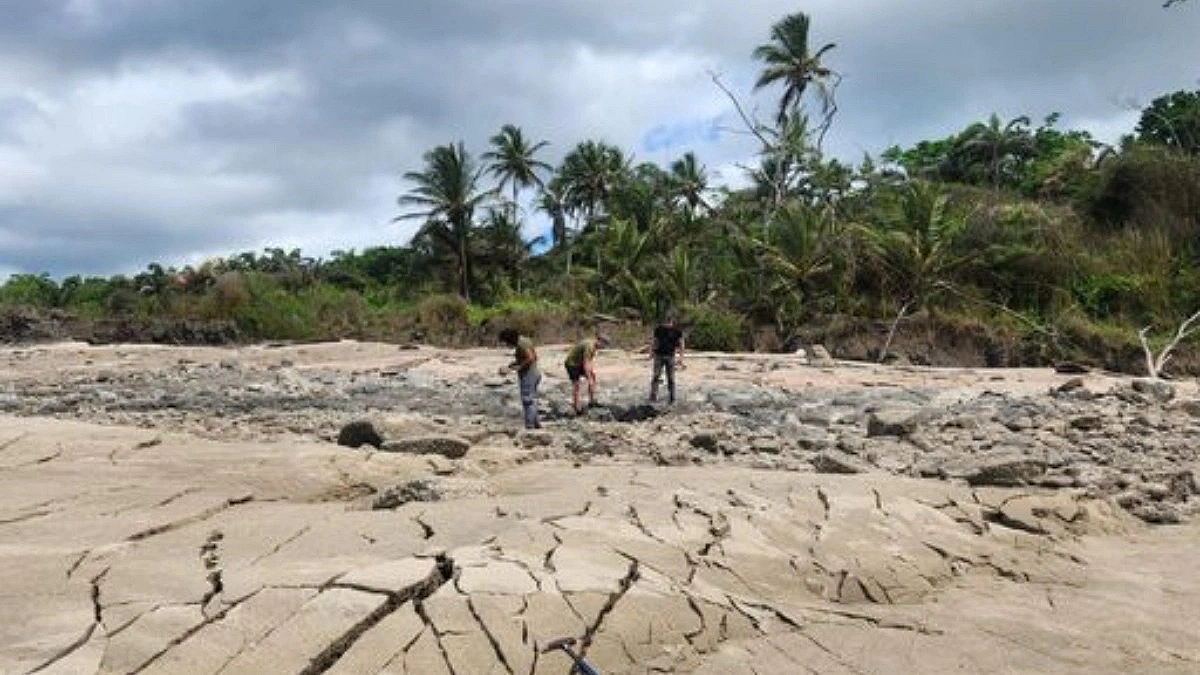
A section of the southwestern coastline of Trinidad and Tobago has reportedly risen about 20 feet above its previous level following a series of powerful earthquakes in neighboring Venezuela, according to local media reports.
Residents told the Daily Express that large cracks have appeared across parts of the affected coastal area after the rare geological event.
The sudden uplift has devastated local marine life, leaving hundreds of fish, crabs, shellfish, and stingrays dead among the exposed coastal debris, while thousands of other sea creatures were stranded.
According to the Express, its reporters visited the site and observed that portions of the coastline had been elevated several feet above sea level. They also found numerous dead marine animals scattered across the newly exposed land, while small pools of seawater had formed in parts of the beach.
Local resident Kamal Baikaran told the Express that the dramatic change became visible on Thursday morning local time. The affected region sits above the boundary between the Caribbean Plate and the South American Plate. He said the powerful earthquakes in Venezuela triggered movement along the tectonic plates beneath Trinidad, causing the ground to shift abruptly and lift the coastline.
"It happened the night of the earthquake," Baikaran said. "When I looked toward the area, I saw a large number of fish. Within moments, everything had risen. If the process had been slower, the fish probably would have escaped."
The reported coastal uplift is considered an unusual geological phenomenon resulting from sudden tectonic movement. Authorities have not yet released an official assessment of the extent of the land deformation or the environmental damage.
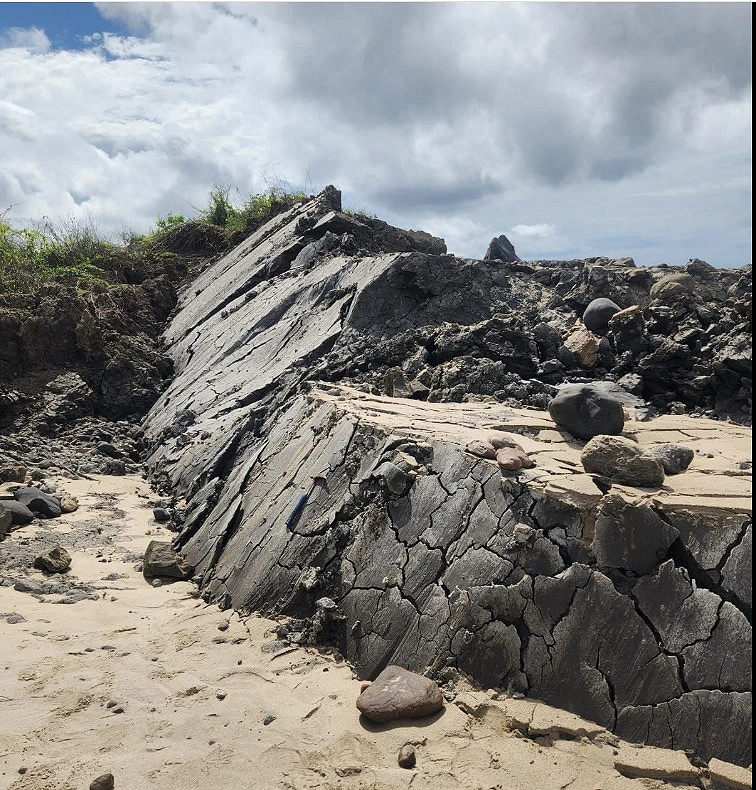
Parts of the island were lifted several feet above the ground following the earthquake. Photo: Collected
According to geologist Xavier Moonan, the unusual phenomenon was likely caused by the reactivation of an underwater slump—a type of submarine landslide.
"When a landslide occurs, massive blocks of rock move downslope," Moonan explained. "In this case, the seabed shifted in a similar way during the earthquake, causing the coastline to rise as the sea floor moved."
Moonan said the entire process unfolded within seconds, leaving marine life with virtually no time to escape.
"The change happened so quickly that the fish and other sea creatures were trapped before they could move away," he said.
He offered the explanation while analyzing the rare geological event, noting that this was not the first time Trinidad had experienced such coastal uplift.
A similar phenomenon occurred in 2018, when a magnitude 6.9 earthquake caused parts of Trinidad's coastline to rise. Moonan said that whenever Trinidad experiences seismic tremors or when earthquake activity from Venezuela propagates along regional fault lines—the island's more geologically vulnerable areas can undergo ground displacement.
The twin earthquakes struck Venezuela at 6:04 a.m. local time on Wednesday. The first measured magnitude 7.2, followed less than a minute later by a magnitude 7.5 quake.
The disaster has claimed the lives of nearly 2,000 people, while more than 50,000 others remain missing.

