

DU Turns 106, Reflects on Legacy and Future Challenges

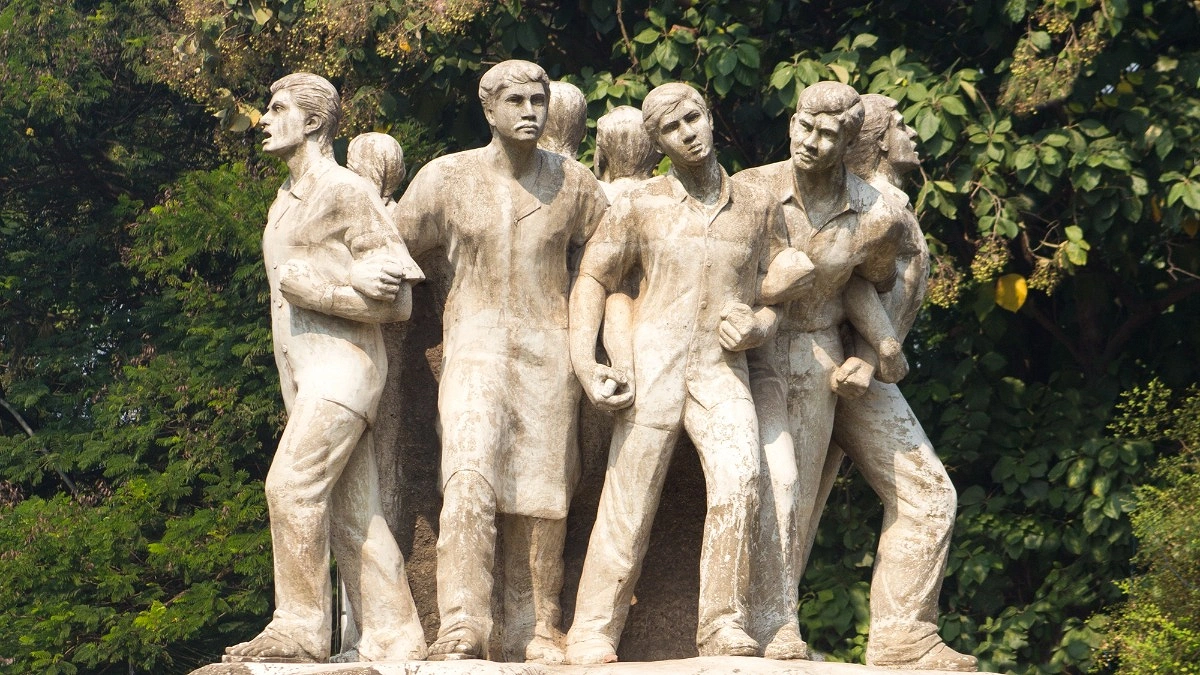
Photo: Collected
University of Dhaka (DU) marks the completion of 105 years and begins its 106th year on Wednesday. For over a century, the institution has served as the epicenter of every significant political movement, social shift, and intellectual pursuit in the country.
From the Language Movement and the Liberation War to the anti-autocracy struggles and the July Mass Uprising 2024, the university has consistently set examples of leadership and sacrifice at every historic crossroads.
The theme for this year’s University Day is “Restoration of Democracy and Higher Education in University of Dhaka.”
DU began its journey on 1 July 1921, with just three faculties, 12 departments, 60 teachers, and 847 students across three residential halls. After a century of growth, it now boasts 13 faculties, 84 departments, 13 institutes, approximately 2,000 teachers, 40,000 students, 19 residential halls, and four hostels.
The history of DU essentially reflects the history of Bangladesh. Faculty and students led nearly every democratic struggle, including the 1952 Language Movement, the 1966 Six-Point Movement, the 1969 Mass Uprising, and the 1971 Liberation War.
Most recently, the campus served as the nerve center for the July uprising 2024, where students played a vital role in organizing the Anti-Discrimination Student Movement. Iconic locations like the Raju Memorial Sculpture, TSC, and the Central Shaheed Minar became the heart of the resistance that eventually led to a seismic political shift.
DU has shaped the lives of the majority of the nation’s presidents, prime ministers, chief justices, and leading intellectuals, earning its reputation as the intellectual heartbeat of Bangladesh.
However, experts note that the journey has not been without hurdles. Political influence, controversies regarding teacher recruitment, limited research investment, and administrative crises have hindered its progress.
Emeritus Professor AF Serajul Islam Chowdhury said that the institution has not yet become fully student-friendly, partly due to a lack of necessary state patronage. He noted that the university has not yet been able to become a completely student-friendly university.
He expressed concern that as the link between education and employment weakens, many students are becoming solely job-oriented.
Despite financial constraints, DU remains the national leader in research. In 2025, its researchers published 1,789 papers in Scopus indexed journals - the highest in the country - compared to 804 from BRAC University and 778 from North South University.
In international standings, DU maintains its top position in Bangladesh, ranking 584th globally in the 2026 QS World University Rankings. It also holds the 132nd spot in the QS Asia University Rankings and sits within the 801-1000 bracket of the Times Higher Education World University Rankings.
Vice-Chancellor ABM Obaidul Islam emphasized that efforts are underway to transform the university into a modern, research-based international institution.
While acknowledging the institution’s glorious past, he said that the university’s academic excellence and research environment have been somewhat damaged due to various reasons in recent years.
Obaidul cited the negative impact of politicization in administration and recruitment. To address these challenges, the administration is drafting a 20-year master plan with the goal of placing DU among the world’s top 200 universities through improved governance, innovation, and international cooperation.
The birth of DU was also the result of long-standing movements and demands. Against the backdrop of demands for higher education from the people of East Bengal following the annulment of the Partition of Bengal, Lord Hardinge, the Viceroy of British India, announced the establishment of DU on 2 February, 1912.
After overcoming the recommendations of the Nathan Commission and the Sadler Commission, a long administrative process, and various obstacles, The Dhaka University Act was passed in 1920. Based on that law, DU officially began its journey on 1 July 1921.
To celebrate the 106th year, the university has organized day-long programs, including a colorful procession and a discussion meeting at the TSC auditorium, where Serajul Islam Chowdhury will present the keynote paper.

