

The Magic That Transformed Singapore

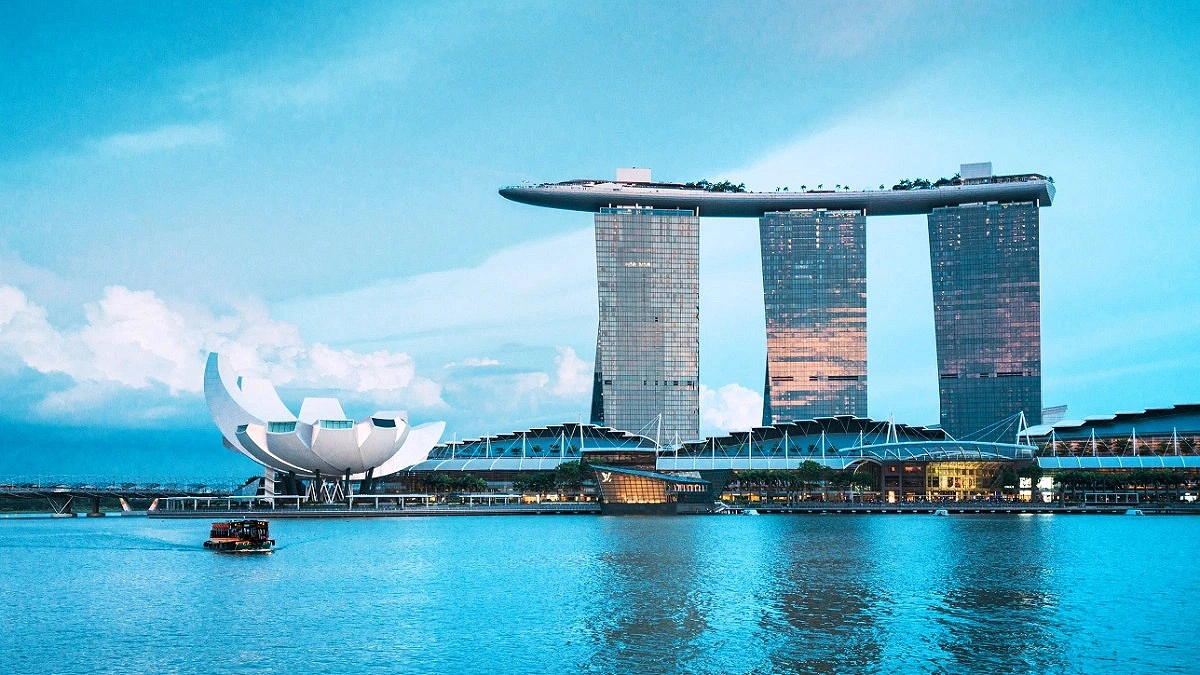
Singapore's world-famous resort and hotel, Marina Bay Sands. Photo: Collected.
It was August 9, 1965. The ordinary people of Singapore sat frozen, their eyes glued to the television screens. Standing in front of the camera was their beloved leader, Lee Kuan Yew, with tears streaming uncontrollably down his face. It took him nearly 30 seconds to compose himself; he pulled a handkerchief from his pocket and wiped his eyes. The reason behind his tears was terrifying. Singapore had just been literally kicked out of Malaysia—the very nation with which Lee had dreamed of building a shared future his entire life.
The surrounding circumstances were suffocating. It was a tiny island nation with not a single drop of natural resources to call its own. The poverty of its people at the time was worse than that of many poor African nations. For drinking water, they had to rely on the very Malaysia that had just severed ties with them. Hemmed in by two hostile neighbors, the country saw no future for factories or businesses.
Singapore's then-Prime Minister Lee Kuan Yew broke down in tears on camera during a live television interview.

But who could have guessed that from this absolute darkness would emerge the greatest fairy tale of modern history? In a span of just 60 years, that struggling Singapore has transformed into one of the wealthiest and most developed countries in the world. How did this impossible magic happen?
A Crazy Decision Against the Tide
Back in the 1960s, major global organizations like the United Nations and the World Bank used to give a standard piece of advice to newly independent, poor nations. They would say, "Do not let foreign companies enter your country; instead, protect and nurture your domestic industries."
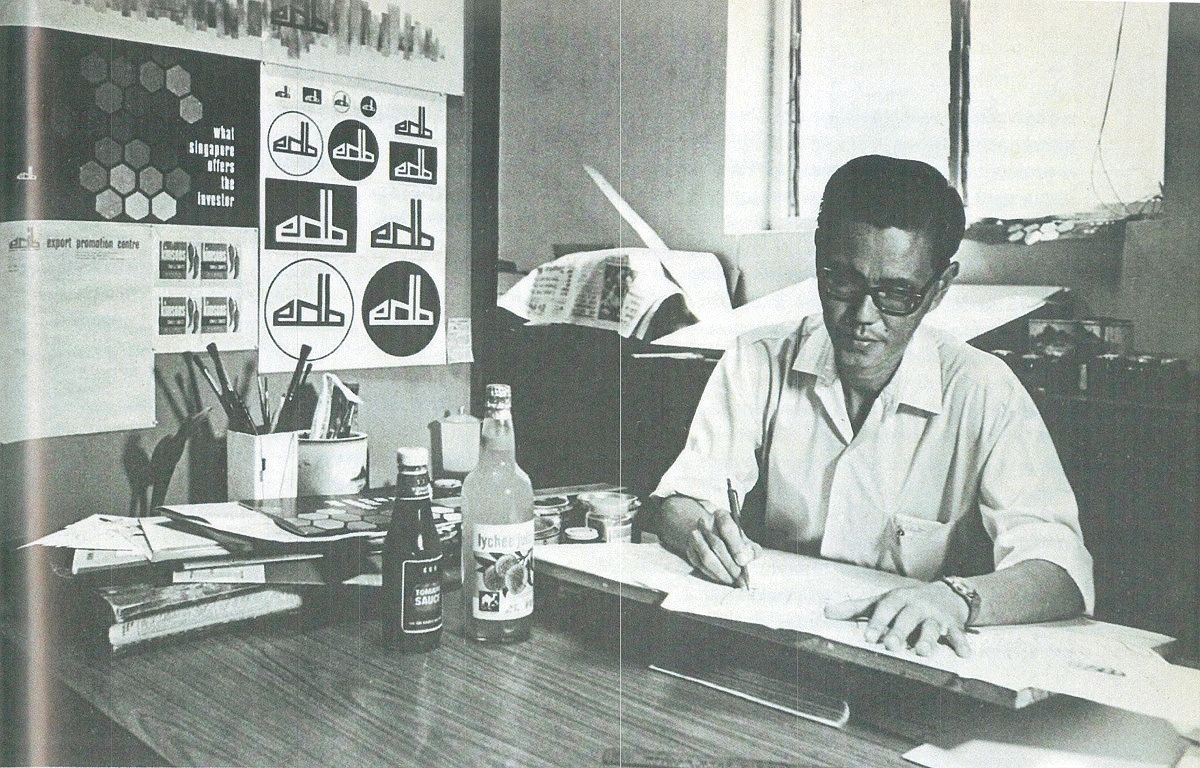
A designer from the LIS team, busy creating a modern 'house style' and logo for Singapore's newly formed EDB in the 1960s.
However, Singapore's Prime Minister Lee Kuan Yew and his Finance Minister Goh Keng Swee realized that given their country's dire situation, following this conventional path would lead to starvation. They had no domestic market of their own, nor did they have the time or capital to build domestic industries from scratch.
Therefore, they made a radically contrarian and audacious decision. They decided to drop the idea of protecting domestic industries and instead throw Singapore's doors wide open to the entire world! They eliminated tariffs and taxes to attract multinational corporations, adopted English as the official working language, and launched an aggressive strategy to draw foreign investment.
A Brilliant 'Sales Pitch' to Conquer the World
To draw foreign companies to their shores, Goh Keng Swee established the Economic Development Board (EDB) in 1961. The officials of this board essentially stepped into the shoes of salesmen and marketers. They flew to the headquarters of major corporations across America, Europe, and Japan with incredibly lucrative offers. Their pitch was simple: "Come to our country. You won't have to pay any taxes for ten consecutive years, and we have fully prepared the infrastructure for your factories in our massive Jurong Industrial Estate. Our workers speak English, and they are fully trained at the government's expense." They even went so far as to offer direct access to the Prime Minister if any issues arose!
The Magical Pitch Yielded Magical Results
Their magical proposition worked exactly like a charm. World-renowned companies like 'Texas Instruments' in 1968 and 'HP' in 1970 moved to Singapore.
By the mid-1970s, the world's biggest electronics giants had set up factories in Singapore. A country where the unemployment rate stood at 14% in 1965 saw it plummet to just 4% in a mere eight years. And the per capita income? It skyrocketed from $516 USD in 1965 to $1,500 USD!
The Harsh Reality Behind the Magic
However, a brutal truth lies hidden behind this success story. To achieve such unprecedented growth overnight, the people of Singapore had to pay a very heavy price—their political freedom.
In order to rapidly boost the economy, Lee Kuan Yew's government had to adopt a very authoritarian stance. To suppress opposition, a strict British-era 'Internal Security Act' was deployed, giving the government the power to detain anyone without trial.
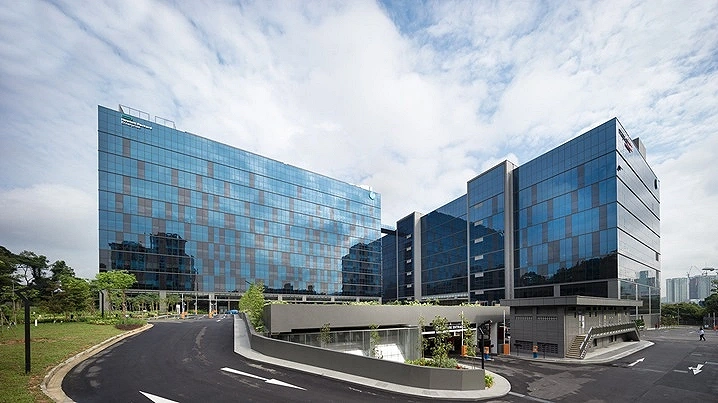
Exterior view of the HP office in Singapore.
In 1963, political dissidents were jailed through 'Operation Coldstore,' and trade unions were brought under tight state control. Even critical journalists and leaders faced legal action. Since 1959, only a single party has been in power there—the People's Action Party. Simply put, in hopes of a prosperous life, Singapore had to sacrifice much of the freedom of speech that Western nations boast about.
A Different World Sixty Years Later
In 1965, only 1.9 million Singaporeans witnessed Lee Kuan Yew's tears on television. Today, six decades later, the entire world looks on in sheer amazement at the fruits of those people's hard work and sacrifice.
For a population that once lacked money for food, their economic growth surpasses even fairy tales. While a person's annual income was a mere $516 USD in 1965, by 2025 it reached nearly $85,000 USD. This means income has increased roughly 165 times! In terms of per capita income, Singapore is now one of the wealthiest nations in the world. Not only that, but in proportion to its population, this tiny island nation is home to the highest concentration of millionaires on Earth. Their seaport is one of the busiest commercial ports in the world, and the country serves as the Southeast Asian headquarters for major multinational corporations. Corruption is virtually non-existent, and their education system is a global role model.
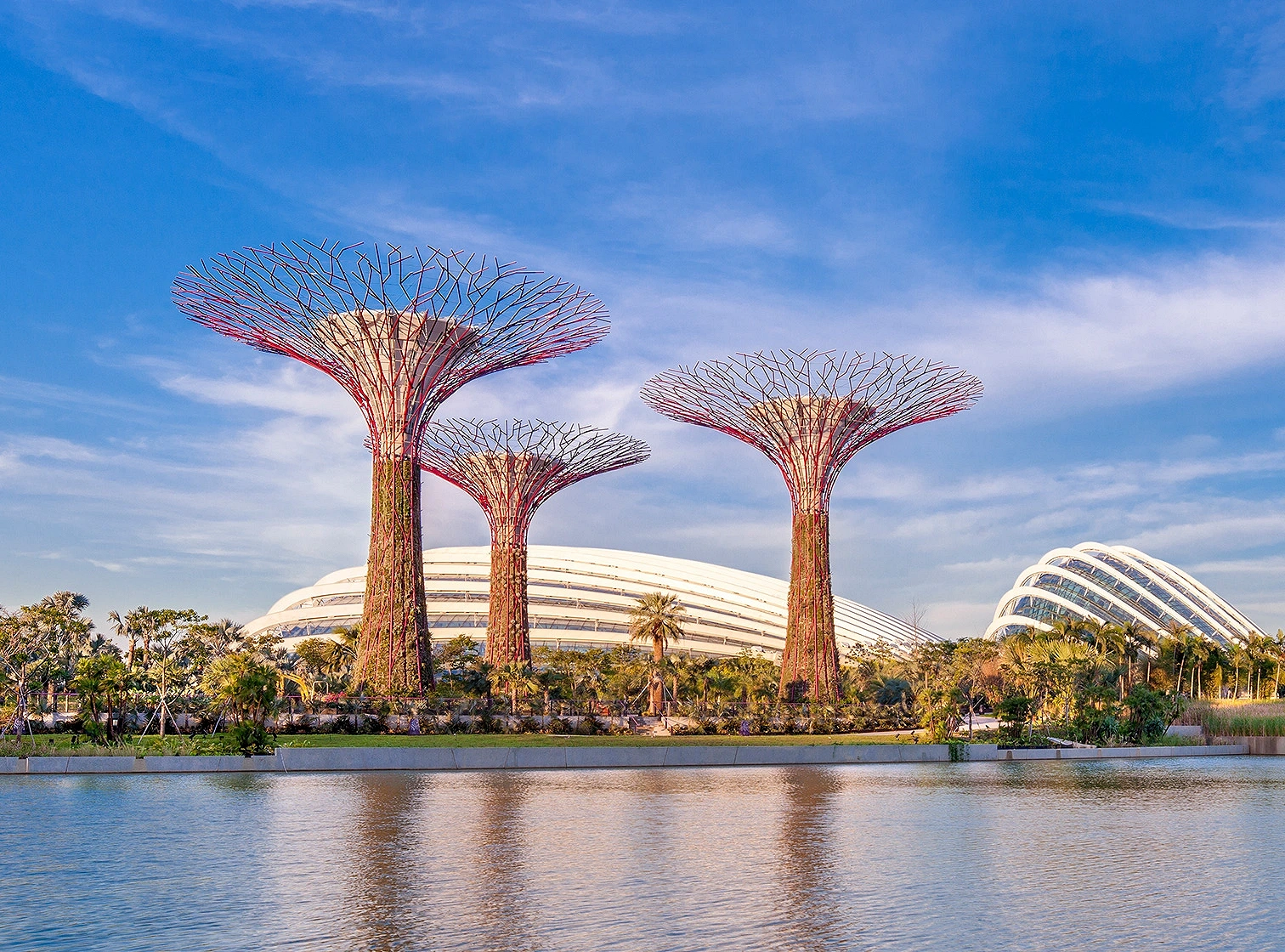
Gardens by the Bay in Singapore. Photo: CollectedThe outside world may offer plenty of criticism and debate regarding their strict political regime. However, no one can deny one fact: there is no second example in the modern world of a nation, completely devoid of natural resources and reeling from poverty, transforming into such a prosperous state within the span of just a single generation. Singapore's story is not just the story of a country; it is an incredible inspiration of rising from the brink of collapse to conquer the impossible.
Source: Space Daily

