

From Sugarcane Fields to National Leadership: The Story of South African Indians

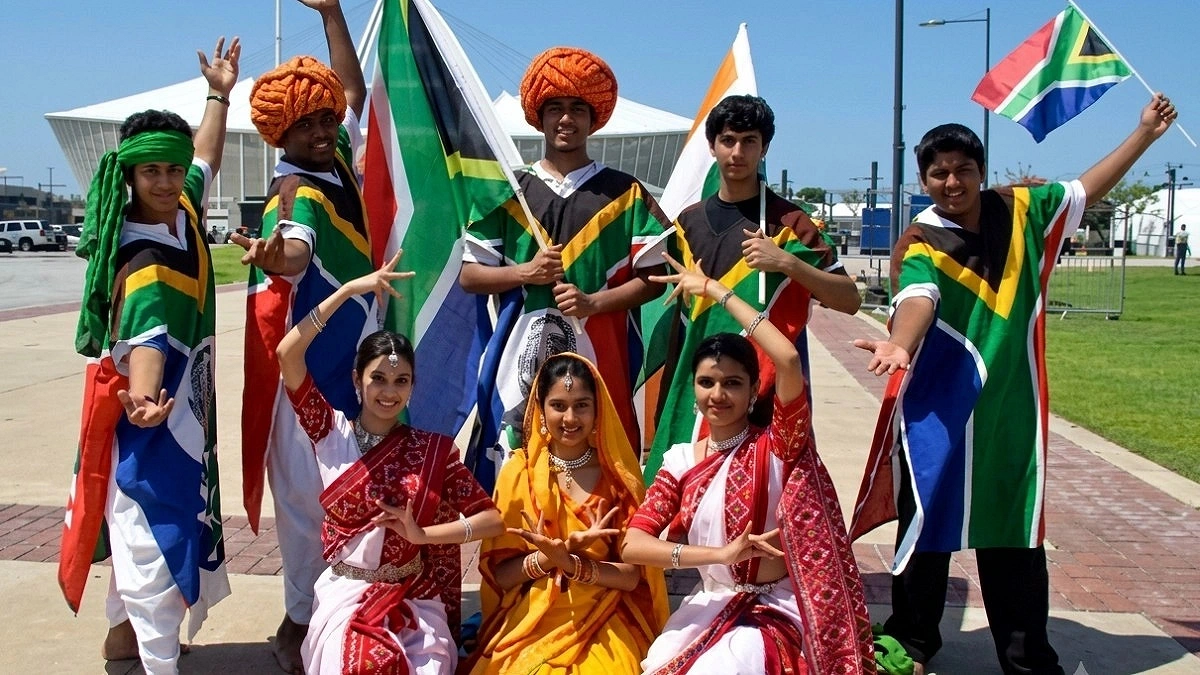
Some young South African Indians. Photo: Collected.
Today, the community of Indian origin forms a vital part of South Africa's multicultural society. Comprising over 1.4 million people, the history of this community is not just one of migration; it is a saga of struggle, resistance against discrimination, cultural evolution, and contribution to nation-building.
Having started their journey as indentured laborers nearly a century and a half ago, this community has now established a significant presence in South Africa's politics, business, education, culture, and sports.
In November 1860, the first batch of Indian indentured laborers arrived in the British colony of Natal. The British government brought thousands of laborers from India primarily to meet the demand for labor in the sugarcane plantations of sugar mills.
Between 1860 and 1911, approximately 152,000 Indian laborers arrived in Natal. The majority of them were residents of present-day Tamil Nadu, Andhra Pradesh, Uttar Pradesh, and Bihar regions of India.
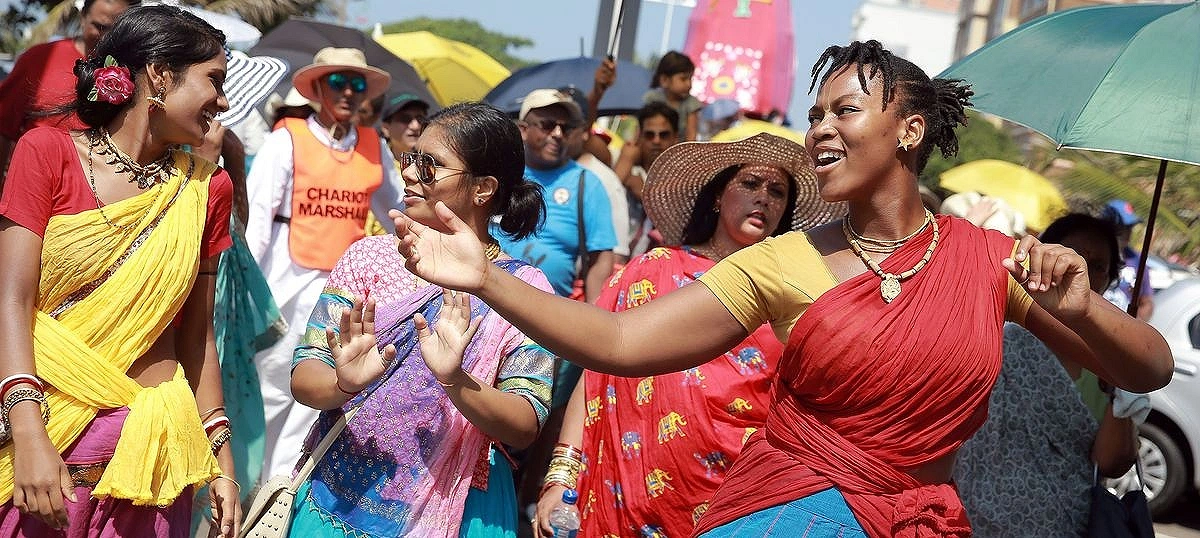
A group of South African Indian women in traditional attire in Johannesburg. Photo: Collected.
Around the same time, another class of Indians traveled to South Africa on their own initiative. Seeking business opportunities and new economic prospects, these individuals were known as "Passenger Indians" or "Free Indians." They quickly established themselves in retail shops, wholesale businesses, and various service sectors.
Although many laborers returned to India after their contracts expired, the majority chose to remain in South Africa. Their descendants now make up the largest portion of today's South African Indians.
According to the 2011 census, about 2.5% of South Africa's total population identifies as being of Indian origin.
The highest concentration of people of Indian origin lives in the KwaZulu-Natal province, particularly in the city of Durban. This is the largest settlement of Indian people in Sub-Saharan Africa.
However, the history of Indians in South Africa is not limited solely to their arrival as laborers. According to historians, many people from the Indian subcontinent were brought to the Cape region as slaves as early as the 17th century during the Dutch colonial era. Over time, they gradually integrated with the local white and mixed-race populations.
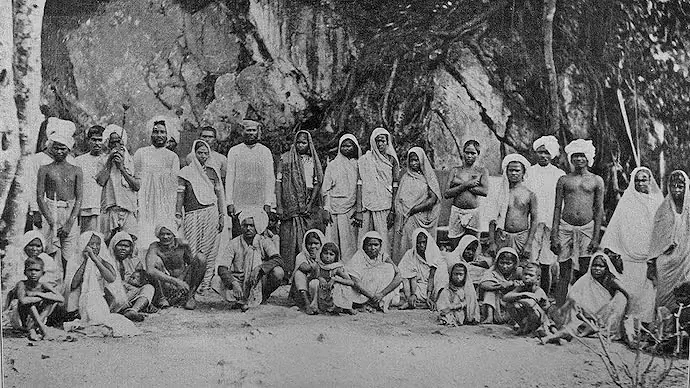
The 342 passengers—the first indentured laborers—who arrived off the coast of Johannesburg in 1860 after an arduous sea voyage. Photo: Collected.
Language, Culture, and Religious Diversity
The cultural identity of South African Indians is highly diverse. Although the majority of the population currently uses English as their mother tongue, a segment of the elderly population still speaks Hindi, Tamil, Telugu, Gujarati, Urdu, and Punjabi.
Legendary South African batsman Hashim Amla is considered one of the finest batters in modern cricket. On the other hand, left-arm
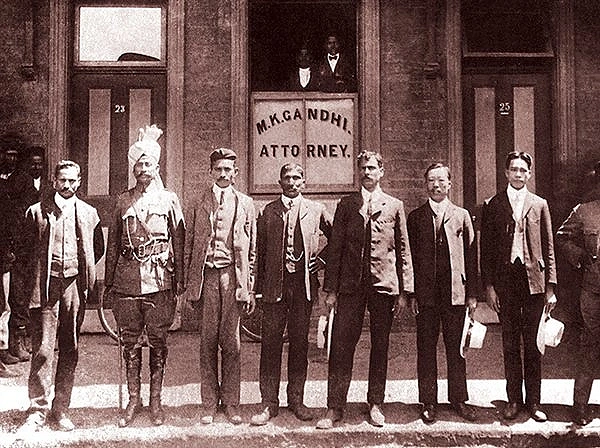
Young Mahatma Gandhi with lawyers in South Africa. Photo: Collected.
spinner Keshav Maharaj remains a vital member of the current South African team. All-rounder Senuran Muthusamy has also carved out his own place in international cricket.
A Vital Part of a Multicultural Nation
Today, South Africa's Indian community is not merely a migrant population; they are one of the core pillars of the country's multicultural identity. While preserving their diverse languages, religions, and cultures, they have seamlessly integrated themselves into the national identity of South Africa.

Renowned Indian-South African batter Hashim Amla. Photo: Collected.
A journey that began over a century and a half ago as laborers in sugarcane plantations has today evolved into a story of visible success in governance, business, education, culture, and international sports. The journey of the community of Indian origin in South African history stands as a unique chapter of migration, struggle, and self-achievement.

